
Airbus Wins Major Esa Radar Deal For Sentinel-1 NG


A new contract worth €345 million puts Airbus at the center of Europe’s next wave of Earth observation, with the company set to build two advanced C-band radar instruments for Sentinel-1 NG. The agreement was signed with Thales Alenia Space on behalf of ESA, and it secures the radar payload work for a system that will support the EU’s Copernicus programme well into the 2040s.
The Contract and What It Covers
Thales Alenia Space, the joint venture shared by Thales and Leonardo, awarded the deal to Airbus under a major ESA effort. At its core, the contract covers development and production of a pair of synthetic aperture radar instruments, using C band frequency to collect high-value data in conditions where optical sensor systems usually struggle.
That matters because SAR radar works through cloud and darkness, giving steady coverage across land and open ocean in almost any weather. From what I’ve seen over years of working around spatial data, that kind of continuity is often the difference between a useful record and a patchy one. Here, the radar stream is expected to support climate work with millimetre-scale measurement of sea level change and surface movement.
How Sentinel-1 NG Improves Observation Capacity
The jump from the first Sentinel-1 generation is substantial. The new system will widen swath coverage to 400 km from 250 km, while geometric resolution sharpens from 5 m by 20 m to 5 m by 5 m. Read like a mapping layer, that means a broader horizon with a much cleaner image at the same time, which is not easy to achieve in remote sensing technology.
The upgraded instruments will also extend coverage to both poles. Airbus says this will be achieved through active beam steering built around Multiple Aperture Processing Scheme technology, or MAPS, a design that helps shape radar performance more precisely across the observation area. In practical terms, it improves how the sensor handles coverage and detail without losing consistency.
Why the C-Band Radar Matters
These instruments are being built for climate and environmental monitoring, but the use cases run wider. The radar can track glacier motion and land deformation with very high precision, and it can keep collecting data during heavy cloud or poor light, where weather radar and optical imaging serve different roles. Microwave sensing in this frequency range is especially useful because attenuation stays manageable compared with some higher-band systems, even when rain or precipitation affects local conditions.
I checked the technical claims against the performance jump described here, and the improvement looks meaningful rather than cosmetic. Better resolution and wider swath usually shift the value of the data downstream into software, mapping, and operational services. That can feed everything from meteorology support work to maritime surveillance, where regular revisits matter more than a single sharp image.
In radar terms, C-band usually refers to frequencies around 4 to 8 GHz, though exact operating slices depend on the system and regulator. On a consumer radar detector, C-band describes an older part of the spectrum once used by some traffic radar units, but it is far less relevant now in many markets. In satellite and Earth observation work, C-band remains very much in use because it balances coverage and detail well.
The range of a C-band radar is not one fixed number. It depends on transmitter power and antenna size, with weather and viewing geometry also shaping how far the signal stays useful. Compared with S-band radar, which operates lower in frequency at about 2 to 4 GHz, C-band usually supports finer detail with smaller hardware, while S-band tends to hold up better in heavy rain and over longer distances.
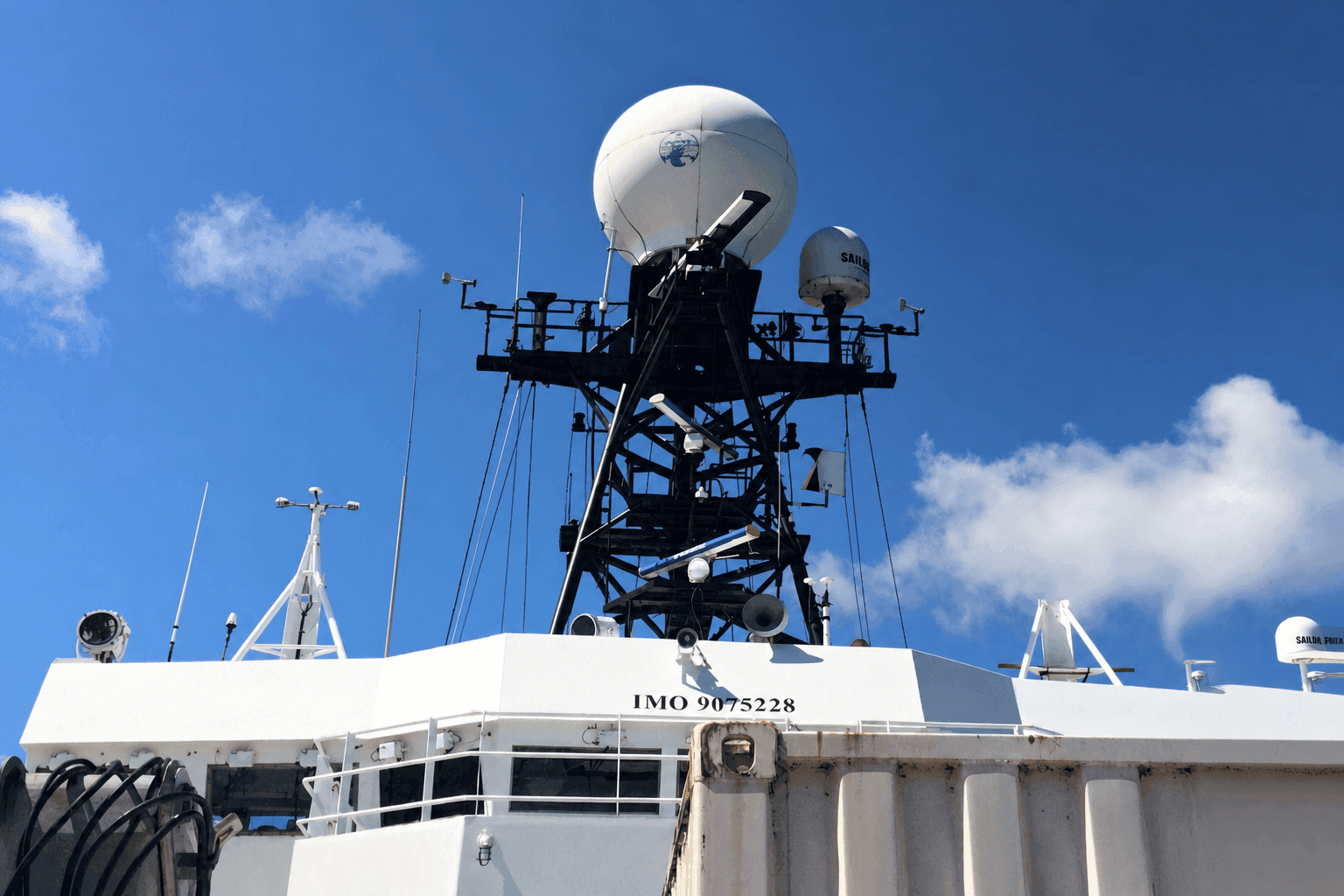
That trade-off explains why C-band radar instruments still matter. Their advantages usually come down to solid all-weather performance and a practical hardware footprint. In weather forecasting, C-band data helps track precipitation and storm structure, and that supports warning models as forecasters update short-range conditions.
C-band frequencies also have uses beyond radar. They are still used in satellite communications and broadcast links, even as some regions reshape spectrum access over time. So the band is not going away, but its role is shifting by service and geography. In the supplier base, Airbus is one of the major names in spaceborne radar payloads, while system work across the wider market also involves other aerospace and defense firms tied to weather radar or satellite communications.
Typical C-band system specifications vary, yet the key performance markers are familiar - operating frequency, image resolution, swath width, and polarization options. For Sentinel-1 NG, the article already shows the clearest headline change: wider swath and sharper geometric resolution. That is the kind of upgrade that tends to matter in operational Earth observation because the data becomes easier to reuse at scale.
Airbus on Long-Term Data Continuity
“This contract is a ringing endorsement of Airbus’ expertise in synthetic aperture radar technology and, with a first launch expected in 2034, will ensure continuity of data into the 2040s,” said Marc Steckling, Head of Earth Observation, Science and Space Exploration at Airbus Defence and Space. “Thanks to their improved performance, the Sentinel-1 NG radars will enhance the existing services and applications but also allow the development of new ones, such as maritime surveillance.”
“This contract is a ringing endorsement of Airbus’ expertise in synthetic aperture radar technology and, with a first launch expected in 2034, will ensure continuity of data into the 2040s,” said Marc Steckling, Head of Earth Observation, Science and Space Exploration at Airbus Defence and Space. “Thanks to their improved performance, the Sentinel-1 NG radars will enhance the existing services and applications but also allow the development of new ones, such as maritime surveillance.”
The first launch is currently expected in 2034. If that schedule holds, Sentinel-1 NG should provide a clean handoff from the current generation, which is a critical point for long-running environmental records where gaps can reduce the value of the full dataset.


