
Geospatial Analyst Salary And Gis Careers in 2026


Maps now sit behind public services, delivery systems, and planning work, so geospatial analyst salary has become a practical question for anyone considering GIS as a career. The short answer is encouraging - pay is solid nationwide, remote roles remain common, and the field still offers room to move from entry-level work into stronger specialist positions.
The GIS Analyst
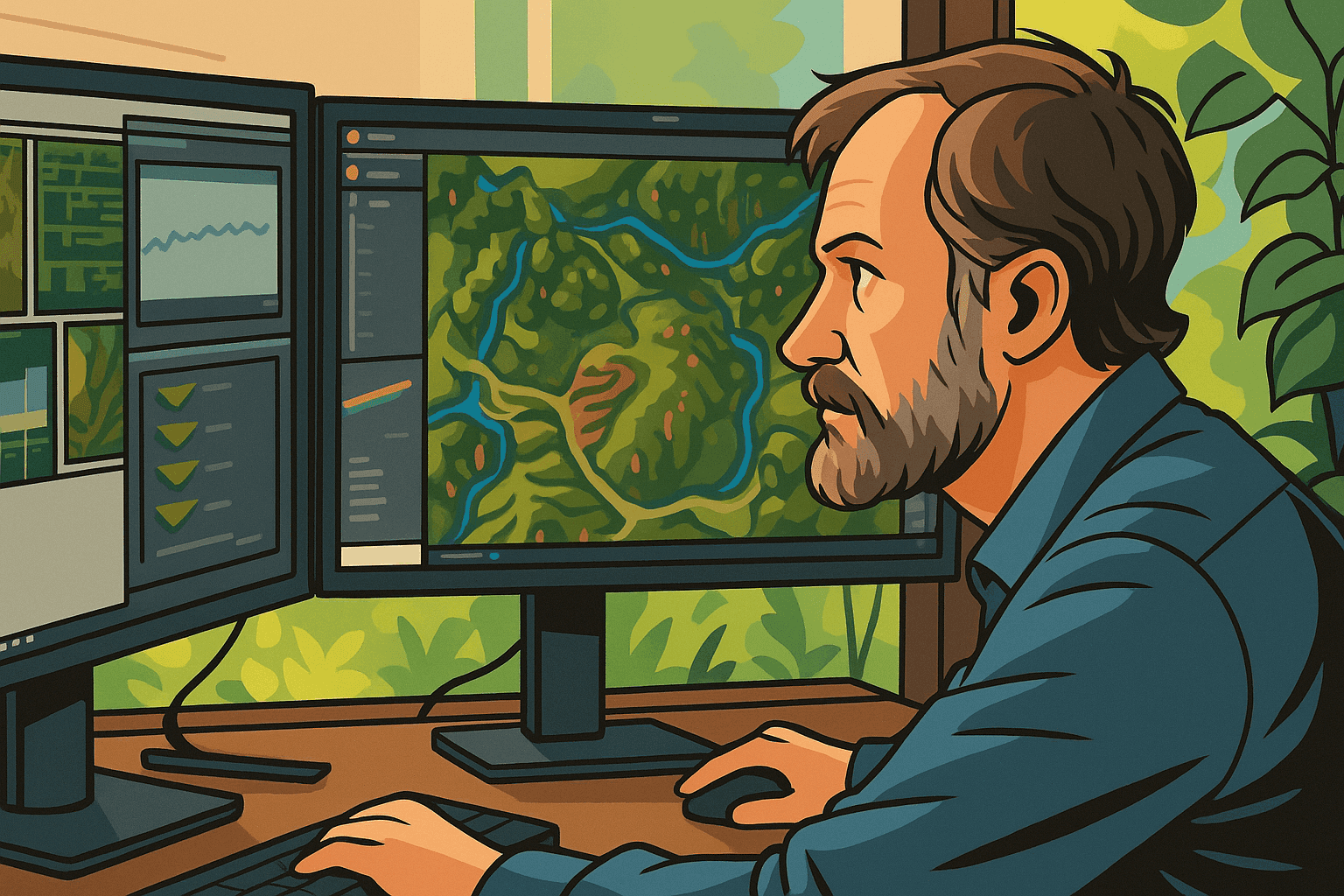
A GIS analyst works with a geographic information system to turn geographic data and information into something useful for decision-making. That might mean building map layers for a health agency or checking routing patterns for an operations team. In plain terms, the role sits between geography and data, with a foot in software and a foot in applied analysis.
That work shows up all over daily life. If you have opened Google Maps or looked at property boundaries online, you have already seen the output of this kind of system. From what I have seen over the years, the strongest analysts are the ones who can read a map and a database with equal confidence.
- Public health and access mapping
- Policing and land planning
GIS professionals also work in utilities and logistics. Day to day, that usually includes cleaning incoming data, updating map layers, checking database links, and preparing maps or dashboards that other teams can use. The setting changes from one employer to the next, but the work stays centered on reliable spatial analysis and clear presentation.Source - African Surveyors Connect
To enter the field, most people build a base through formal education, a GIS certificate, or a geography-related degree. Employers also look for overlap with IT and data skills. That usually means comfort with mapping software, spatial analysis, and the handling of digital map products.
Is a GIS analyst an entry-level job? Often, yes. Many teams hire junior analysts to support map production, data cleanup, and routine quality checks. Over time, that foundation can lead to stronger pay and more technical responsibility.
Average GIS Analyst Salary
Source - ZipRecruiter
GIS pay usually falls into a few broad bands. Early-career roles tend to land between $40,000 and $60,000. Mid-career positions often sit from $60,000 to $80,000. Senior jobs start above $80,000 and rise from there.
The average GIS analyst salary in the United States is close to $75,000 a year. That figure shifts with sector focus and software depth. Experience with Esri tools, database work, or applied cartography often pushes compensation upward.
Is geospatial analysis a good career choice? In my view, yes. The field keeps spreading into sectors that rely on location intelligence, and the skills transfer well between public agencies and private firms. That makes the career path more resilient than many narrowly defined technical roles.
Table 1 Average GIS Analyst Salary by State 2026
| State/Region | Average Salary | Cost of Living | Key Industry Demand |
|---|---|---|---|
| New York | $82,379 | High | Finance and urban analytics |
| Oregon | $80,577 | Midrange | Environmental GIS |
| California | $74,639 | High | Tech and local government |
| Texas | $70,122 | Lower | Infrastructure and energy mapping |
| Remote U.S. | $75,000 | Generally aligned with on-site roles | Broad employer demand |
These salary levels reflect both living costs and employer demand for spatial talent. Texas deserves a quick note because it is searched so often. Recent salary reporting places the average geospatial analyst pay in Texas at about $72,198, which works out to roughly $34.71 per hour. Reported ranges stretch from about $20,496 on the low end to $113,662 at the high end, though most openings cluster much closer to the middle.
At the city level, local markets can shift the picture fast. In Los Angeles, GIS Analyst roles have been reported near $92,153, with many openings falling roughly between the low $70,000s and just over $110,000 depending on seniority and employer type. Oakland has been reported around $96,000, while San Francisco has landed near $100,000 in recent comparisons.
Among Los Angeles employers, the highest-paying GIS Analyst openings usually show up with larger engineering firms and public infrastructure contractors. Salary postings change quickly, but the stronger listings tend to cluster around the upper end of the local range, especially for roles tied to enterprise mapping systems or utility work.
The broader takeaway is simple - the average salary matters, but local demand matters too. I usually read job markets a bit like map layers. The national pattern gives you context, then the city layer shows where the real opportunities sit.
Work From Home and Remote Pay
Remote GIS work held on after the pandemic and now looks like a standard option in many teams. With stable internet access and secure FTP or VPN connections, analysts can complete map edits, database updates, and review tasks from almost anywhere.
Current employment estimates put the U.S. GIS analyst workforce at roughly 28,000 people, and a large share of them work remotely. As of January 2026, remote GIS analyst pay averages about $75,000 per year, which is very close to on-site compensation. The difference usually has more to do with project sensitivity than physical office location.
Remote analysts typically spend time on spatial database maintenance, map publishing, and quality checks. Some also handle scripting for automation. I have seen these workflows become smoother over the last few years, with many platforms loading in a second or two once access is configured properly.
How to Find GIS Analyst Jobs Near You
GIS analysts work across government, utilities, consulting, and technology firms. If you are trying to narrow the search, start with a region you would actually consider living in and compare salary against cost of living. That step saves time fast.
Step-by-Step Job Search
- Pick your target area - compare state or metro pay with local living costs.
- Search for GIS Analyst jobs on major boards and filter by remote status or entry level.
- Read the requirements closely and look for tools such as Python or QGIS.
- Build a portfolio that shows maps and coursework projects.
Example state averages for 2026 show New York at $82,379, Oregon near $79,577, and California at $74,639. For job boards, ZipRecruiter, Indeed, and LinkedIn Jobs all support salary filters and remote search options. Company reviews are available on each as well, which helps when you are comparing employers instead of titles alone.
What is the highest paying job in GIS? Titles vary, but senior geospatial engineering roles and advanced GIS management jobs usually sit above standard analyst pay. Positions tied to software development, enterprise systems, or defense work can also rise well past the analyst average.
The Next Steps to Become a GIS Analyst
GIS remains a growth field because organizations keep generating more location-based information and need people who can interpret it. The route into the profession usually begins with coursework, then practical work using live data and industry software.
University classes still matter, though many learners want something closer to production work. Programs built around projects can help because they expose students to the same kinds of datasets and workflow issues they will see on the job. In my experience, that shortens the gap between learning and employability.
Training options that cover spatial analysis and data handling can also count toward a GIS certificate. That structure is useful for people starting from another field or trying to formalize experience they already have.
If you are starting with no experience, focus on tools employers ask for repeatedly, especially ArcGIS Pro, QGIS, and Python. A strong portfolio matters almost as much as the credential itself, because hiring teams want proof that you can work with real information and produce reliable map outputs.
Frequently Asked Questions
Which GIS Courses Help Most With Hiring
Courses tied to current employer needs tend to help the most, especially work in spatial data analysis, cloud mapping, and Python automation. A certificate that ends with portfolio pieces gives hiring managers something concrete to review.
Do Remote GIS Analysts Earn Less
No. Recent salary data shows remote GIS analysts earning about the same as office-based analysts, near $75,000 annually. Pay differences usually reflect project type or security limits.
Which States Pay the Most
Among the higher-paying states listed here, New York leads at $82,379, followed by Oregon at $80,577. California also remains strong at $74,639, though living costs can offset some of that advantage.
Is GIS a Good Career in 2026
Yes. Demand continues to rise as more organizations use spatial data for planning, logistics, and sustainability work. That steady adoption supports long-term hiring.
How Do You Become a GIS Analyst With No Experience
Start with core software and build a small body of work you can show. Even a few polished map projects can act like a reliable GPS fix for an employer, giving them a clear read on your direction and skill level.
Sources
- Esri - What Is GIS?
- ZipRecruiter - GIS Analyst Salary, January 2026
- Zippia - GIS Analyst Jobs and Trends, 2026
- Bootcamp GIS - Online GIS Courses
- Bootcamp GIS - Advisory Session


