
Gladys West The Mathematician Who Helped Invent GPS


Anyone asking who invented GPS ends up at a wider answer than one single name. The Global Positioning System was developed by the United States government over time, beginning in the 1970s under the United States Department of Defense, and it became operational in the 1990s. Many specialists worked on it, and Gladys West stands out as one of the key people behind its accuracy.
At her home in Virginia, West looks back on a life that began on a segregated farm and led into one of the quiet technical stories behind modern location systems. As a child in Dinwiddie County, Virginia, she understood one thing early - education was her route out. She could not have known that the work she later did on a military base would shape technology used across the world.
Growing up, she helped her family harvest crops from before sunrise into the punishing afternoon heat. She disliked the soil and the grind of farm labor, so she fixed her attention on the school building beyond the trees. Even then, she saw it as a way forward.“I was gonna get an education and I was going to get out of there. I wasn’t going to be stuck there all my life,” West, 89, says firmly, on Zoom in her home in Virginia.
“I was gonna get an education and I was going to get out of there. I wasn’t going to be stuck there all my life,” West, 89, says firmly, on Zoom in her home in Virginia.
That determination would eventually push past the narrow expectations placed on black women at the time. It also placed her inside the long development path of GPS, a system many people use daily without ever seeing the layers of math underneath. From what I’ve seen in mapping work, the invisible layer is usually the one doing the heavy lifting.
A Long Walk Toward Mathematics
West attended what was known as the red schoolhouse, an elementary school about three miles away. The route cut through woods and crossed streams. All seven grades were taught together in one room, and she quickly emerged as one of the strongest students.
Her parents tried to save for college, but the money kept being diverted by household costs. West realized that if she wanted higher education, she would need to secure it herself. She saved what little she could, then heard a teacher announce that the state would award a college scholarship to the top two students in her class.“I started doing everything so that I would be at the top,” West says. “And sure enough, when I graduated from high school, I got one.”
“I started doing everything so that I would be at the top,” West says. “And sure enough, when I graduated from high school, I got one.”
The scholarship took her to Virginia State College, now Virginia State University, one of the historically black colleges and universities that opened critical doors for African Americans shut out elsewhere. Tuition was covered, though room and board still had to be paid. Her parents could help at first, but only briefly, so she spoke with her mathematics teacher, who arranged part-time babysitting work after recognizing her ability.
College brought a new kind of challenge. She had excelled in a small rural school, yet now she was competing with students from larger cities. She stayed intensely focused and let most campus distractions pass by.“I was so dedicated that I didn’t care about missing the fun. But now I look back and I should have,” she says before laughing.
“I was so dedicated that I didn’t care about missing the fun. But now I look back and I should have,” she says before laughing.
She chose mathematics as her major because it carried weight and demanded rigor. It was largely a male field, but West did not dwell on that. She was fixed on the work in front of her.“I knew deep in my heart that nothing was getting in my way.”
“I knew deep in my heart that nothing was getting in my way.”
From Classroom to Naval Programming
After graduation, West taught school and saved money so she could return for graduate study. She later earned a master's degree in mathematics and briefly went back to teaching. Then came a job offer in Dahlgren, Virginia, at what is now the Naval Surface Warfare Center Dahlgren Division. That move made her only the second black woman hired there as a programmer, and one of very few black employees overall.
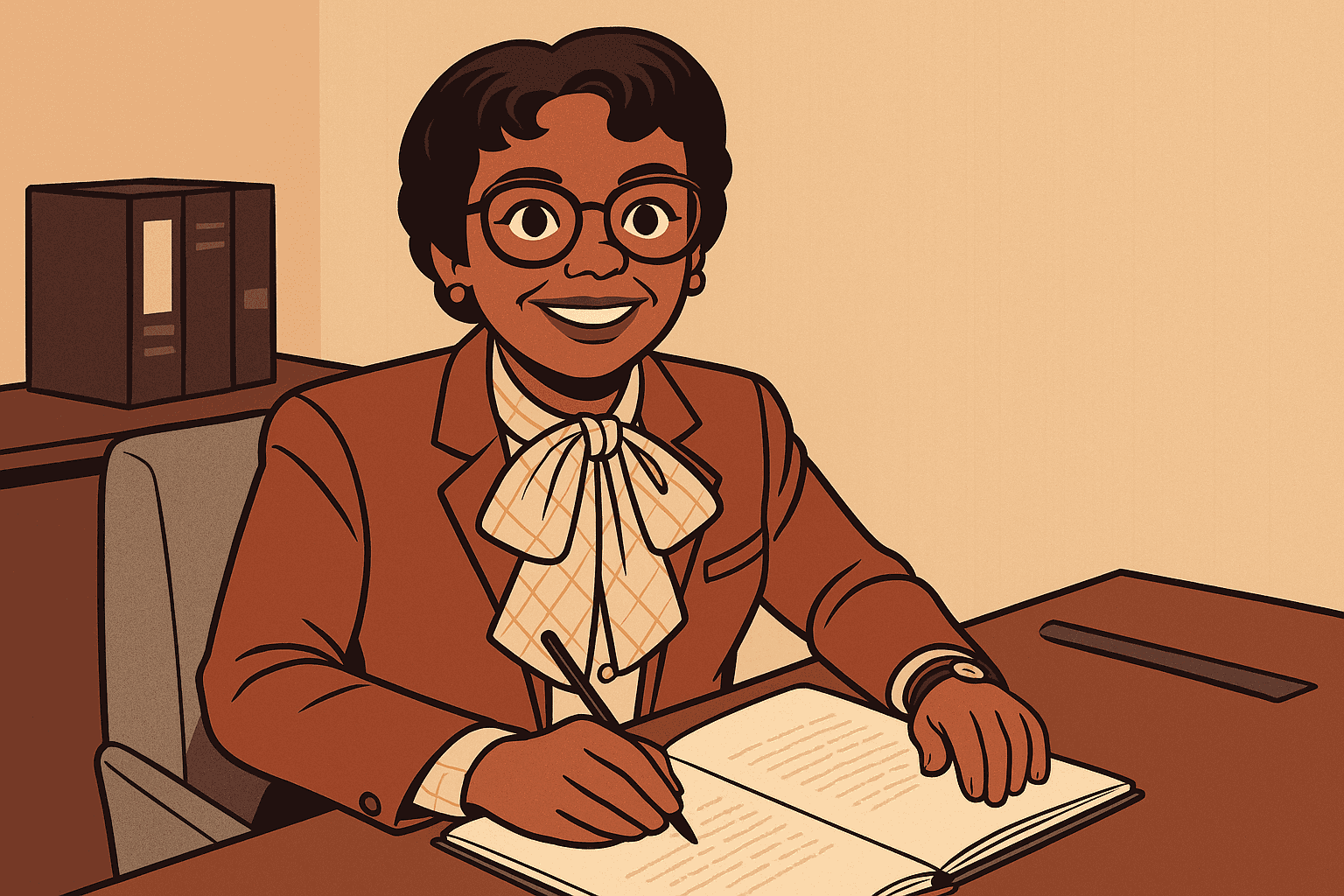
When West arrived, the navy was bringing computers into its technical workflow. She was hired to write code for machines that filled rooms. By current standards the interface would feel primitive in under a minute, but the underlying logic was serious work. She was proud to be there, though she also carried a long-standing sense of inferiority that segregation had planted deeply. She believes many African Americans knew that feeling, and for her it became fuel.
She still recalls that first day clearly. The base looked gray to her, and people gathered before work with coffee in hand. It was there she first met Ira West, the man she would later marry, though she kept her attention on the job and brushed him aside at first.“I just got there and I was a serious woman. I didn’t have time to be playing around,” she says.
“I just got there and I was a serious woman. I didn’t have time to be playing around,” she says.
Her white co-workers treated her with respect at work, though social distance remained outside the office. West noticed it, understood it, and chose not to let it break her focus. Instead, she decided that her response would be performance.“You know how you know that kind of thing is going on, but you won’t let it take advantage of you? I started to think to myself that I’ll be a role model as the black me, as West, to be the best I can be, doing my work and getting recognition for my work,” she says.
“You know how you know that kind of thing is going on, but you won’t let it take advantage of you? I started to think to myself that I’ll be a role model as the black me, as West, to be the best I can be, doing my work and getting recognition for my work,” she says.
Civil Rights Outside the Gate
The base could feel sealed off from the country around it, yet the civil-rights struggle was unfolding all across the United States, especially in the south. West’s office itself was not segregated, but outside the gate demonstrations were challenging exclusion in public life. Some of her college friends were deeply involved, and she and her husband followed events closely.
She supported the peaceful protests, but because she worked for the government she was told she could not join them directly. That left her in a difficult place. So she committed herself to a quieter form of change from inside the system. She visited demonstrations, returned to work, and focused on proving through precision and discipline what black professionals could do.“They hadn’t worked with us, they don’t know black people except to work in the homes and yards, and so you gotta show them who you really are,” she explains. “We tried to do our part by being a role model as a black person: be respectful, do your work and contribute while all this is going on.”
“They hadn’t worked with us, they don’t know black people except to work in the homes and yards, and so you gotta show them who you really are,” she explains. “We tried to do our part by being a role model as a black person: be respectful, do your work and contribute while all this is going on.”
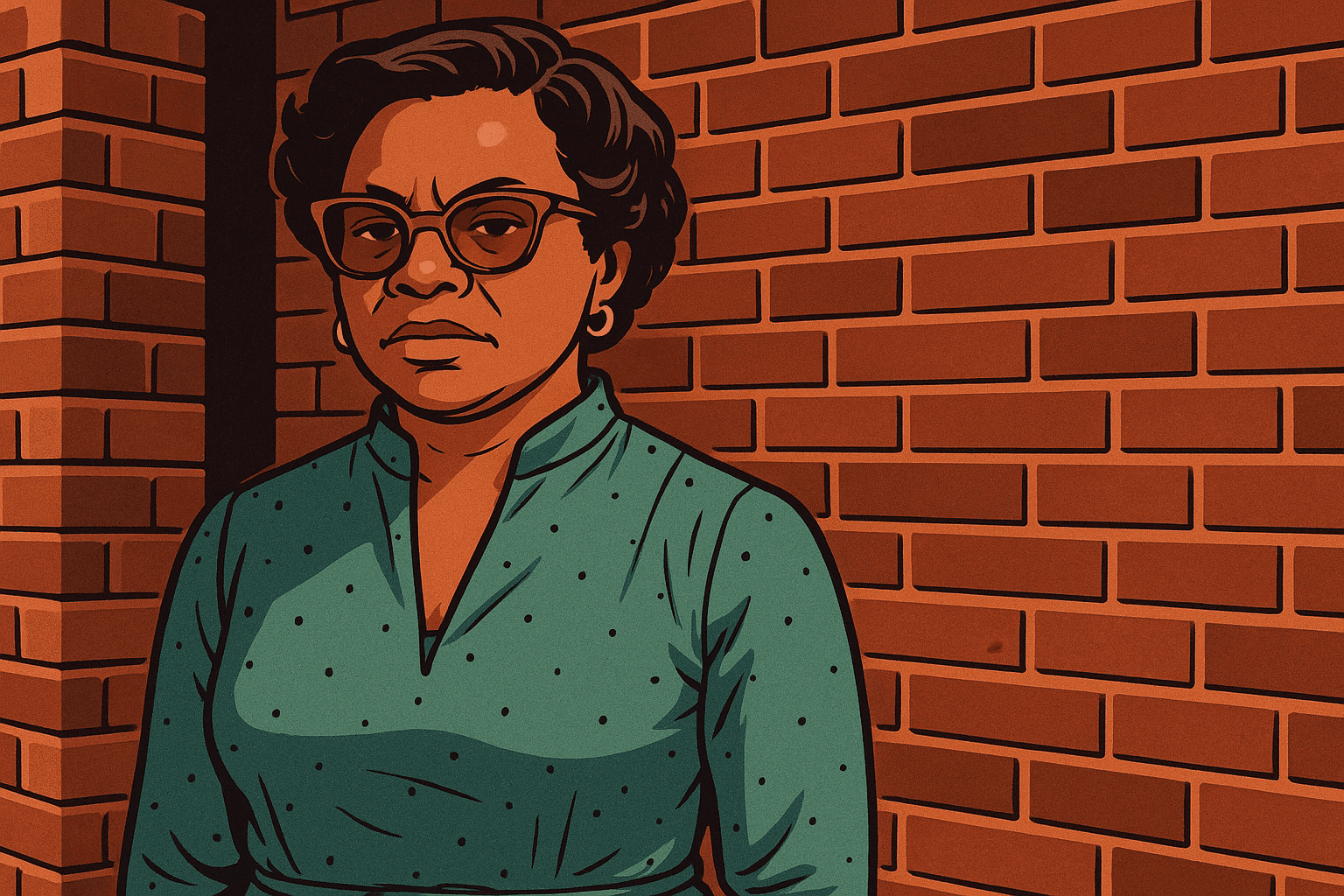
That approach carried weight. West moved up through the ranks and earned strong respect from colleagues. The work demanded careful handling of large datasets and exact computational procedures. In geospatial terms, this is where tiny errors can drift outward like bad coordinates on a map.“You had to be particular. You can learn the process, but then you have to really make sure you create the process just right, so everything would come out all right,” she says.
“You had to be particular. You can learn the process, but then you have to really make sure you create the process just right, so everything would come out all right,” she says.
How Gladys West Contributed to GPS
The article does not say Gladys West solely invented GPS, and that distinction matters. If someone asks who is considered the primary inventor or inventors of GPS, the fairest answer is that the system emerged from a broader United States military effort led by the Department of Defense. Other figures often credited with shaping the system include Roger L. Easton, whose satellite timing work helped define the concept, and Bradford Parkinson, who led the NAVSTAR GPS program. West is better understood as a foundational contributor whose work made high-accuracy positioning possible. In technical systems, I tend to read contribution the way I read map layers - the final display depends on groundwork that may stay hidden.
In the early 1960s, West worked on a study that later won recognition for confirming the regularity of Pluto’s motion relative to Neptune, according to our research. By 1979 she had earned a formal commendation from her department head. She later became project manager for the Seasat radar altimetry project. Seasat was the first satellite able to monitor the oceans in this way, and West led a small team of five.
| Contribution | Description | Impact on GPS |
|---|---|---|
| Geodetic modeling | West programmed the IBM 7030 Stretch computer to build a precise figure of the Earth from satellite data. | GPS needs that model so positions are measured against the Earth’s actual shape rather than a rough sphere. |
| Algorithms and data processing | She worked through large radar datasets and refined the calculations used to interpret them. | That helped reduce position error and supported the accuracy needed for reliable satellite navigation. |
Her role involved programming the IBM 7030 Stretch computer, a fast machine for its era, to calculate a highly accurate geodetic description of the Earth. That figure of the Earth mattered because GPS cannot work well if the planet is treated as a perfect sphere. West’s mathematical model drew on satellite measurements and algorithm design to describe the Earth more precisely, which improved how orbital positions could be calculated against the surface below. Her work with radar and the radar altimeter fed into that larger measurement problem.
So did Gladys West invent GPS? No, not by herself. Did she help create GPS in a direct technical sense? Yes. Her contributions to geodesy and Earth modeling were essential to the system that followed. That also answers another common question - did the United States government create GPS? Yes. The United States Department of Defense initiated and oversaw the project, with West among the important scientists behind it.
While her team was laying that groundwork, West kept studying. She attended evening classes and earned another master's degree, this time in public administration from the University of Oklahoma. She kept taking the opportunities the base made available, which says a lot about how she worked.
Retirement, Recovery, and Recognition
By 1998, after more than four decades at the base, West knew it was time to retire. She was 68 and uneasy about leaving work behind, so she planned to turn her attention to a PhD. Then she had a stroke.“I was just sitting there working on the computer and all of a sudden I started spinning around,” West says.
“I was just sitting there working on the computer and all of a sudden I started spinning around,” West says.
She moved into recovery immediately after leaving the hospital and refused to let the event define the rest of her life.“I never stopped one moment just to feel sorry for myself and say: ‘Oh boy, I’d never make it.’ I just said: ‘What’s next?’”
“I never stopped one moment just to feel sorry for myself and say: ‘Oh boy, I’d never make it.’ I just said: ‘What’s next?’”
She finished her dissertation and completed her PhD in public administration and policy affairs in 2000, at age 70. Looking back, she says she did not realize at the time that her military work would later affect civilian life on such a large scale.“You never think that anything you are doing militarily is going to be that exciting. We never thought about it being transferred to civilian life, so that was a pleasant surprise.”
“You never think that anything you are doing militarily is going to be that exciting. We never thought about it being transferred to civilian life, so that was a pleasant surprise.”
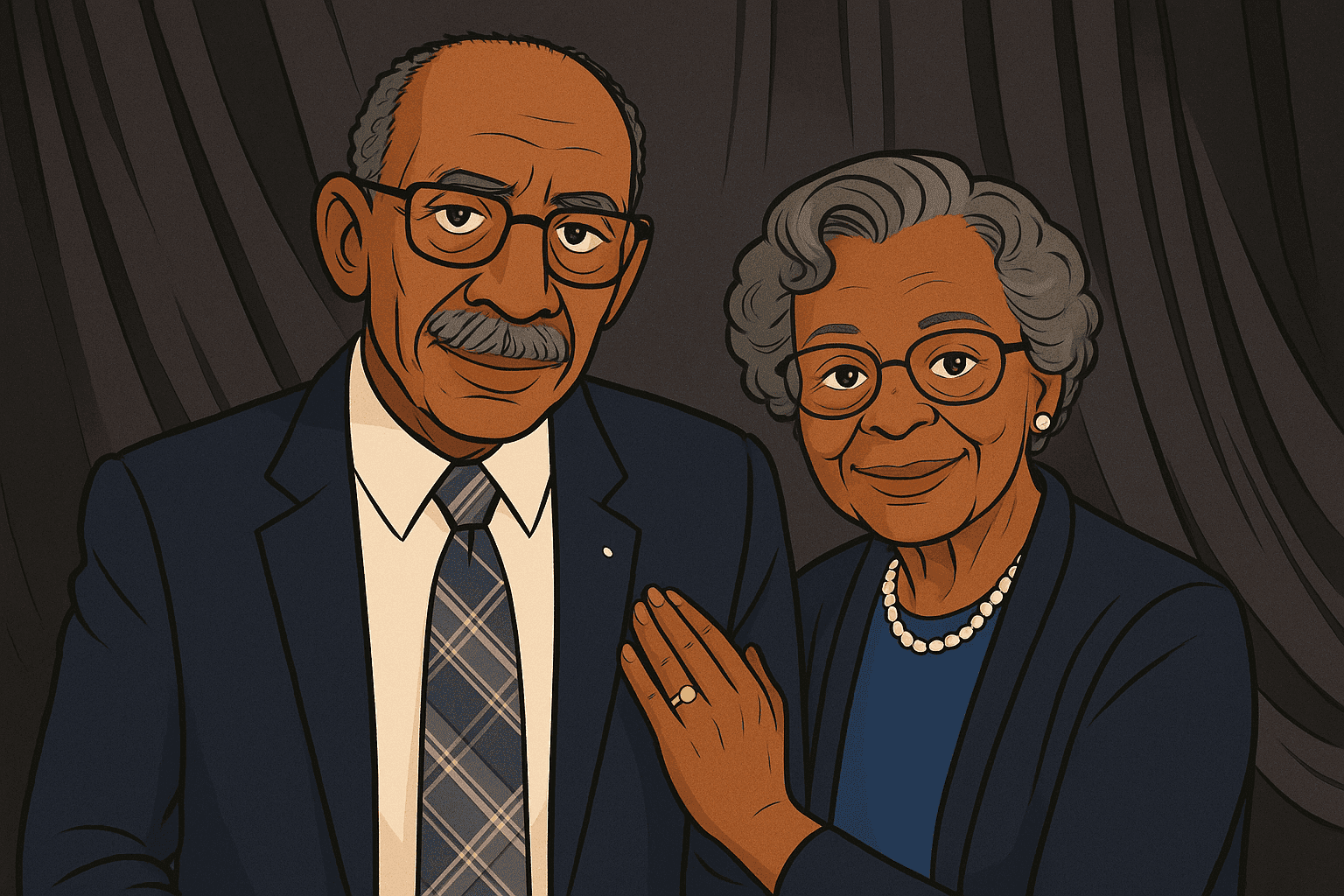
For years, her contribution remained largely unrecognized. Her 42-year career at the naval base drew little public attention. Much later, she sent a brief autobiography to a sorority event, and the response caught her off guard. Her sorority sisters were amazed by what she had done.“I just thought it was my work, and we’d never talk to our friends about work. I just never thought about it. I didn’t brag about what I was working on,” West says. “But to see other people so excited about it, that was amazing.”
“I just thought it was my work, and we’d never talk to our friends about work. I just never thought about it. I didn’t brag about what I was working on,” West says. “But to see other people so excited about it, that was amazing.”
Hidden Figures and a Place in History
Recognition expanded from there. West came to be celebrated as one of the hidden figures behind GPS, and in 2018 she was inducted into the United States Air Force hall of fame. Her story finally entered the public record, which she knows is unusual for black women whose work has often been left out of official history.“We always get pushed to the back because we are not usually the ones that are writing the book of the past. It was always them writing and they wrote about people they thought were acceptable. And now we’re getting a little bit more desire to pull up everyone else that’s made a difference.”
“We always get pushed to the back because we are not usually the ones that are writing the book of the past. It was always them writing and they wrote about people they thought were acceptable. And now we’re getting a little bit more desire to pull up everyone else that’s made a difference.”
When West saw Hidden Figures, the film about African American women working in mathematics for NASA, she felt a strong connection to what it showed. She had not known their exact story, yet the experience looked familiar to her. It also confirmed that there were likely many other black women whose scientific work had stayed out of sight.“I really loved the movie and I didn’t know that that was going on with them. But they were doing something similar,” she says.
“I really loved the movie and I didn’t know that that was going on with them. But they were doing something similar,” she says.
Her sense of pride is clear, though so is her realism about the social burden she carried as a black woman working in science.“I felt proud of myself as a woman, knowing that I can do what I can do. But as a black woman, that’s another level where you have to prove to a society that hasn’t accepted you for what you are. What I did was keep trying to prove that I was as good as you are,” she said. “There is no difference in the work we can do.”
“I felt proud of myself as a woman, knowing that I can do what I can do. But as a black woman, that’s another level where you have to prove to a society that hasn’t accepted you for what you are. What I did was keep trying to prove that I was as good as you are,” she said. “There is no difference in the work we can do.”
Her View of Justice and Everyday GPS
West says she appreciates the people who have taken to the streets in support of Black Lives Matter in recent years. She hopes those demonstrations help move society toward a more honest understanding of itself and toward greater unity.“I’m hoping that, from that, we become better people, closer to the reality of who we really are, and the world becomes more united than it is now,” West says.
“I’m hoping that, from that, we become better people, closer to the reality of who we really are, and the world becomes more united than it is now,” West says.
She also wants the public demand for justice to lead to practical support for more women and black students in science and mathematics. In her view, scholarships and focused training programs remain necessary if access is going to improve.
And there is one final detail that gives the whole story a human edge. West is deeply proud of helping build the foundations of GPS, yet she does not rely on it herself. She still prefers paper maps. I understand that instinct. After years around mapping systems, sometimes seeing the route on the page still feels more certain.“I’m a doer, hands-on kind of person. If I can see the road and see where it turns and see where it went, I am more sure.”
“I’m a doer, hands-on kind of person. If I can see the road and see where it turns and see where it went, I am more sure.”


