


Best Indicators For Crypto Day Trading That Actually Help You Read The Tape


Fast crypto markets leave very little room for hesitation, so the best indicators for crypto day trading are the ones that help you judge market trend, momentum, volatility, and support and resistance without cluttering the chart. The strongest mix usually includes a moving average, MACD, and tools that read price pressure or volume. Used well, they can help answer practical questions such as what indicators are best for crypto day trading, which one tends to be most accurate in a given setup, and whether steady daily income goals are realistic at all.
- Tools such as moving averages, MACD, and the Ichimoku Cloud can give you a wider view of trend direction and momentum in a Cryptocurrency market.
- NR4 and NR7 opening ranges, along with the stochastic oscillator and Fibonacci retracement levels, can help with timing trade entries and exits.
- Bollinger Bands, VWAP, and the MFI are useful for reading volatility in finance and spotting shifting support and resistance zones.
Technical indicators also shape the foundation of many day trading methods. That is why the right mix matters. If two indicators work together, the chart tends to read more like aligned map layers. If they fight each other, the signal gets noisy fast. With that in mind, here are ten indicators worth considering for a crypto trading toolbox in 2026.
1 - Moving Averages
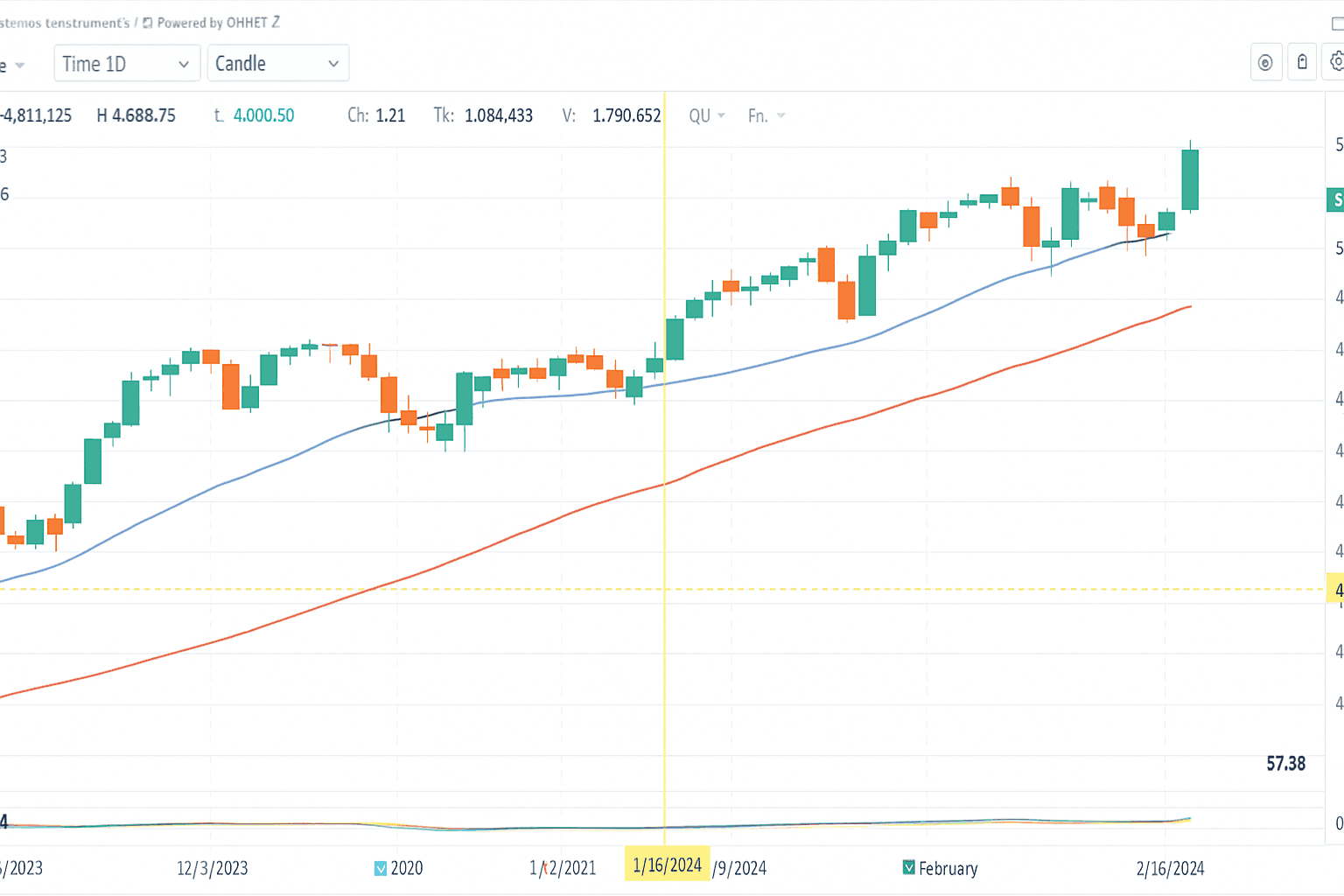
Moving averages are among the most established trading indicators in technical analysis. They smooth raw price data by calculating an average over a chosen period, which makes trend direction easier to read on a busy chart.
The two versions traders use most are the SMA and the EMA. An SMA gives equal weight to each point in the lookback period. An EMA reacts faster because it leans harder on recent price action.
Why This Indicator Works
Moving averages strip out a good deal of short-term noise, which helps reveal the broader market trend. In my own chart work, that matters a lot on crypto pairs where small candles can distract from the actual move. EMA lines are especially helpful in fast sessions because they adapt more quickly when momentum changes.
Why Day Traders Use Moving Averages
Trend direction -They help traders see quickly whether price is generally moving higher or lower.
Signals -Crossovers between faster and slower averages can mark possible entry or exit points.
Dynamic levels -Many traders also treat them as moving support and resistance.
Day Trading Strategies Using Moving Averages
Strategy 1 - Crossover setups
One common approach uses two moving averages with different speeds. When the shorter line crosses above the longer one, traders may read that as a bullish signal. A cross in the other direction can suggest fading strength.
Strategy 2 - Pullbacks to the average
During an uptrend, price often returns to a key average before continuing higher. That area can become a practical trade zone. In a downtrend, the same line may act as resistance after a bounce.
Strategy 3 - Price location versus a key average
Price holding above a widely watched moving average can imply underlying strength. Holding below it can point to weakness. I usually treat this like a GPS reference point for the session because it helps keep the broader route in view even when short candles get messy.
Moving averages remain versatile because they support decision-making in several ways at once. They can show trend direction, help frame a trading strategy, and highlight areas where price may react.
2 - Opening Range Breakout With NR4 and NR7
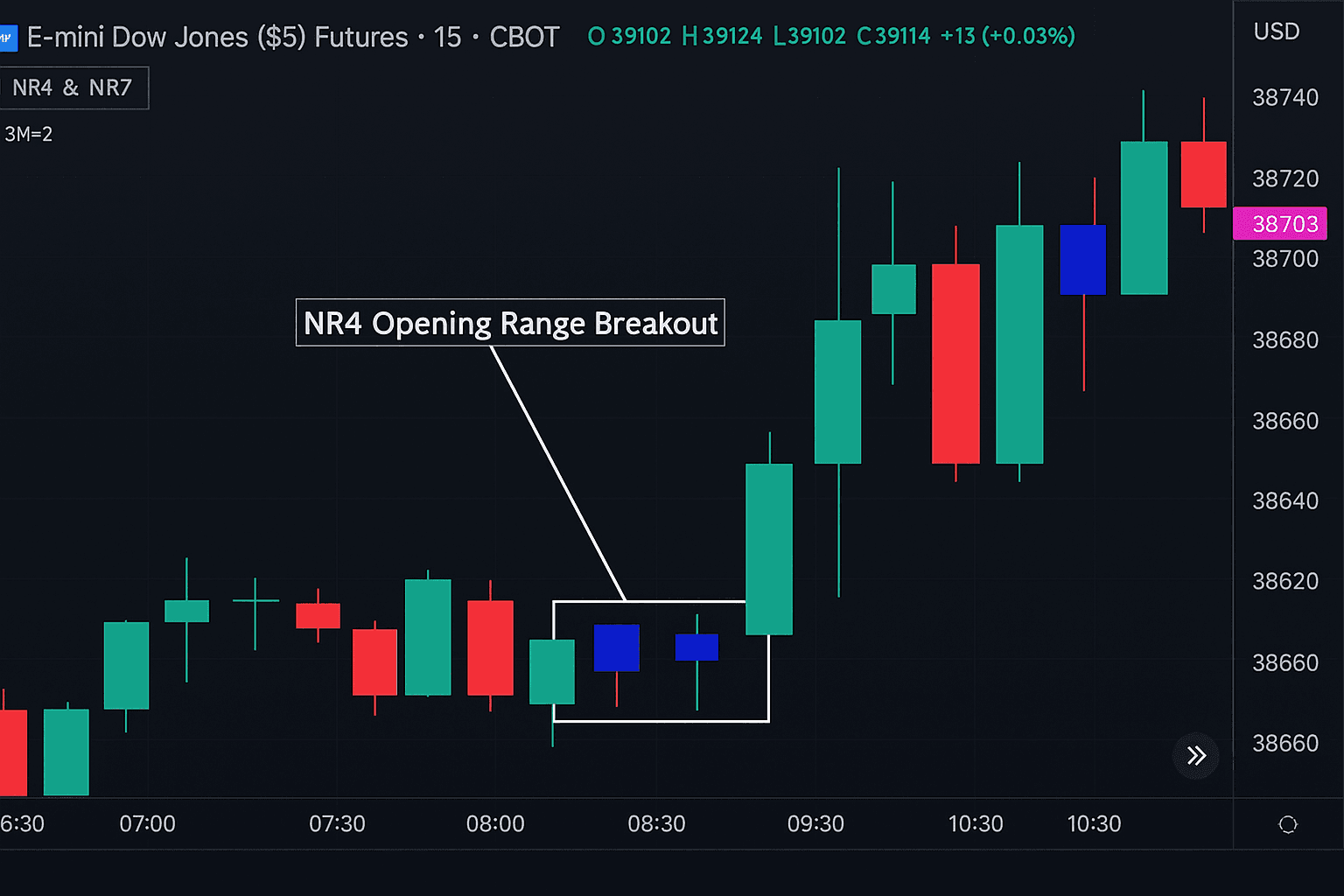
The Opening Range Breakout method built around NR4 and NR7 looks for a market that has compressed into an unusually tight range. NR4 marks the narrowest range in the last four sessions. NR7 does the same over seven sessions. The idea is simple - compression often sets up expansion.
Why This Approach Works
These patterns reflect a basic rhythm in the financial market. Quiet phases often lead into sharper movement once new order flow arrives. In crypto trading, that can happen quickly, especially around session overlaps or news-driven sentiment shifts.
Why Day Traders Watch NR4 and NR7
Breakout potential -Tight ranges can precede strong directional moves.
Clear structure -The narrow bar gives obvious reference points for entries and stops.
Flexible use -Traders can apply the idea across different assets and intraday timeframes.
Day Trading Strategies Using NR4 and NR7
Strategy 1 - Breakout entries
After an NR4 or NR7 setup appears, traders often wait for price to move above the high or below the low of that narrow bar. The break itself provides the signal, and the opposite side of the range can guide risk placement.
Strategy 2 - Trade with the larger trend
Using a moving average or MACD alongside the setup can filter weaker breaks. If the breakout lines up with the bigger trend, the odds often improve.
Strategy 3 - Range-based targets
Some traders project the height of the narrow range from the breakout point to estimate a target. Others use recent swing levels. I have found this especially useful on highly active crypto charts where a compact setup can release quickly and then stall just as fast.
NR4 and NR7 give traders a structured way to approach breakout conditions after contraction. Paired with decent risk control, they can be a practical addition to a short-term system.
3 - MACD
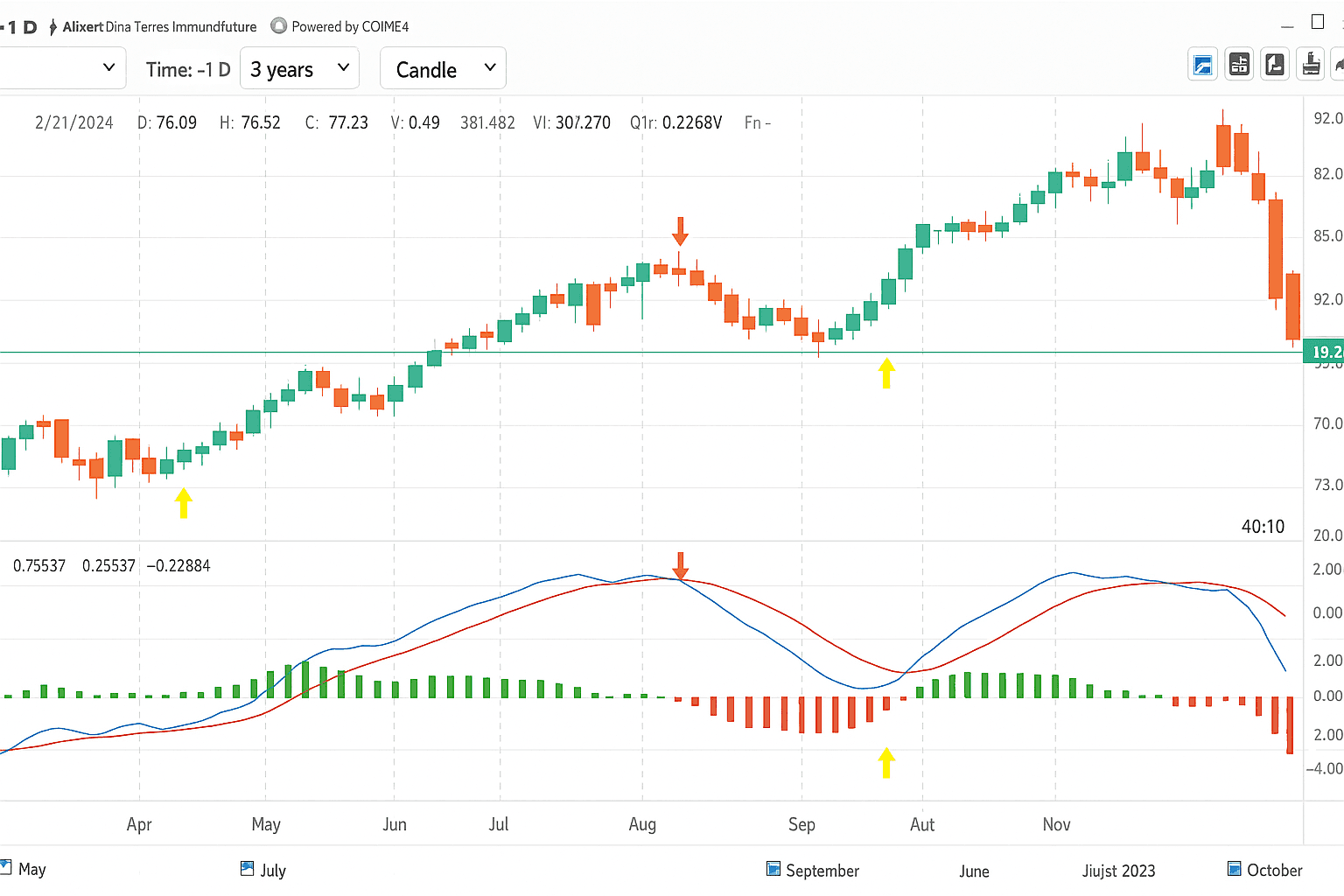
MACD, short for Moving Average Convergence Divergence, is a momentum indicator built from the relationship between two EMAs. It is widely used in both stock and crypto trading because it helps frame trend strength and possible shifts in direction.
The core parts are the MACD line, the signal line, and the histogram. The histogram measures the distance between the two lines, which makes changes in momentum easier to spot at a glance.
Why This Indicator Works
MACD is useful because it blends trend-following behavior with momentum analysis. Crossovers can mark possible buy or sell signals. Divergence can hint that a trend is weakening. The zero line can also help show whether bullish or bearish pressure has taken control.
Why Day Traders Use MACD
Momentum shifts -MACD often catches changes in pace before they are obvious from price alone.
Entries and exits -The line structure gives traders a clear signal framework.
Potential reversals -Divergence can warn that a move is losing force.
Day Trading Strategies Using MACD
Strategy 1 - Signal-line crossovers
A bullish signal appears when the MACD line crosses above the signal line. A bearish signal appears on a cross below. These setups are common because they are easy to read in real time.
Strategy 2 - Zero-line confirmation
When MACD moves above zero, traders often read that as a sign the broader tone has turned bullish. A drop below zero can support a bearish view.
Strategy 3 - Divergence trades
If price makes a fresh low while MACD makes a higher low, downward momentum may be fading. The opposite can happen near highs. From what I have seen, divergence works best when it appears near a known area of support and resistance rather than in open space.
For traders asking what is the most accurate crypto trading indicator, MACD is a serious candidate in trending conditions. Still, no single tool stays accurate in every regime. Accuracy improves when the indicator matches the structure of the market.
4 - The Stochastic Oscillator
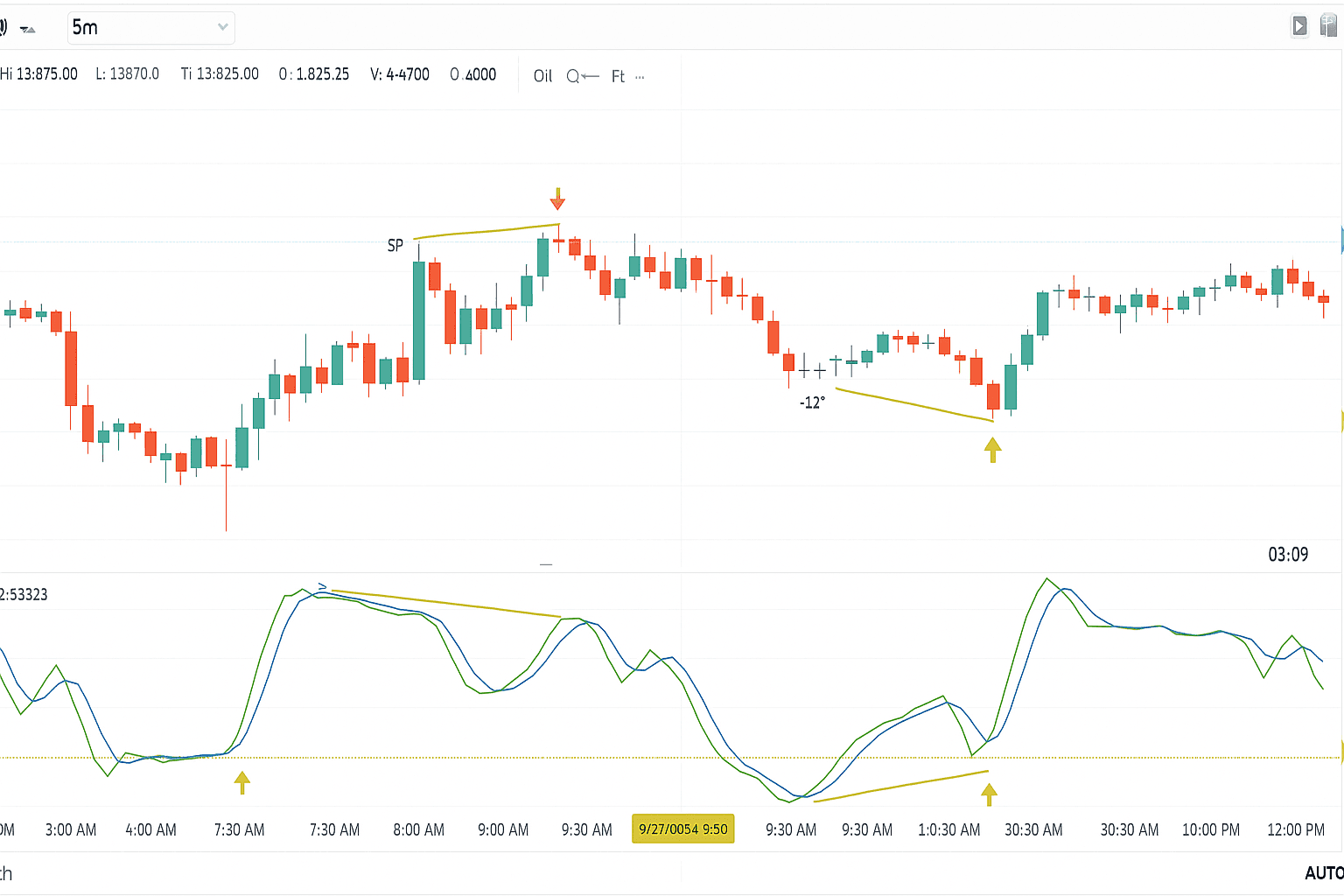
The stochastic oscillator compares the latest closing price with the recent trading range. It moves between 0 and 100 and is designed to highlight overbought or oversold conditions that may lead to a turn in price.
Why This Indicator Works
Its main strength is sensitivity. Because it reacts quickly, traders can spot short-term shifts in momentum without waiting for a slower indicator to catch up. That makes it useful in crypto, where short intraday rotations happen fast.
Why Day Traders Use the Stochastic Oscillator
Fast reaction -It responds quickly to small changes in price movement.
Short-term timing -It can help identify spots where a pullback may be ending.
Reversal clues -Divergence and crossovers can point to fading pressure.
Day Trading Strategies Using the Stochastic Oscillator
Strategy 1 - Overbought and oversold zones
Readings above 80 can suggest the asset is stretched. Readings below 20 can suggest exhaustion to the downside. These levels work best as alerts rather than automatic trade triggers.
Strategy 2 - Divergence
When price pushes to a new low and the oscillator forms a higher low, bearish momentum may be weakening. A mismatch at highs can imply the reverse.
Strategy 3 - %K and %D crossovers
A bullish crossover often matters more when it happens in lower territory. A bearish crossover tends to matter more near the upper zone. I usually find this tool cleaner in range-bound action than in a strong trend.
The stochastic oscillator is a useful timing aid, though it works better when paired with another form of confirmation such as price structure or volume.
5 - Relative Strength Index
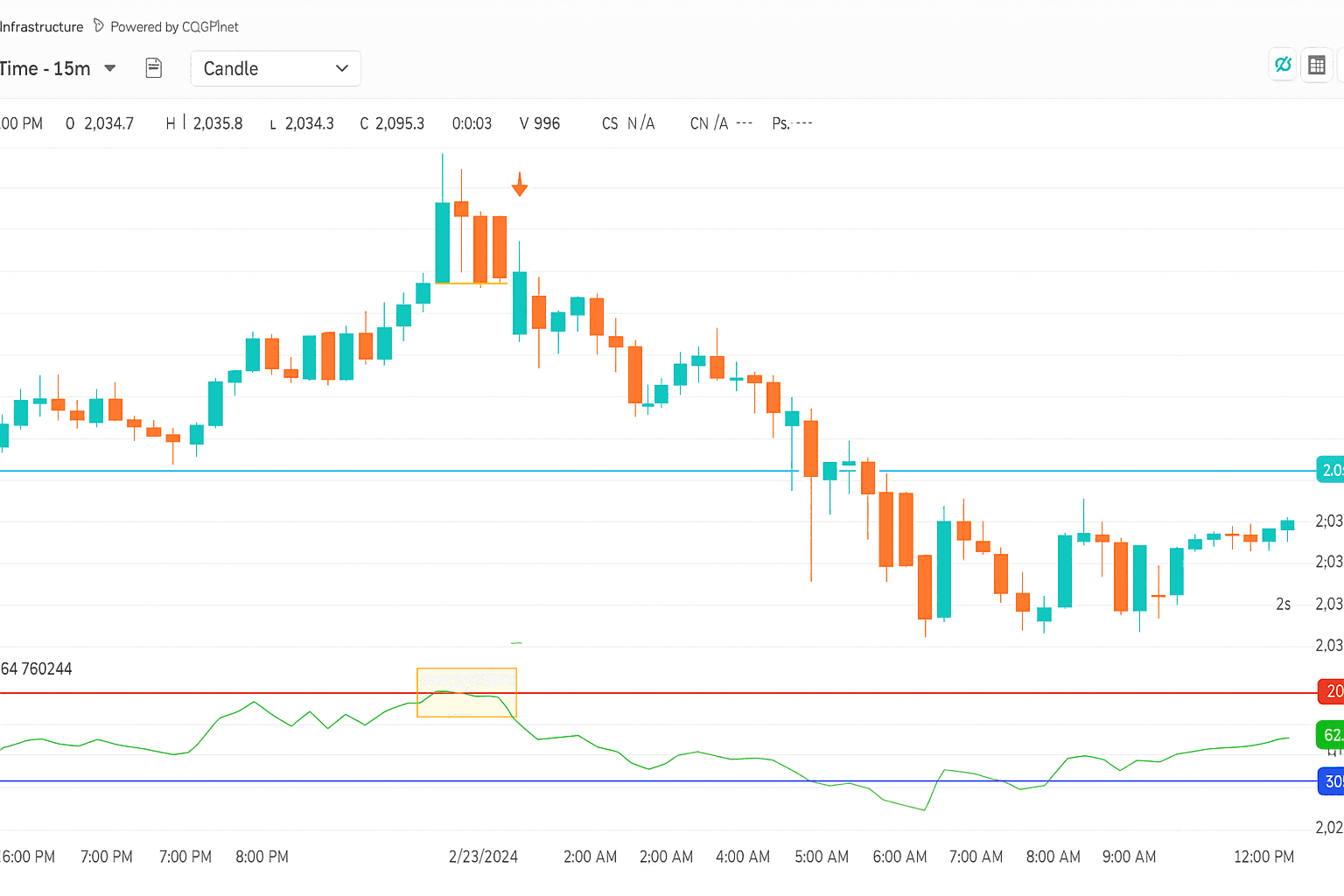
The relative strength index, or RSI, is a momentum oscillator created by J. Welles Wilder. It tracks the speed of recent price changes on a scale from 0 to 100.
Most traders read values above 70 as overbought and values below 30 as oversold. RSI also helps assess the force behind a move by comparing recent gains with recent losses.
Why This Indicator Works
RSI is especially useful for spotting potential reversals in sideways markets. It also helps traders judge whether momentum remains healthy or is beginning to fade. In crypto day trading, that makes it one of the first indicators many people learn for good reason.
Why Day Traders Use RSI
Fast signals -RSI reacts quickly when price stretches too far in one direction.
Divergence -It can show a disconnect between momentum and price before a turn becomes obvious.
Trend support -The 50 level often acts like a momentum divider during active sessions.
Day Trading Strategies Using RSI
Strategy 1 - Overbought and oversold readings
Some traders look for short setups above 70 and long setups below 30. Others tighten the thresholds to 80 and 20 when volatility is elevated, which can reduce false triggers.
Strategy 2 - RSI divergence
If price prints a new low while RSI forms a higher low, a rebound may be building. A higher high in price with a lower high in RSI can warn of fading upside momentum. This is one of the cleaner ways RSI is used in crypto trading.
Strategy 3 - Failure swings
A bullish failure swing develops when RSI moves out of oversold territory and then breaks a prior swing high without slipping back. The bearish version forms on the opposite side. These patterns focus on the indicator itself rather than the candle chart.
For traders asking how RSI can be used in crypto trading, the short answer is timing. It helps with reversals, with divergence, and with reading whether momentum is actually supporting the move on screen.
6 - Bollinger Bands
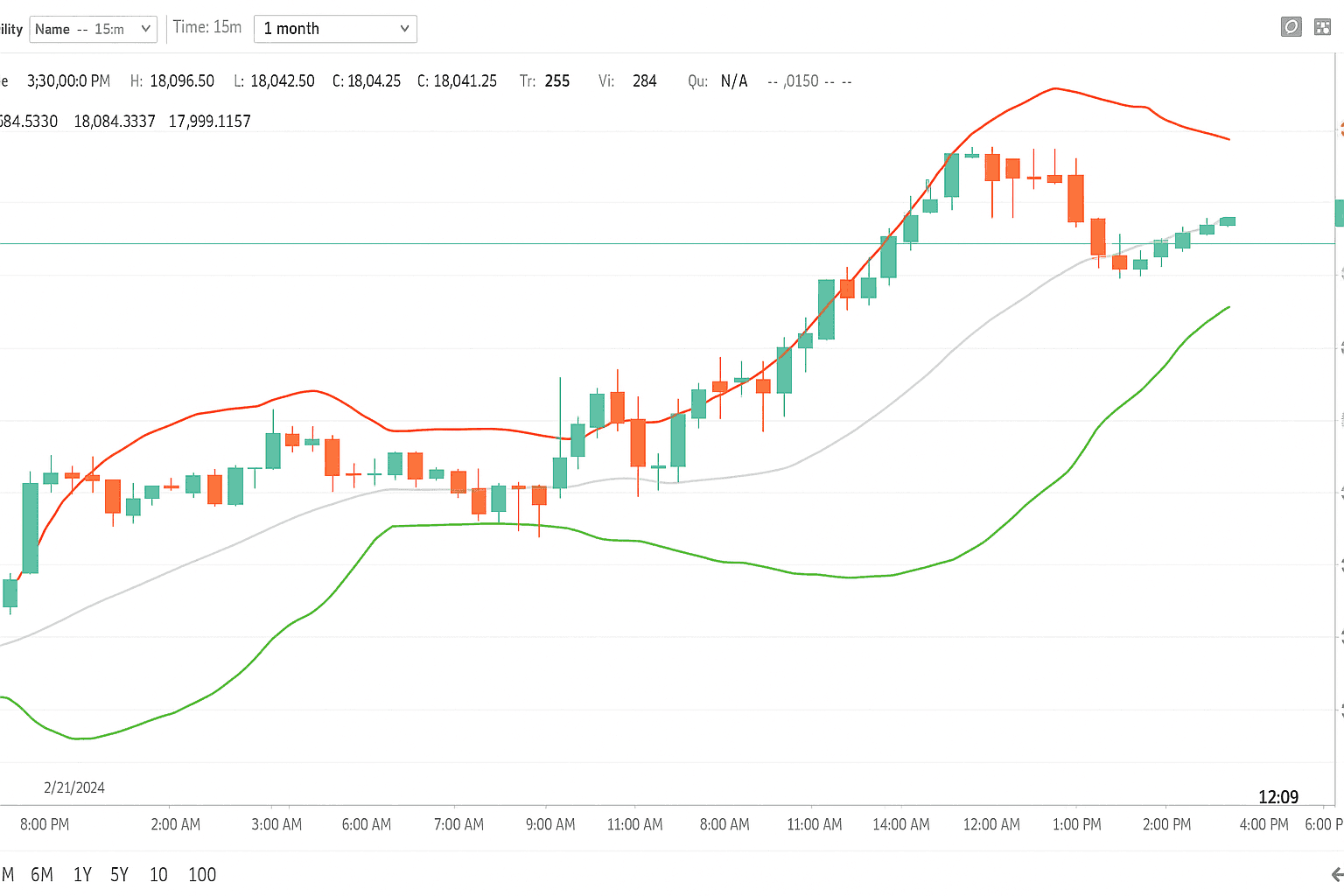
Bollinger Bands are a volatility tool created by John Bollinger in the 1980s. The structure uses a middle band based on an SMA, along with an upper and lower band placed using standard deviation.
As volatility expands, the bands widen. As price quiets down, they contract. That shifting width gives traders an immediate sense of how active the market is.
Why This Indicator Works
Bollinger Bands help frame whether price is relatively stretched or compressed. That makes them useful for mean-reversion ideas, but also for tracking trend continuation and possible breakouts.
Why Day Traders Use Bollinger Bands
Volatility reading -The bands expand and contract with market activity.
Trend context -Price behavior around the outer bands can show whether a move is still healthy.
Practical levels -Traders often use the bands for targets or stop placement.
Day Trading Strategies Using Bollinger Bands
Strategy 1 - The squeeze
When the bands tighten, price is often coiling. A break above the upper band or below the lower one can hint that a stronger move is beginning. Volume helps with confirmation here.
Strategy 2 - Trend continuation
In a firm uptrend, price may keep pressing the upper band. In a downtrend, it may keep leaning on the lower band. The middle band can then act as a useful pullback level.
Strategy 3 - Band bounces
Traders sometimes fade a touch of the outer band and look for reversion toward the average. This works better when price is moving inside a range rather than accelerating in one direction.
How can Bollinger Bands be used in crypto trading? Mainly as a volatility framework. They help traders spot reversals, gauge trend health, and prepare for compression breaks. I checked this approach across several volatile pairs, and the squeeze remains one of the cleaner visual setups when volume also supports the move.
7 - Fibonacci Retracement
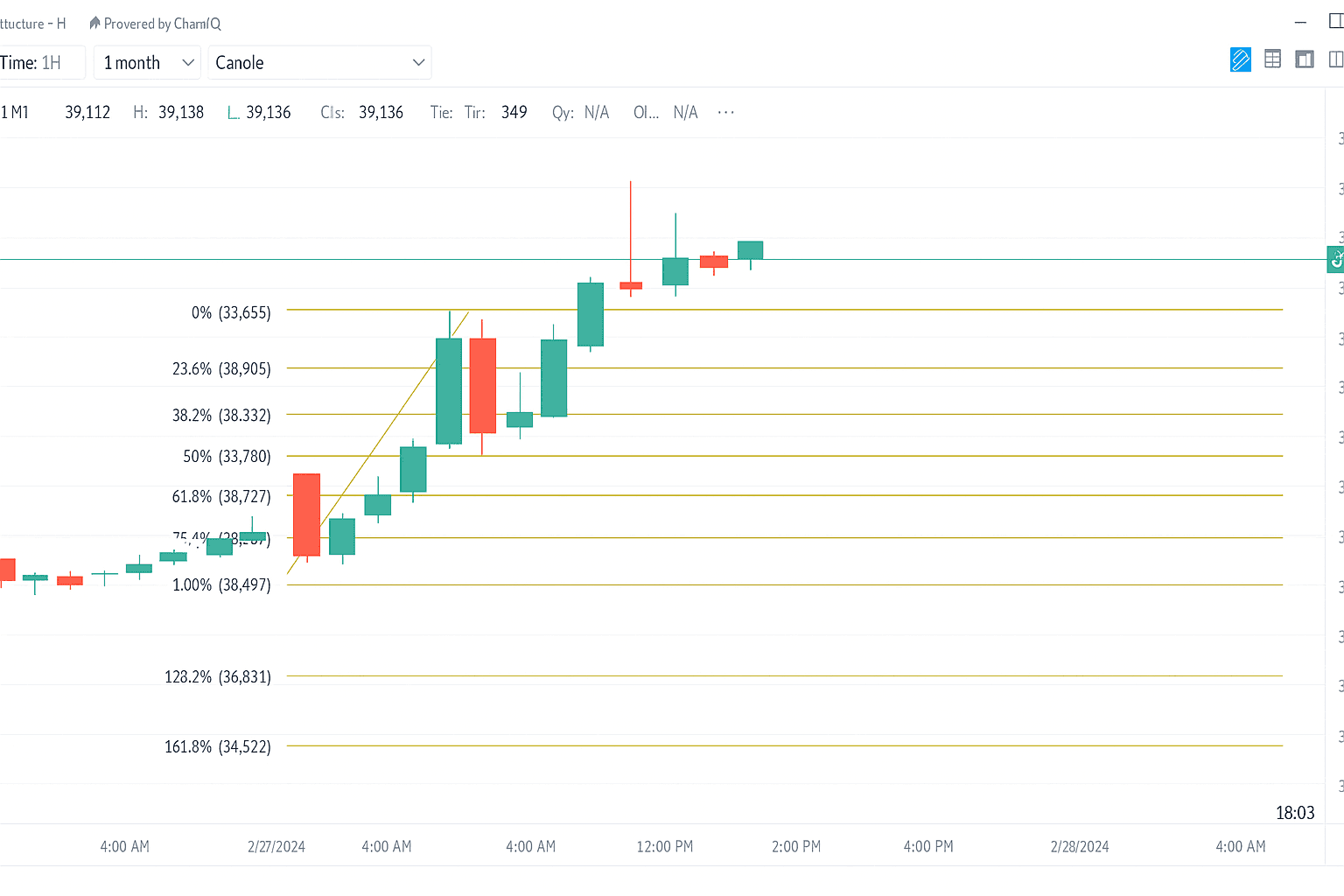
Fibonacci retracement uses horizontal levels to estimate where support and resistance may appear during a pullback. Traders draw these levels over a completed move and then watch how price behaves as it retraces.
The method is built from ratios derived from the Fibonacci sequence. Among the commonly watched levels, the 61.8 percent area tends to receive the most attention.
Why This Indicator Works
Fibonacci levels often matter because traders collectively pay attention to them. In practice, they become reference points where orders may cluster, and that can shape price response. They are especially helpful when paired with a moving average or a horizontal level that already matters on the chart.
Why Day Traders Use Fibonacci Retracement
Potential turning points -Retracement levels can highlight where a pullback may stall.
Trade planning -They help with entries and exits inside a larger trend.
Risk control -They offer useful structure for stop placement.
Day Trading Strategies Using Fibonacci Retracement
Strategy 1 - Pullback entries
A trader may wait for price to retrace toward a key level and then look for confirmation before joining the original trend.
Strategy 2 - Breakout context
After a period of tight consolidation, a push beyond an important Fibonacci level can support a breakout case.
Strategy 3 - Stop and target planning
Stops can be placed just beyond a retracement level, while exits may be planned near another level likely to act as resistance or support.
Fibonacci retracement rarely works well in isolation. It becomes more reliable when it overlaps with another chart feature, much like two geospatial layers lining up over the same coordinate.
8 - VWAP
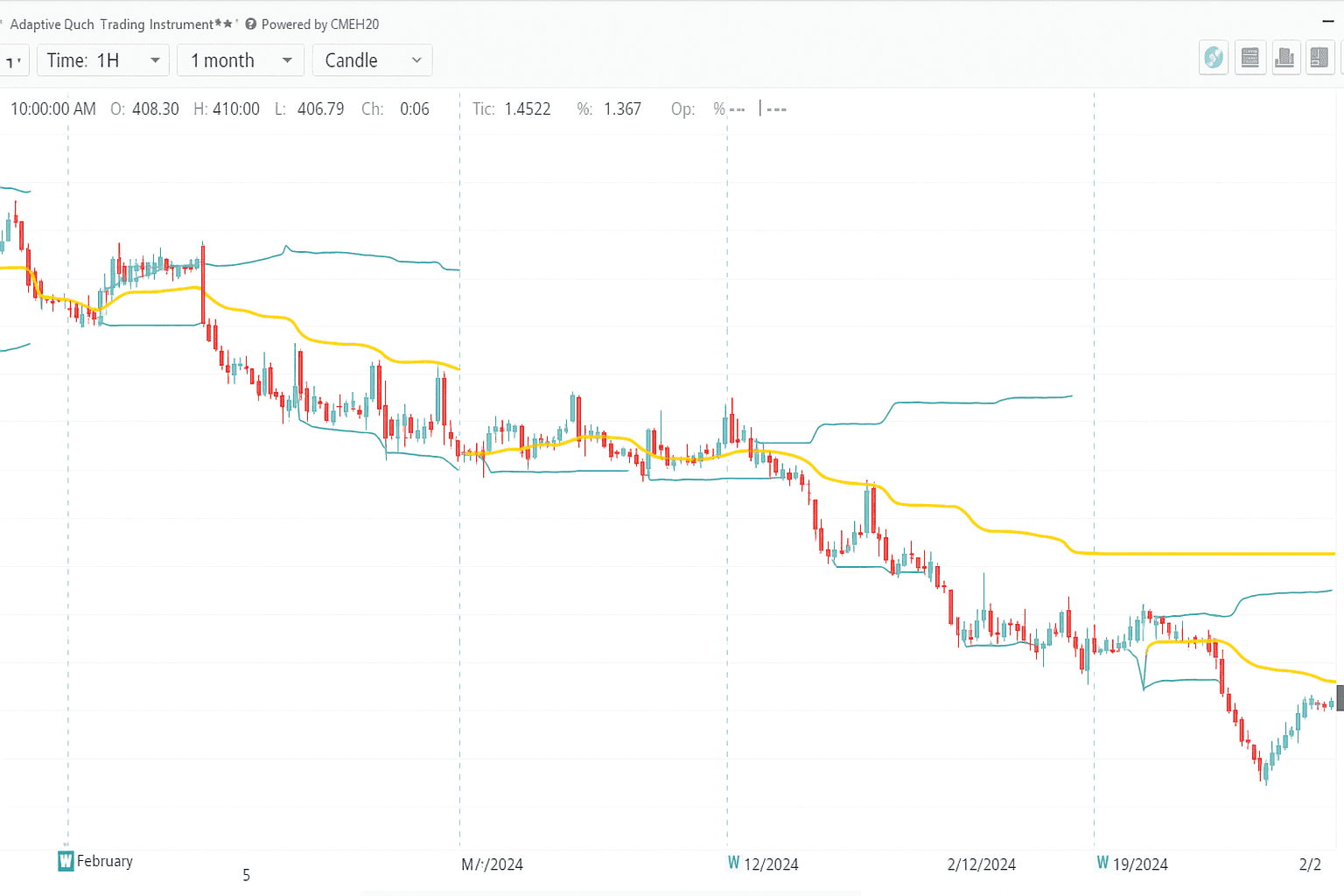
VWAP stands for Volume-Weighted Average Price. It calculates the average price traded during the session while giving more influence to higher-volume transactions.
That makes VWAP useful as a benchmark. It shows where the bulk of participation has occurred, which helps traders judge whether the current price is relatively efficient or stretched.
Why This Indicator Works
VWAP combines price with volume data, so it reflects more than a simple average. In active intraday markets, that makes it a practical measure of fair value. It also helps identify where liquidity has concentrated.
Why Day Traders Use VWAP
Trend reading -Price above VWAP often supports a bullish intraday view, while price below it leans bearish.
Trade location -It can help traders avoid chasing far away from the session average.
Risk framing -VWAP provides a reference line for entries, exits, and invalidation.
Day Trading Strategies Using VWAP
Strategy 1 - Pullbacks to VWAP
In a trend, traders often wait for price to return to VWAP and then watch whether it holds. If support appears in an up move, that can create a reasonable entry area.
Strategy 2 - Reversals around VWAP
A move back through VWAP after holding on one side can hint that market sentiment is shifting. This can be especially useful early in the session.
Strategy 3 - VWAP as support and resistance
Price often reacts to the line repeatedly through the day. A clean bounce can reinforce the current direction, while a strong break can imply a larger intraday rotation.
Why is volume important for crypto day trading? Because it confirms whether price movement has backing. VWAP handles that idea elegantly by weighting average price with participation, which can help separate a real move from a thin one.
9 - Money Flow Index
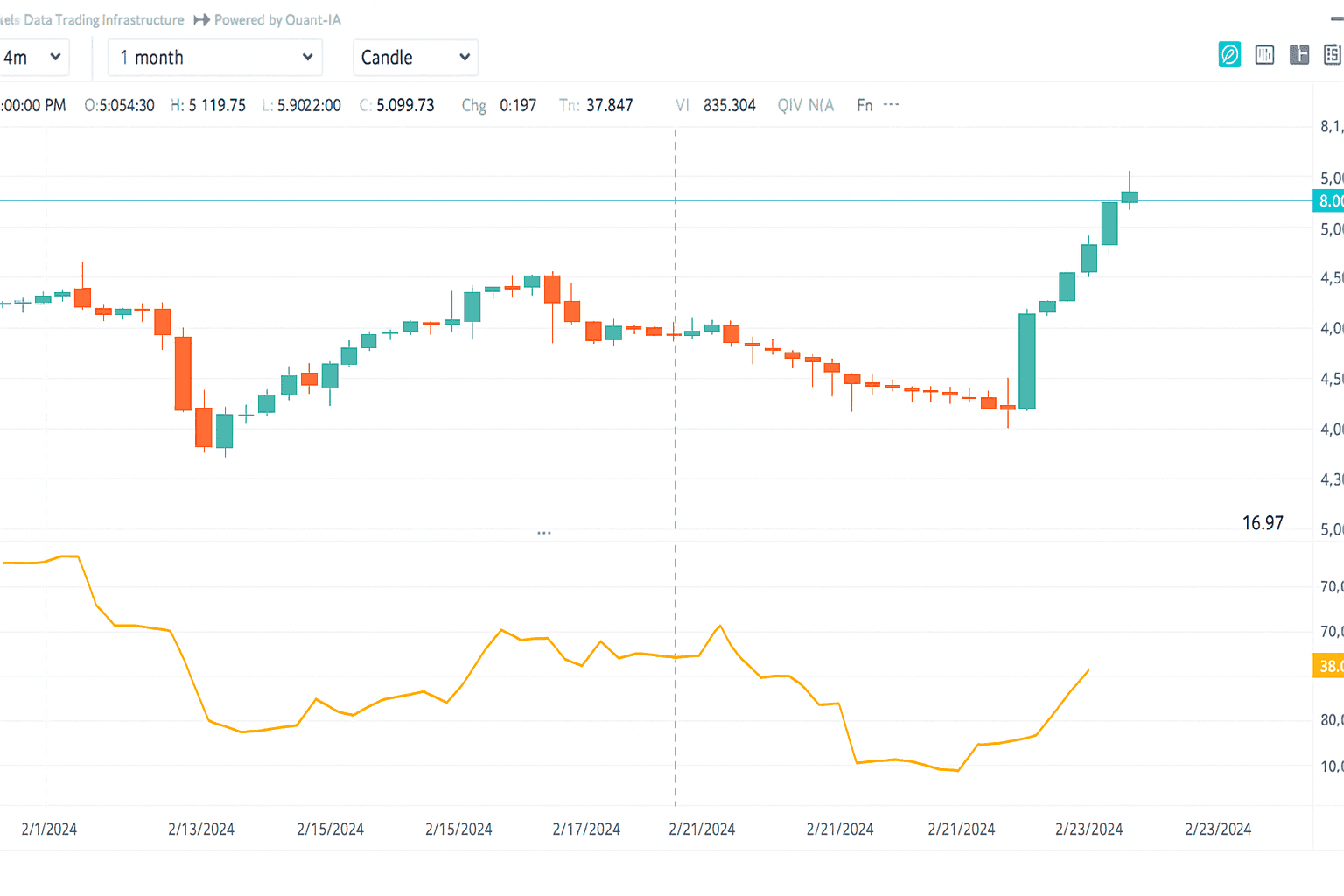
The Money Flow Index, or MFI, is an oscillator that blends price and volume to estimate buying or selling pressure. It runs from 0 to 100 and is often viewed as a volume-aware relative strength index.
Why This Indicator Works
Because MFI includes volume, it can reflect actual market momentum more clearly than price-only oscillators in some situations. If price rises while money flow lags, the move may be weaker than it looks.
Why Day Traders Use MFI
Sentiment clues -It helps show whether a move is supported by meaningful participation.
Overbought and oversold zones -Readings above 80 or below 20 can warn of possible exhaustion.
Divergence -Mismatch between MFI and price can point to a coming turn.
Day Trading Strategies Using MFI
Strategy 1 - Extreme readings
When MFI reaches oversold territory, some traders look for signs of a rebound. When it reaches overbought territory, they may watch for fading strength.
Strategy 2 - MFI divergence
If price records a new high while MFI does not confirm it, upside pressure may be weakening. The same logic works in reverse on lows.
Strategy 3 - Pairing MFI with another tool
MFI becomes stronger when combined with structure from a channel or a moving average. During my own testing, that extra filter usually cut down on weaker signals.
MFI gives a more layered picture of the asset by combining money flow with price behavior. For short-term trading, that added context can be useful during high-volume rotations in BTC and ETH markets.
10 - Ichimoku Cloud Kumo
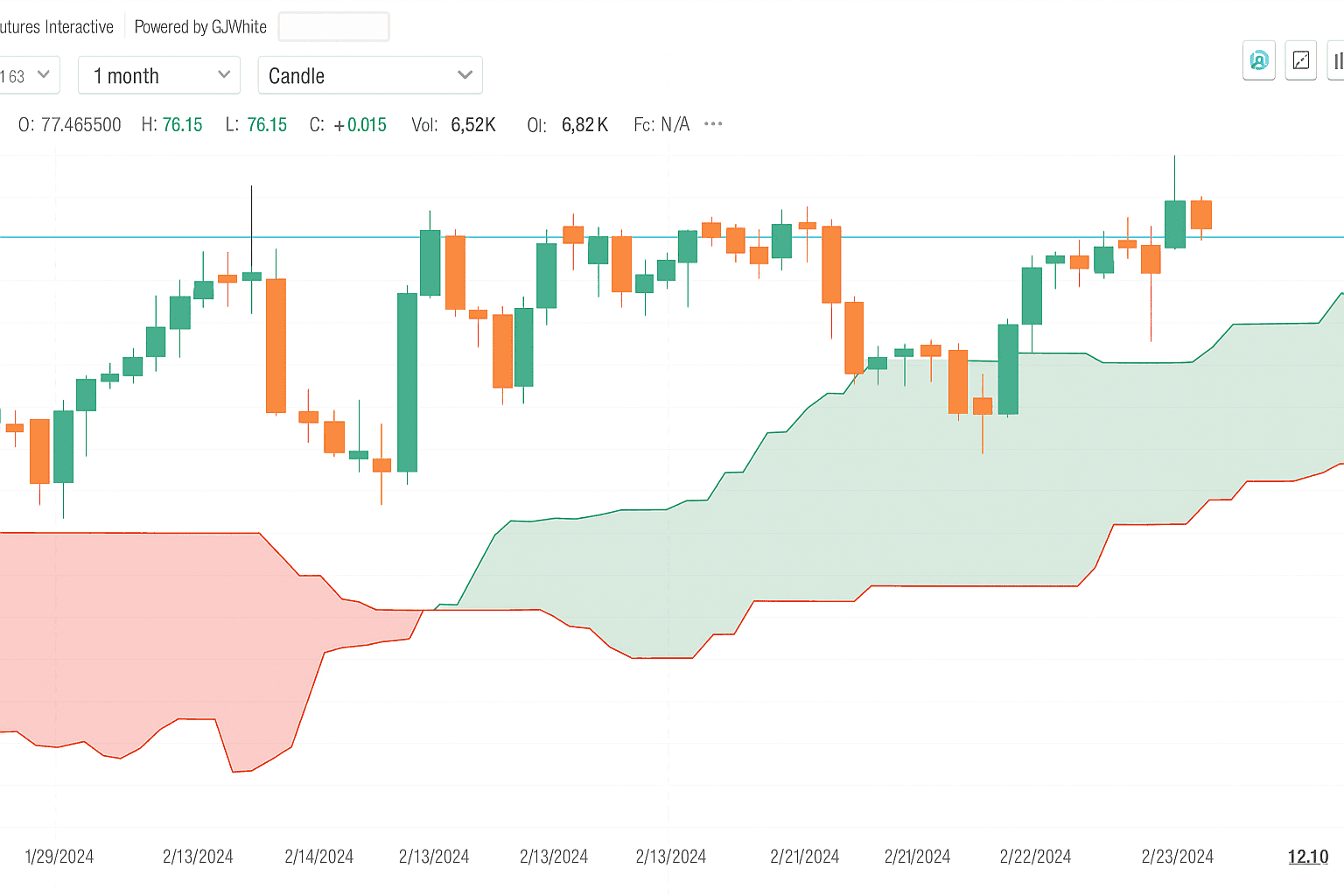
The Kumo, or cloud, sits at the center of the Ichimoku system. It is formed by Senkou Span A and Senkou Span B, which are projected forward on the chart. That forward projection makes the cloud different from many other trading indicators.
Why This Indicator Works
The Kumo gives a forward-looking view of possible support and resistance while also helping define trend direction. The cloud’s thickness matters too. A thicker zone often suggests stronger underlying structure, while a thinner one may be easier for price to break through.
Why Day Traders Use the Kumo
Trend identification -Price above the cloud points to a bullish environment, while price below it points lower.
Projected support and resistance -The cloud can show future areas where price may react.
Volatility clues -Cloud width offers context around strength and instability.
Day Trading Strategies Using the Kumo
Strategy 1 - Cloud breakouts
A break above the cloud may signal a long opportunity. A move below it may support a short setup.
Strategy 2 - Thickness analysis
When the cloud grows thicker, traders often read that as stronger support or resistance developing. Thin cloud zones tend to be more fragile.
Strategy 3 - Kumo twists
A twist forms when the leading spans cross, changing the cloud structure. This can hint that trend conditions may be shifting ahead.
The Ichimoku cloud is one of the more complete crypto trading indicators because it blends trend, momentum context, and projected levels on one view. I read it a bit like a route layer in GIS. The future path is not guaranteed, but the terrain ahead becomes easier to anticipate.
The Bottom Line
For traders asking what indicators are best for crypto day trading, the most practical answer is a small set that covers trend, momentum, and volume without overwhelming the chart. Common starting points include a moving average and RSI. Depending on the setup, MACD or VWAP can then add useful context.No single indicator guarantees profits. Consistent results come from skill, discipline, and risk management.
No single indicator guarantees profits. Consistent results come from skill, discipline, and risk management.
As for the most accurate crypto trading indicator, there is no universal winner. Accuracy changes with market structure. RSI can be excellent in range conditions, while MACD and a moving average often perform better during cleaner trends.
And can you make $100 a day trading crypto? It is possible in theory, but the odds change a lot with account size and leverage. Market volatility matters too, and so do trading costs such as fees or slippage. A target like that can push traders into forcing setups, holding losers too long, or taking oversized risk after a slow session. In my analysis, fixed daily goals sound clean on paper, but live markets rarely move in a straight line. Indicators help with timing and decision-making. They do not create income on their own.


No comments yet. Be the first to share your thoughts.