


What Is Transaction Hash in Crypto?


When people ask, “What Is Transaction Hash in Crypto,” they are usually trying to understand the code that identifies a transfer on a blockchain. In practical terms, a transaction hash, often called a TXID, helps verify that a cryptocurrency payment was actually sent, where it went, and whether the network confirmed it. From what I’ve seen, it works a lot like a reference point on a map: one small data marker that lets you locate a much larger trail of information.
Definition of a Transaction ID
A transaction hash, also referred to as a transaction ID or TXID, is a unique identifier created the moment a crypto transfer is submitted to the network. It is tied to the transaction’s recorded data and becomes the standard way to locate that operation on the blockchain.
Each entry is represented by a string of alphanumericals produced from transaction information such as the sender address, recipient address, transferred amount, and sometimes related metadata. That output is generated by a cryptographic hash function, which turns the source information into a fixed-format result.
At first glance, a TXID can look like random characters. In reality, every character matters. Even a tiny change in the underlying transaction data produces a very different result, which is exactly what gives the identifier its reliability and distinctiveness.
| Hash Function | Output Length | Common Use in Crypto |
|---|---|---|
| SHA-256 | 256 bits | Used in Bitcoin transaction processing and broader blockchain security design |
| RIPEMD-160 | 160 bits | Often used in Bitcoin-style address generation and public-key workflows |
SHA-256, short for Secure Hash Algorithm 256-bit, creates a fixed-length output from input data. In networks such as Bitcoin, this process is central to building a transaction ID and preserving immutability. If the transaction data changes, the output changes as well, which makes tampering easy to detect.
RIPEMD-160 is another cryptographic method often used in cryptocurrency infrastructure, especially in workflows connected to address generation. It produces a shorter 160-bit result and is widely associated with public-key handling in systems built around Bitcoin-style design.
A TXID also serves as a compact record pointer. Once you look it up, you can usually see the main information attached to the transfer, including source and destination addresses, transferred value, and sometimes extra notes such as memos or destination tags.
Why Transaction Hashes Matter
The main reason transaction hashes matter is simple: they allow anyone to verify transaction details against public blockchain data. That improves transparency and makes it easier to confirm what happened without relying on a private ledger or internal database.
This identifier is also important for validation. A user can take the TXID, check whether the transfer was recorded, and monitor how many confirmations it has received. In my own testing, that lookup usually takes less than a minute on a good explorer, and it is often the fastest way to answer the question, “Did my crypto actually go through?”
For everyday use, the transaction hash is what turns a vague transfer into a traceable event. It gives senders and recipients a neutral reference they can both inspect, which is especially useful when there is a delay, a support ticket, or uncertainty about network status.Transaction hashes matter because they turn blockchain transparency into something practical: a transfer can be checked, traced, and verified by anyone with the right identifier.
It also helps users work more effectively with blockchain explorers and any cryptocurrency wallet that exposes transaction history. That combination of open network data and searchable identifiers is one of the clearest practical advantages of blockchain architecture.
Blockchain Explorers for TXIDs
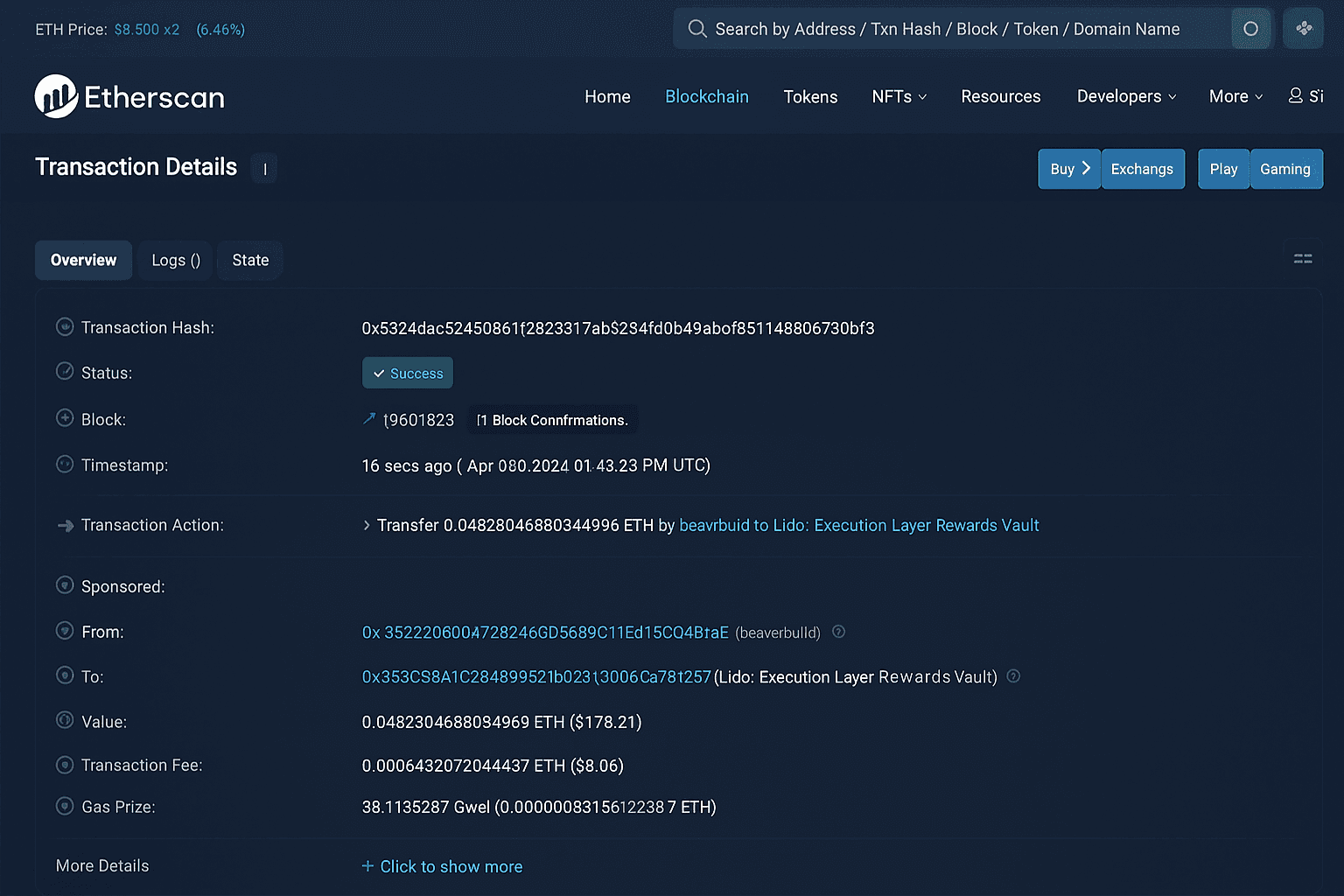
Blockchain explorers function a bit like search engines for on-chain activity. By entering a transaction hash, users can pull up details about status, confirmations, timestamps, fees, and possible issues. I tend to read these tools the way I would compare GIS layers: a single point is useful, but the surrounding context is what makes the data meaningful.
Services such as Etherscan, , and BscScan provide near real-time visibility into transfers. For both new users and experienced holders, they are among the most practical tools available for checking sender data, recipient data, and the amount moved across the network.
How to Get Your Transaction Hash
If you are wondering how to get your transaction hash, the usual starting point is your cryptocurrency wallet or exchange history. Most wallet apps list recent activity, and tapping into a specific transfer will often reveal the TXID. When I checked several wallet interfaces, it typically took 3 to 5 clicks to open the full transaction view.
Wallets designed for Bitcoin, Ethereum, and other major networks generally show this identifier inside the transaction details screen. In many cases, you can copy it directly and paste it into a blockchain explorer for independent verification.
This is also where many users first notice how a transaction hash looks. It is generally a long string of letters and numbers, sometimes all lowercase, sometimes mixed depending on the chain or tool displaying it. A Bitcoin TXID, for example, is often 64 hexadecimal characters, and an Ethereum transaction hash is also commonly 64 hexadecimal characters, usually displayed with a leading 0x in many wallets and explorers. A sample format might look like this: 0x4e3b2f1c9a7d8e6f5b4a39281716151413121110fedcba9876543210abcdef12. The important thing is not memorizing the pattern, but knowing where to find it and how to use it.
Common TXID Use Cases
Verification
One of the most common reasons to use a TXID is transaction verification. The hash gives both the user and the network a reliable way to check whether a transfer exists, whether it is pending, and whether it has been finalized by the blockchain.
Much like using a parcel tracking code, entering the hash into a blockchain explorer reveals the route the transfer has taken through the network. You can usually see the sender, the receiver, current status, and confirmation count. That information is especially useful when someone wants proof that a transfer was sent successfully.
In practical terms, the TXID is the closest thing crypto has to a digital receipt. If a payment is delayed or disputed, this is usually the first reference support teams ask for.
Preventing Double Spending
Another major role of the transaction hash is helping the network stop double spending. In digital currency systems, double spending refers to attempting to use the same value more than once. If that were possible at scale, trust in the system would break down quickly.
Because each transaction receives its own unique identifier and is checked by network participants, nodes can verify whether the same transfer has already been recorded. If the network sees that a conflicting transaction has already been processed, the duplicate attempt is rejected.
That validation process is one of the reasons blockchain systems remain dependable. It reminds me of cleaning noisy GPS traces: the signal only becomes trustworthy when duplicate or conflicting points are filtered out.
Can Anyone Do Anything With a Transaction Hash?
On its own, a transaction hash does not usually let someone spend your funds or take control of your wallet. It is primarily a reference, not a secret key. So if you share a TXID, you are typically sharing visibility into a transfer, not handing over account access.
That said, a TXID does expose information. Anyone who has it can often inspect the associated blockchain record, including wallet addresses, transferred amount, fees, and timing. If several hashes can be linked back to the same person, that pattern may reveal more about their activity than they intended.
So the short answer is yes, someone can do something with a transaction hash, but usually that “something” involves observation, analysis, or tracking rather than theft. Privacy is the real concern here.
Risks and Limitations
Although TXIDs are useful, they are not perfect. One limitation is transaction linking, where outside observers follow multiple transfers and start connecting them into a broader activity profile.
There is also the theoretical issue of hash collisions, especially if shorter hash formats are involved. A collision means two different inputs produce the same output. Modern systems are built to make that outcome extremely unlikely, but the concept still matters when discussing identifier design and security assumptions.
Another concern is public visibility. Since blockchain records are open by design, anyone with the right identifier can inspect transaction data. For many users, this is less a security flaw than a privacy tradeoff, but it is still significant.
Privacy Best Practices
Because transaction data is often searchable, it makes sense to adopt a few privacy habits when dealing with cryptocurrency.
- Use Fresh Addresses:Generating a new address for separate transfers can make it harder for outside observers to group your activity under one identity.
- Be Careful With Mixing Services:Some users turn to coin-mixing tools to blur transaction trails, but these services introduce complexity and additional risk. They are not ideal for beginners.
- Share TXIDs Selectively:Only provide a transaction hash to people or support teams that genuinely need it. Broadcasting it publicly can reveal more of your history than expected.
- Consider Privacy-Focused Coins:Some blockchain networks are designed with stronger privacy features, which can reduce the ease of address and transaction tracing.
Other Useful Blockchain Identifiers
Beyond the TXID, several other identifiers help explain what is happening on-chain. The most useful ones for everyday investigation are block height, block hash, and nonce.
- Block height: shows where a block sits in the chain.
- Block hash: identifies the block itself and helps confirm integrity.
- Nonce: supports block creation in proof-of-work systems.
Block Height and Block Hash
Block height refers to where a block sits in the chain relative to earlier blocks. It gives users a simple way to understand sequence and progression across the blockchain. If you think of the chain as a route log, block height tells you where in that route a specific event was recorded.
The block hash is the unique identifier for the block itself. Like a transaction hash, it is created through a cryptographic process and used to confirm integrity. If the contents of the block are altered, the resulting hash changes, which makes tampering visible.
When I reviewed explorer data across several pages, block height and block hash were often the quickest way to place a transaction in context, much like checking coordinates against a broader base map.
Nonce and Its Role
The nonce, meaning “number only used once,” plays an essential role in mining-based blockchain systems. It is a variable miners adjust while trying to produce a valid block hash that satisfies the network’s difficulty rules.
This process is part of proof-of-work. Miners repeatedly change the nonce and test the result until a suitable hash is found. The first successful result allows that miner to append the next block, and the winning nonce becomes part of the proof that computational work was done.
From a systems perspective, the nonce is one of those small fields with outsized importance. It is not very visible to casual users, but it helps secure the chain at a foundational level.
Conclusion
A transaction hash is one of the most useful pieces of information in crypto because it gives every transfer a searchable, verifiable identity on the blockchain. Whether you are using Bitcoin, Ethereum, or another cryptocurrency network, the TXID is the standard tool for checking status, confirming delivery, and reviewing public transaction data.
It matters because it supports transparency, validation, and protection against issues such as double spending. It also helps answer practical questions users ask every day, including what a transaction hash is, how it looks, how to get it, and whether sharing it creates any risk.
Used carefully, a transaction hash makes blockchain activity easier to read and audit. Pair that with sound privacy habits, a reliable cryptocurrency wallet, and an understanding of related identifiers like block height, block hash, and nonce, and you have a much clearer picture of how digital transactions are tracked in 2026.


No comments yet. Be the first to share your thoughts.