


How to Trade on The Solana Network: The Solana Ecosystem Explained


This guide walks you through trading on the Solana network, explaining why its ultra-fast confirmations and negligible fees make it a strong fit for active crypto traders. You will learn the core parts of the ecosystem, practical onboarding steps, key platforms, risk controls, and how Solana stacks up against other blockchains.
Key Takeaways:
- A High-Level Tour of the Solana Ecosystem and Its Design
- Must-Know Decentralized Exchanges Built on Solana
- Step-by-Step: Getting Started With Trading on Solana
- How Solana Compares With Other Major Blockchains
- Main Risks, Security Practices, and What to Avoid
- What’s Next: Roadmap Themes and Community Momentum
Overview of the Solana Ecosystem
Solana is a high-throughput, decentralized blockchain engineered for speed, security, and scalability. Released in 2020, it quickly earned attention for handling several thousand transactions per second while keeping costs a fraction of a cent, placing it among the quickest permissionless networks.
At its core is Proof of History (PoH), a verifiable timekeeping method combined with Proof of Stake (PoS). By ordering events cryptographically before consensus, PoH accelerates processing without compromising on safety or validator diversity.
Its parallelized architecture supports a wide range of use cases, including dApps, DeFi protocols, NFTs, and an active memecoin market. The blend of performance, low fees, and scale makes Solana attractive for developers, traders, and long-term participants.
Key Decentralized Exchanges on Solana
Solana supports trading through both on-chain decentralized exchanges and centralized exchanges that list Solana-based tokens. Depending on your preferences, you can trade on a centralized venue such as Binance, Coinbase, or Kraken, or connect a wallet to trade directly on-chain.
- Jupiter
- Raydium
- Orca
- Mango Markets
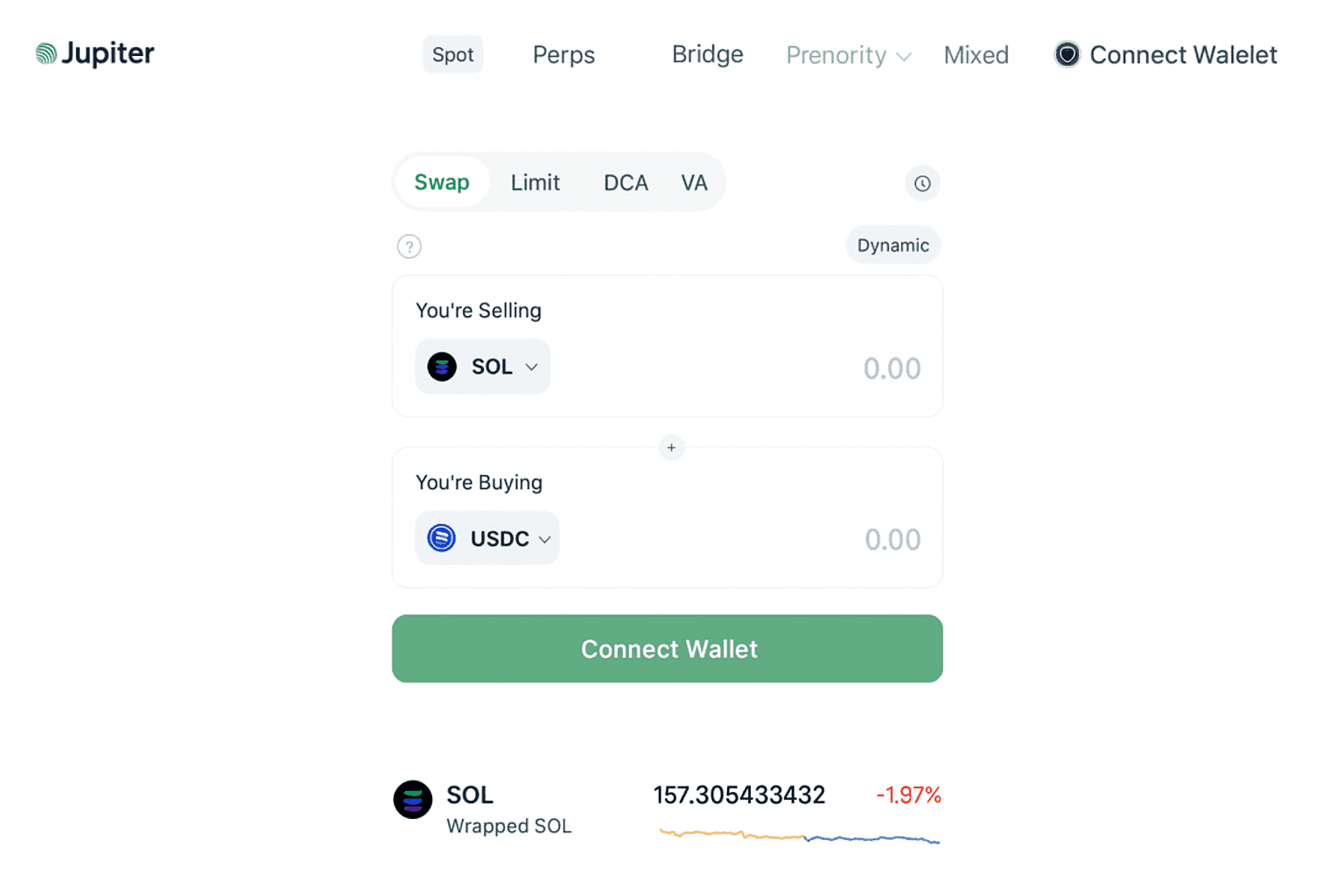
This leading aggregator scans multiple venues to surface the best route and price, often reducing slippage. Its intuitive interface and broad token coverage make it a favorite for efficient swaps and smart order routing.
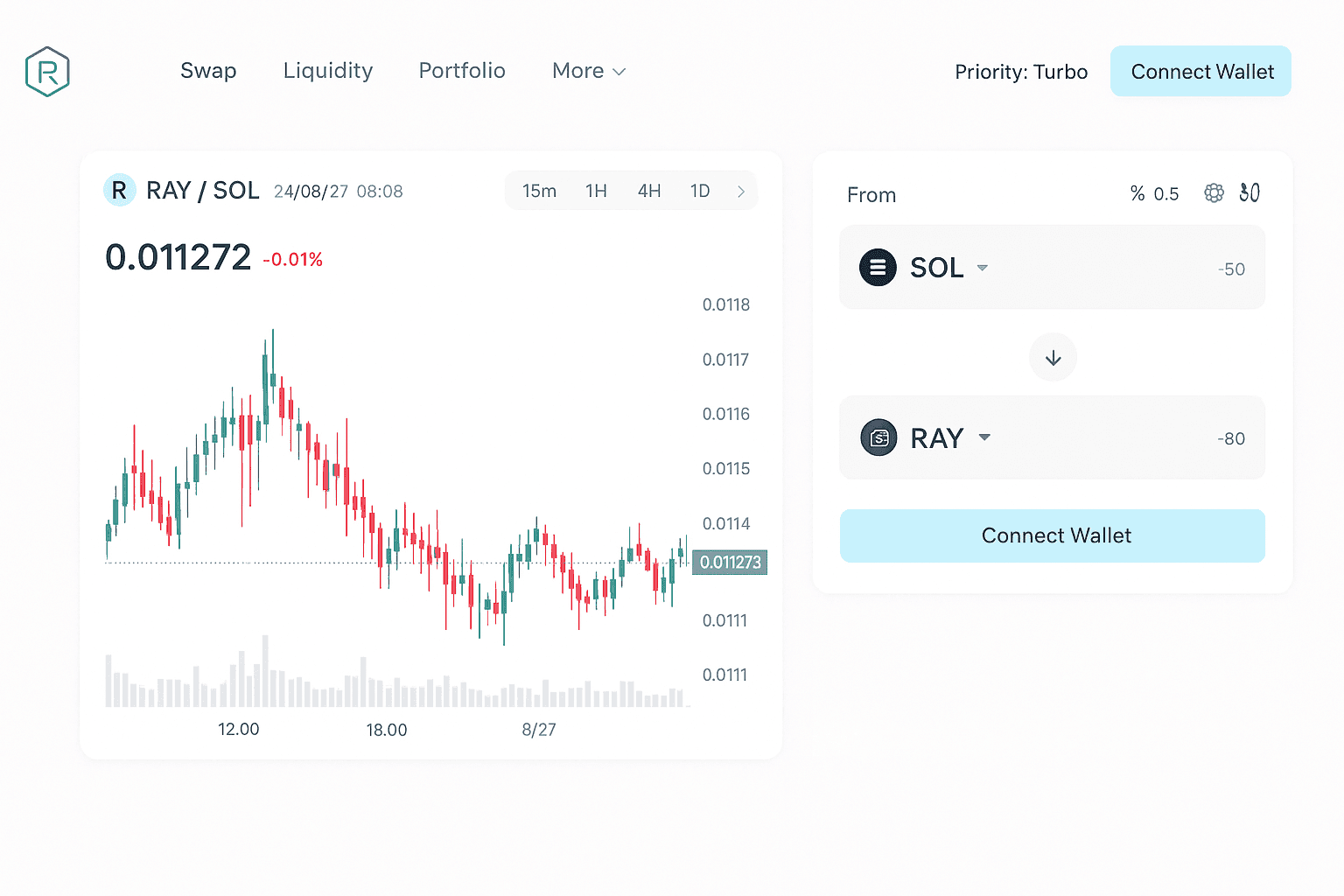
This protocol uses an automated market maker model and connects to order-book liquidity, offering fast swaps, deep liquidity, and yield-style strategies. Its mix of pooled liquidity and order-book execution helps both newcomers and pros find competitive fills.
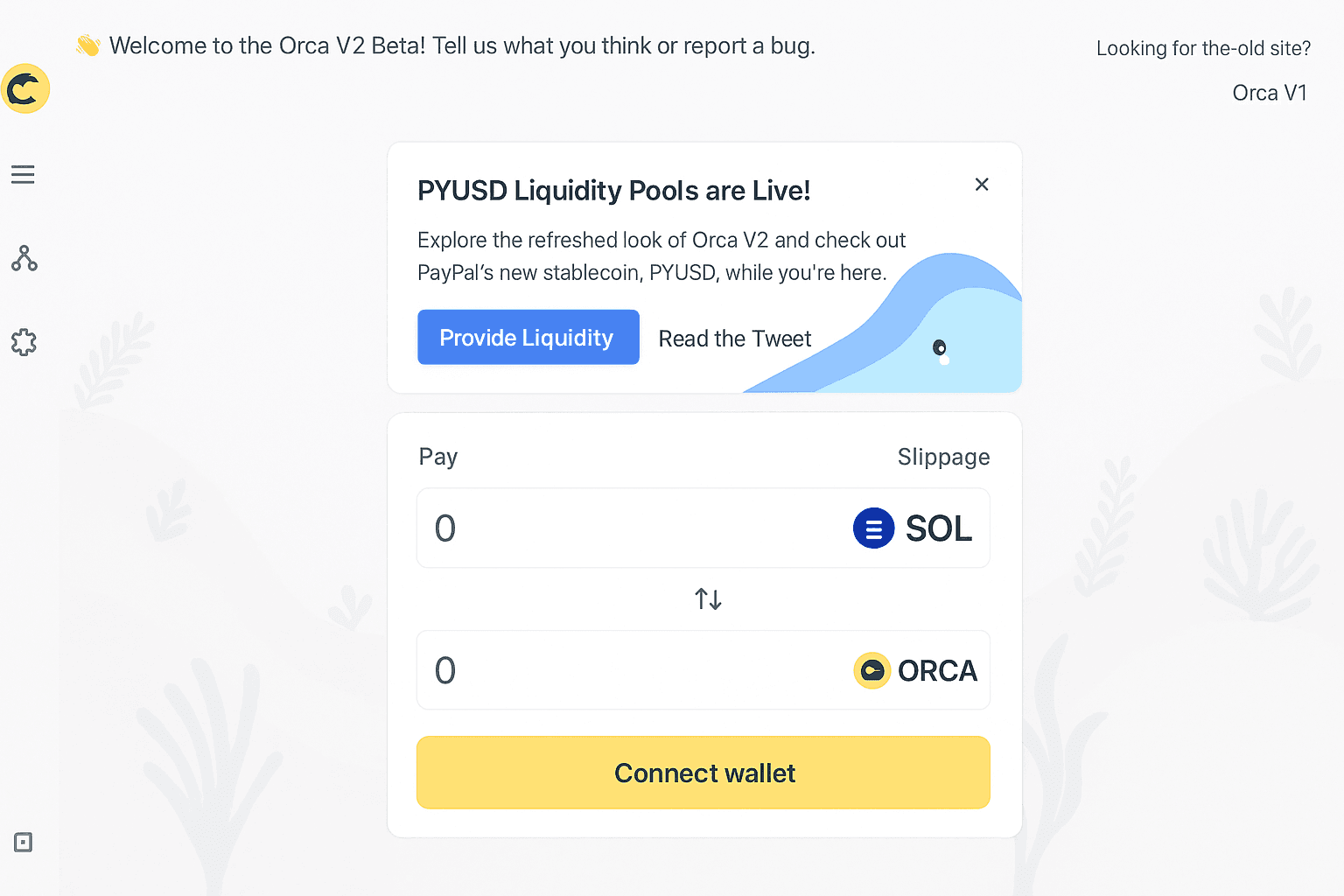
This venue emphasizes simplicity—“DeFi for the people.” Clear workflows for swaps and liquidity provision make it approachable, with strong community participation and clean UX for everyday use.
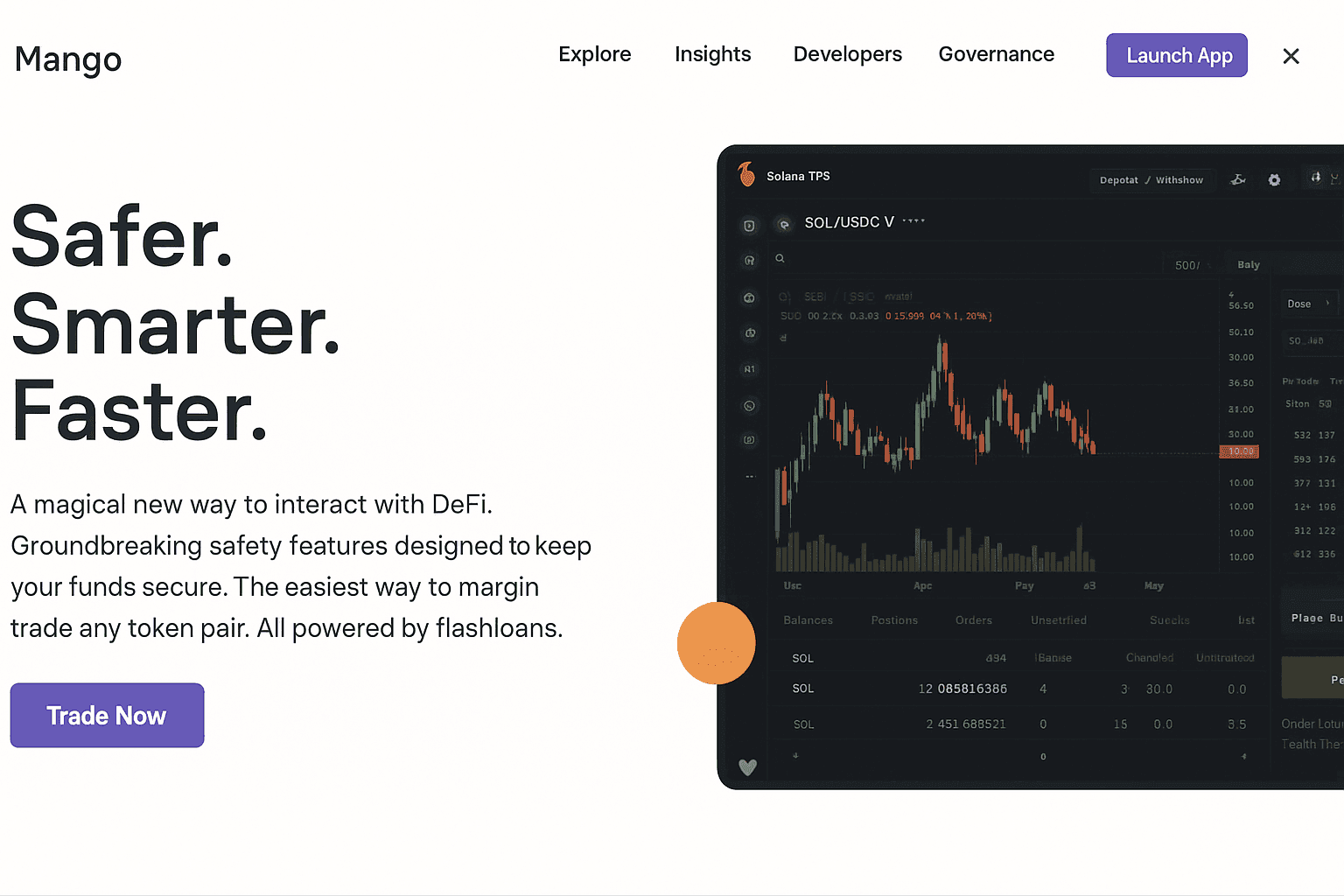
This platform focuses on advanced workflows, including margin, perpetual contracts, and decentralized lending. It pairs Solana’s speed with pro-grade tools for more sophisticated strategies.
How to Start Trading on Solana?
Getting started is straightforward. Because the network runs continuously and users participate globally, trading access is available 24/7. Follow these steps to set up your wallet, fund it, connect to a decentralized exchange, and place your first trade.
Setting Up a Solana Wallet
Create a wallet that supports Solana, such as:
- Phantom
- Sollet
- Solflare
These wallets let you hold Solana and other tokens, send or receive funds, and interact with dApps. Install the extension or app, complete onboarding, and back up your seed phrase securely offline.
Funding Your Wallet
Buy Solana on a centralized exchange that serves your region, such as Binance, Coinbase, or Kraken, then withdraw it to your wallet’s public address. The typical flow is: create an exchange account, complete identity verification if required, add a payment method or deposit funds via a fiat onramp (for example, bank transfer or card), place a buy order, and then withdraw to your self-custody wallet. Keep a small balance of the native token for network fees so swaps and other on-chain actions execute smoothly.
Connecting to Decentralized Exchanges
Open a Solana-based decentralized exchange and use the Connect Wallet prompt. Approve the connection in your wallet to enable permissioned access for trading operations.
Executing Trades
Select the token pair, enter size, and confirm. The exchange routes your order to available liquidity, finalizing the swap in seconds. Settled tokens appear in your wallet once the transaction clears.
Common Solana Trading Strategies and Techniques
Solana’s low fees and fast confirmations lend themselves to several common approaches. Swing trading focuses on multi-day moves and tends to work best with liquid pairs where entries and exits are less sensitive to slippage, but it still carries significant volatility risk if the market reverses quickly.
Scalping aims to capture small intraday price movements, often by using rapid swaps and tight discipline around position sizing. The main trade-off is execution risk: small price changes can be overwhelmed by slippage, thin liquidity, or sudden spread widening during fast market moves.
Liquidity provision involves depositing tokens into pools to earn a share of fees, while yield farming stacks incentives across protocols to increase returns. Both techniques introduce additional risks, such as impermanent loss, smart contract failures, and sudden changes in incentive programs that can shift pool profitability.
Arbitrage looks for price differences across venues, including routing across multiple pools or swapping through multi-hop paths. Even on Solana, competition can be intense, and profits can disappear if liquidity changes mid-transaction or if execution lands at a worse price than expected.
Comparing Solana With Other Blockchains
Relative to Ethereum and other networks such as BNB Chain, Avalanche, and Polygon, Solana prioritizes throughput and affordability, while competitors emphasize different trade-offs such as decentralization breadth, compatibility, and tooling depth.
| Blockchain | Consensus Mechanism | Typical Throughput (Transactions per Second) | Average Fees | Ecosystem Strengths |
|---|---|---|---|---|
| Solana | Proof of History + Proof of Stake | Very high (typically thousands; varies by conditions) | Typically very low | Fast execution, low fees, active DeFi and consumer apps |
| Ethereum | Proof of Stake | Lower on the base layer (varies; scaling often relies on layered solutions) | Often higher, especially during congestion | Deep liquidity, mature tooling, strong network effects |
| BNB Chain | Validator-set staking model | High (varies by conditions) | Generally low | Broad exchange-linked access, strong retail activity |
| Avalanche | Proof of Stake with Avalanche consensus | High (varies by subnet and conditions) | Typically moderate to low | Flexible deployment options, growing DeFi activity |
| Polygon | Proof of Stake (sidechain and related scaling ecosystem) | High (varies by chain and conditions) | Generally low | Strong app integration, scalability-focused ecosystem |
Solana vs. Ethereum
Ethereum launched in 2015 and pioneered smart contracts, but its earlier Proof of Work design meant slower settlement and higher fees. The move to PoS has helped reduce costs, though average fees typically remain above Solana’s. Solana’s PoH+PoS approach delivers rapid finality at low cost, enabling high-frequency use cases.
Unique Features and Performance Metrics
Solana’s throughput and fee profile benefit users seeking fast execution without congestion-driven price spikes. Ethereum, however, still leads in developer tooling, established liquidity, and network effects, yielding resilience despite higher average costs.
Both chains are robust, but Solana is compelling where speed, cost, and scale are paramount.
Risks and Considerations
Prudent risk management is essential when interacting with DeFi protocols and tokens on Solana. Price volatility can be extreme, smart contract risk is always present when using on-chain protocols, and network outages or congestion can disrupt execution at the worst time. Regulatory shifts can also impact access, listings, and token availability, while counterparty risk remains a factor when trading on centralized exchanges.
On fast, low-fee chains, the biggest risk is often behavioral: speed can encourage overtrading, so define your risk limits before you chase the next move.
Security Practices
- Use strong passwords.
- Enable two-factor authentication where available.
- Prefer hardware wallets for large balances.
- Avoid phishing links.
- Interact only with reputable, verified protocols.
Common Pitfalls
Rug pulls:
- Treat unknown tokens and sudden hype cycles as high risk, and assume liquidity can disappear quickly.
- Fraudulent tokens: Watch for lookalike names, spoofed contract addresses, and deceptive listings designed to imitate popular assets.
- Lack of research on teams and audits: Review basic documentation, security posture, and token economics before committing capital.
- Hasty trading decisions: Fast settlement can reward preparation, but it can also punish impulse entries if you do not confirm price impact and market context.
Managing Risks
Diversify positions, size trades conservatively, and use stop-loss logic where supported. Stay informed about protocol changes, liquidity shifts, and broader crypto market conditions.
Future Trends and Developments
Solana’s roadmap continues to focus on performance, developer experience, and expanded financial primitives.
Upcoming Features
Expect richer DeFi building blocks, further optimizations to throughput and latency, and enhancements that streamline verification and network reliability.
Growth Prospects
Adoption is likely to expand across NFTs, gaming, and new dApps as more projects and users arrive. Institutional interest and developer activity reinforce the long-term outlook.
Community Involvement
Hackathons, grants, and community governance fuel rapid iteration. Grassroots contributions keep Solana agile and innovative.
Conclusion
Solana offers lightning-fast settlement, low fees, and vibrant DeFi opportunities. To begin, pick a trusted wallet, fund it with Solana, connect to a decentralized exchange, and explore tokens and strategies that fit your plan. Continue learning, do thorough due diligence, and refine your approach as the ecosystem evolves.
FAQs
How Does the Solana Ecosystem Work?
Solana combines Proof of History with Proof of Stake to order and validate transactions quickly, enabling dApps across DeFi, NFTs, and more. This design keeps costs low while sustaining high throughput.
How Do You Trade Solana for Fiat?
Sell Solana on a cryptocurrency exchange that supports your local currency, then withdraw the proceeds to your bank account in fiat once settlement completes.
How Can You Earn From Solana?
Ways to monetize include staking Solana for rewards, participating in DeFi strategies, actively trading on exchanges, or investing in projects within the Solana ecosystem with strong fundamentals.
What Factors Influence Solana’s Price?
Key drivers include market demand and supply, network adoption and usage, ecosystem development and partnerships, macroeconomic conditions that affect risk appetite, regulatory news, and competition from other smart-contract blockchains.
What If You Invested $1,000 in Solana Five Years Ago?
The value depends on the spot price when you bought and the spot price today. Five years ago, Solana traded at much lower levels than it has in later bull cycles; for a rough example, if the price was $15 per token at purchase, $1,000 would have bought about 66.67 tokens.
To estimate the value today, multiply the number of tokens by today’s price on your chosen exchange. For example, if today’s price were $150 per token, 66.67 tokens would be worth about $10,000. In that illustration, the percentage return would be ((10,000 - 1,000) / 1,000) × 100 = 900%.


No comments yet. Be the first to share your thoughts.