
Air Force Looks For a Jam-resistant Gps Receiver For Jassm


The U.S. Air Force has begun market research for a GPS Increment 2 GNSS M-code receiver to support the Joint Air-to-Surface Standoff Missile program. In practical terms, the service is looking for a hardened navigation component that can keep working in contested conditions where GPS signals may be degraded by radio jamming or other interference.
What the Request Is Seeking
The Air Force Materiel Command Life Cycle Management Center at Eglin Air Force Base released a Request for Information on March 17. The goal is to identify companies in the United States that can design, build, and deliver the receiver hardware and related technology for missile guidance.
From what I’ve seen in similar defense notices, this stage works a bit like checking map layers before committing to a route. The government is gathering information first, then narrowing the field before moving to a formal solicitation. I looked through the requirements the same way I would compare GIS layers for consistency: maturity, production readiness, security status, and integration risk all have to line up.
Core Technical Expectations
The Air Force said interested vendors should be able to show several baseline capabilities:
| Baseline Capability | Description |
|---|---|
| Starting design maturity | A point-of-departure design already at Technology Readiness Level 5 and Manufacturing Readiness Level 5 or higher, suitable for United States Department of Defense tactical missile use |
| Existing work to build from | Evidence of existing programs, platforms, or prior work being leveraged rather than starting from a blank sheet |
| Current maturity data | Current TRL and MRL details, with enough information to show where the design stands today |
| Funded path forward | A funded path to reach the maturity level the program needs for development and production |
That requirement set points to a system that is expected to move beyond concept work. This is not just about software models or paper studies. The government wants a receiver architecture, likely tied to an integrated circuit roadmap, that already has measurable maturity and can transition into production without excessive delay.
What Vendors Need to Provide
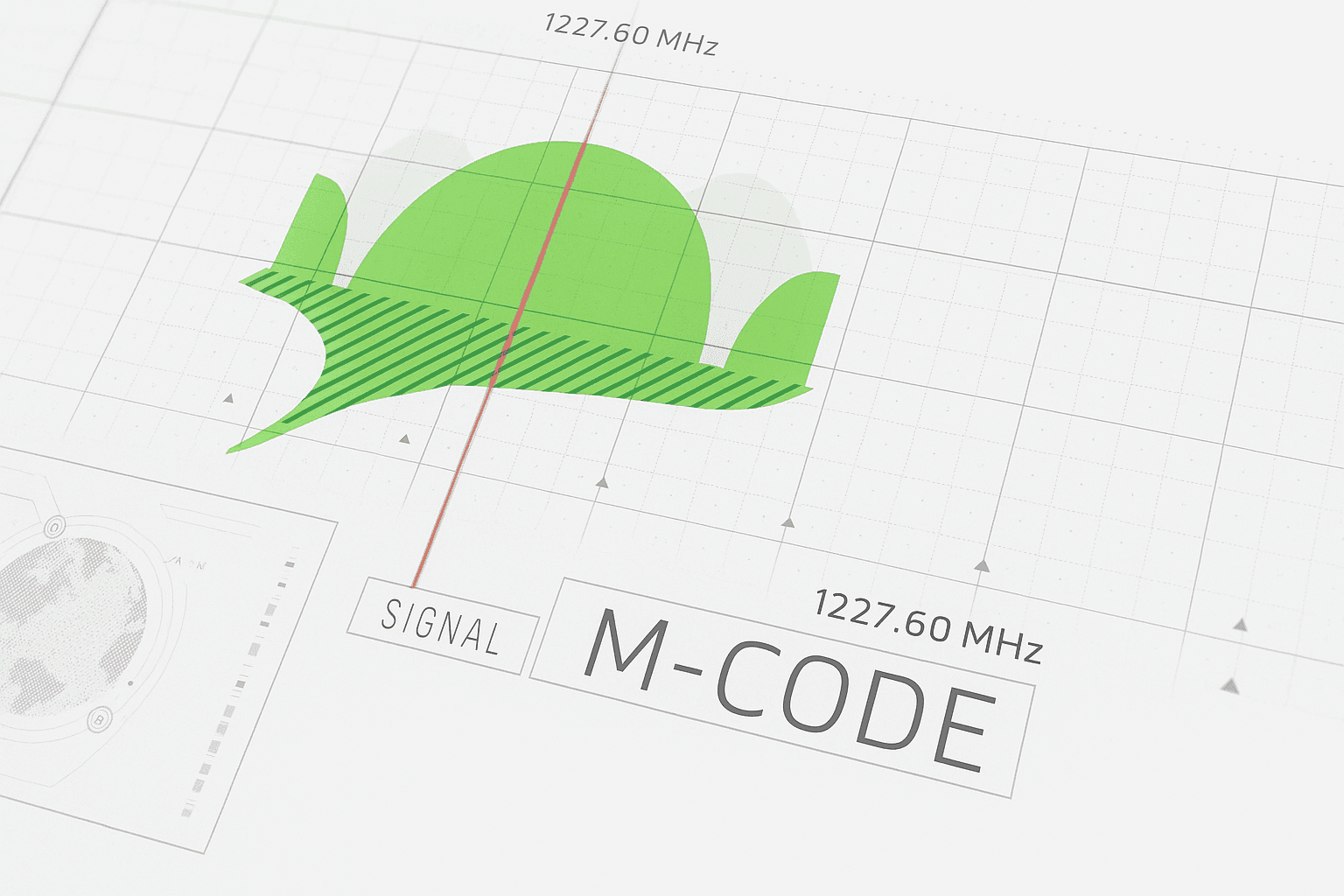
Companies responding to the notice must also explain how they would approach the GPS receiver technically, including how the design would support secure navigation using M-code. That matters because M-code is a modern military GPS signal designed for more resilient positioning, navigation, and timing. It is encrypted, built for authorized users, and intended to give forces more assured access to trusted navigation data in environments where signal conditions are poor or actively challenged.
| Submission Requirement | Details |
|---|---|
| Technical approach | Outline the proposed technical approach for the receiver design |
| ASIC certification status | State where the Increment 2 M-code application-specific integrated circuit certification stands with the GPS Directorate Security Team |
| Production capability | Show, where possible, that they already run an active production line delivering DoD M-code receivers |
| Program timeline | Submit a notional development and integration timeline built around a low-risk schedule starting at contract award |
In my own review, that production-line requirement stands out. It usually signals that the Air Force is not looking for a lab-only prototype. It wants manufacturers that already understand the realities of defense production, documentation, testing, and information security. In other words, the signal needs to be clean not just on a bench, but across the whole supply chain.
Key features of an M-code receiver generally include encrypted signal processing, stronger resistance to jamming, signal authentication, and more reliable PNT performance for military users. Compared with older military GPS access methods such as P(Y) code, M-code is designed to offer better anti-jam behavior, a more modern signal structure, and stronger security controls. From a systems point of view, the benefit is not just better accuracy on a good day. It is improved confidence that the receiver can keep delivering usable navigation and timing when the spectrum is crowded, degraded, or under deliberate attack.
That does not remove every challenge. M-code enabled systems still have to deal with interference, platform integration, certification, and production scaling. The practical answers tend to be layered: hardened antennas, better filtering, secure receiver design, disciplined integration testing, and supply-chain readiness. When I checked the Air Force language, that layered approach was easy to see. The request is asking for security, maturity, and manufacturability at the same time, not one after the other.
Why the Market Research Phase Matters
For now, the government is using this phase to measure vendor capability before issuing a formal procurement package. The opportunity is limited to qualified commercial suppliers without foreign involvement, which suggests a strong preference for controlled domestic production and a secure flow of data, components, and program information.
The language also indicates the Air Force wants established firms with proven experience making DoD M-code receivers. Given the mission profile of a missile such as JASSM, that is not surprising. A guidance receiver in this category has to work with the Global Positioning System while staying reliable under stress, much like a satellite navigation solution that must hold accuracy even when the signal environment gets noisy. Anyone who has worked with raw location data knows the pattern: the harder the environment, the more important filtering, hardening, and disciplined system design become.
The current notice does not name specific companies, contract awardees, or alternate testing methods, so this market research phase stops short of identifying who will supply the hardware. It does, however, point to firms that already have DoD M-code production experience and active manufacturing capability. In plain terms, the Air Force appears to be leaning toward suppliers that are already in the M-code receiver pipeline rather than vendors proposing a fresh start.
On deployment and production status, the same limitation applies. The notice clearly favors hardware that is beyond early research and connected to an existing production line, which suggests the Air Force wants technology that is already moving into broader fielding or is at least close to sustained manufacturing. That matters because modernization programs for military GPS receivers usually live or die on transition risk: a design may look strong in isolation, but if the production path is weak, the whole navigation chain becomes harder to trust.
Submission Deadline and Administrative Material
Interested companies have until May 29 to submit a white paper response capped at 10 pages. Separate administrative material must also be provided. Those items do not count toward the 10-page limit.
- White paper response: Maximum 10 pages
- Company qualifications
- Facility security clearance details
- Executed non-disclosure agreements
That page limit is tight but manageable. In my experience, a concise technical response often works better anyway. A vendor that can explain its receiver design, certification status, production footing, and schedule in 8 to 10 pages usually has a clearer engineering story than one that needs far more space. For programs tied to GPS Block III-era military capability, secure signal access, and hardened navigation performance, clarity tends to matter almost as much as raw technical depth.


