
Septentrio Expands Its Boxed Gnss Line With The Asterx EB


Septentrio, part of Hexagon, has introduced a new enclosed multi-frequency GNSS receiver called the AsteRx EB, adding another option to its satellite navigation device portfolio.
This lower-cost unit is aimed at users who still need strong accuracy and precision, along with dependable GNSS heading, in areas such as industrial robot systems, port logistics, marine navigation, UAV support, logistics fleets, and scalable automation.
- IP67-rated enclosure for weather and dust protection
- Advanced GNSS+ algorithm processing
- Reliable performance in challenging signal environments such as foliage, multipath, and nearby interference
Published details emphasize the enclosure and signal-processing focus, but the release does not provide a full technical specification sheet in the announcement itself. It does not list supported GNSS constellations, total channel count, physical dimensions, weight, operating temperature range, input voltage range, power consumption, output data formats, or additional environmental certifications beyond IP67. It also does not state numerical positioning accuracy, heading accuracy, or position and heading update rates in this summary.
Integrity Monitoring and Faster Deployment
- RAIM+ integrity monitoring
- Trustworthy positioning data for autonomous systems
The RAIM+ integrity monitoring system is designed to deliver trustworthy positioning data, a requirement for autonomous navigation and other systems that cannot tolerate misleading location information. From what I’ve seen in geospatial work, bad position data can spread through a system like a misaligned GIS layer, so integrity checks matter as much as raw precision. The compact housing should also make installation simpler, which can shorten evaluation cycles and reduce time-to-market.In industrial GNSS deployments, integrity monitoring and interference resilience often matter just as much as raw accuracy because one bad position fix can ripple through the rest of the system.
“AsteRx EB is an ideal boxed receiver for customers who need reliable, resilient, and highly accurate positioning in a compact form factor and at a price point that makes rapid scale-up possible,” said Danilo Sabbatini, Product Manager at Septentrio, part of Hexagon.
Heading, Interference Protection, and Field Resilience
When used in a dual-antenna setup, the AsteRx EB provides sub-degree GNSS heading for platforms that need orientation as well as real-time kinematic positioning. Based on the published description, that refers specifically to heading, or yaw, rather than a full INS-style pitch-and-roll solution. The release also does not indicate that the AsteRx EB is a GNSS/INS receiver, so it should be treated here as a GNSS receiver rather than an integrated inertial system unless Septentrio documentation states otherwise.
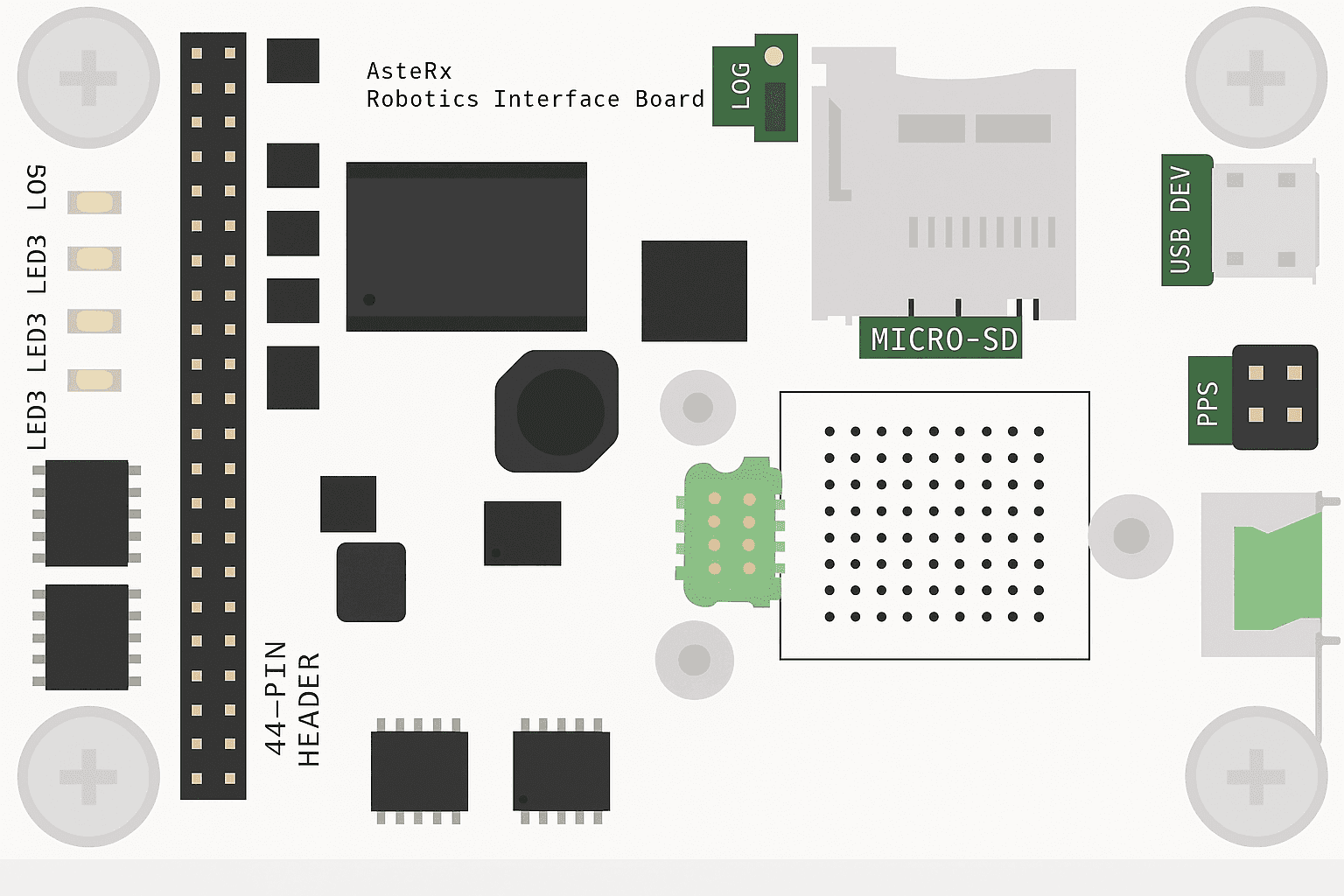
The built-in AIM+ technology is intended to protect the radio receiver against both deliberate and accidental disruption, including radio jamming, spoofing, and other forms of electromagnetic interference that can affect GPS and other satellite constellations. The announcement describes detection and protection at a high level, but it does not break out the exact anti-jamming or anti-spoofing techniques, such as specific filtering, signal-quality checks, or mitigation steps.
In my own testing of navigation hardware over the years, I’ve found that interference handling is often the difference between a clean field result and a long troubleshooting session. I checked this release the way I would compare several map overlays: enclosure, signal protection, and onboard firmware intelligence all have to line up before the device is genuinely useful in the field.
Where It Fits in Septentrio’s Enclosed Receiver Range
The AsteRx EB broadens Septentrio’s family of enclosed GNSS products. Like mosaic-go, it can serve as a practical tool for quick testing and evaluation of the company’s positioning technology. Its rugged package should make it suitable across a broad set of industrial uses, whether the interface is handled through Ethernet, USB, serial, CAN, GPIO, or other system integration paths common in automation environments. The release, however, does not provide a complete interface list, connector details, mounting options, protocol support, software utility information, or power supply specifications such as voltage range and connector type.
| Model | Protection Level | Form Factor | Key Features | Typical Applications |
|---|---|---|---|---|
| AsteRx EB | IP67 enclosure | Compact boxed receiver | GNSS heading, RAIM+, AIM+, rugged housing | Robotics, marine, port logistics, UAV support, automation |
| AsteRx RB3 | Higher protection for severe conditions | More heavily protected enclosed receiver | Built for harsher weather, vibration, and mechanical stress | Demanding industrial and field deployments |
For deployments facing especially severe weather, intense vibration, or heavy mechanical stress, Septentrio positions the AsteRx RB3 as the higher-protection option. In that sense, the AsteRx EB fills the middle ground: compact, durable, and easier to deploy, while still offering the satellite navigation, data reliability, multipath mitigation, and anti-interference technology many users need. It should be relevant not only for marine and ocean operations, but also for unmanned aerial vehicle support, robotics platforms, logistics fleets, and other systems where signal quality, information integrity, and dependable measurement remain central.
Documentation and Support
Anyone looking for full specifications, integration guidance, or support will need to go beyond the product announcement. The most likely places to check are the official product page, the downloadable datasheet, technical manuals, firmware notes, and the vendor support portal or helpdesk. According to our research, those are the sources most likely to confirm detailed items such as constellation support, channels, accuracy figures, update rates, interfaces, power requirements, and whether any additional certifications apply.


