
Is Crypto or Forex Better For Beginners? Pros, Cons, And How to Choose


When asking is crypto or forex better for beginners, the answer depends on how much risk you can handle, how you prefer to learn, and what kind of financial market you want to trade in. Both the foreign exchange market and cryptocurrency trading attract a global audience because of their accessibility, fast-moving price action, and expanding technology. Still, these two parts of the market (economics) operate very differently, and those differences matter for every trader (finance), investor, and beginner making an investment decision.
There is no universal winner. One path offers a more established and regulated environment built around fiat money and currency pair trading, while the other opens the door to digital currency, blockchain innovation, and nonstop market access. Elements such as volatility (finance), market liquidity, regulation, leverage (finance), and overall risk can strongly influence which market feels more suitable.
In this guide, our editorial team compares forex and cryptocurrency in a practical way. We examine trading hours, liquidity, regulation, volatility, and key advantages and drawbacks so you can decide which option fits your goals, risk management approach, and preferred trading style.
What Is Forex Trading?
Forex refers to the foreign exchange market, the world’s largest financial market by daily turnover. Based on data from the Bank for International Settlements, average daily activity reached roughly $7.5 trillion in the 2022 survey, making it larger than the stock market and many other asset classes. Trading takes place around the clock during the business week through major centers such as Sydney, Tokyo, London, and New York City.
In simple terms, forex trading means exchanging one currency for another. Common examples include the euro against the United States dollar, pound sterling against the dollar, or the dollar against the Japanese yen. Because a currency pair constantly changes in price, traders attempt to profit from those movements, whether large or small.
Forex remains popular because it combines scale, speed, and relatively high market liquidity. Banks, hedge funds, corporations, central bank institutions, and retail participants all help keep the market active. Modern platforms have also made trade execution easier, giving beginners access to charts, news, and mobile tools. Even so, forex prices are shaped by macroeconomics, interest rate expectations, bank policy, inflation, and political developments in the United States and elsewhere.
What Is Crypto Trading?
Crypto trading revolves around cryptocurrency, a digital currency class powered mainly by blockchain systems. This space includes major names like Bitcoin and Ethereum, as well as newer projects such as Solana (blockchain platform) and thousands of other coin-based networks. Unlike traditional forex, most crypto markets operate 24 hours a day, seven days a week, usually through a cryptocurrency exchange rather than through the traditional bank-led structure.
What makes this market stand out is decentralization. Instead of relying entirely on a central authority, many crypto networks use distributed technology to validate and record transactions. That structure has attracted traders and investors who value transparency, innovation, and direct access to a new type of asset.
However, crypto is also known for sharp and sudden price swings. A single piece of news, a regulation update from the United States Securities and Exchange Commission, or a shift in investor sentiment can move valuations rapidly. The possibility of large returns draws attention, but the same volatility can lead to equally fast losses.
Forex vs. Crypto: Core Differences
Although both markets involve speculation and active trade decisions, they are built on very different foundations. Forex is centered on fiat money, national economies, and established financial institutions. Crypto, by contrast, is linked to blockchain adoption, software development, network usage, and the broader idea of decentralization.
In forex, price behavior is often influenced by central bank announcements, interest rate changes, employment reports, inflation data, and wider macroeconomics. In crypto, market direction may depend more on technology upgrades, exchange activity, adoption trends, regulation, and sentiment. That means the kind of information a beginner must follow can differ significantly.
Participation also differs. Forex has long been dominated by institutional flows from banks and large funds, while crypto began as a retail-driven market before attracting larger firms. Today, both retail traders and professional investors are active in digital assets, and some even track the correlation between crypto, the S&P 500, exchange-traded fund flows, and broader stock or futures contract markets.
| Aspect | Forex | Crypto |
|---|---|---|
| Asset Type | Fiat currencies traded in pairs | Digital assets and tokens |
| Trading Hours | Open 24 hours during the business week | Open 24/7 |
| Market Structure | Led mainly by banks, brokers, and institutions | Often centered on exchanges and blockchain networks |
| Main Drivers | Interest rates, inflation, central banks, and macroeconomics | Technology updates, adoption, regulation, and sentiment |
| Liquidity | Usually deeper in major currency pairs | Strong in major coins but uneven in smaller tokens |
| Volatility | Often lower in normal conditions | Often higher and more sudden |
| Regulation | Generally clearer and more established | More uneven across jurisdictions |
| Leverage Access | Common through many brokers, though rules vary | Available on some platforms but often with added risk and restrictions |
Both markets share some similarities. They both involve speculation, chart analysis, trade execution, and risk management. The main difference is that forex is usually more structured and economy-driven, while crypto is more technology-driven and often more volatile.
Is Crypto or Forex Better for Beginners?
For many new traders, forex is often the easier starting point because it usually offers a more structured environment. It tends to come with stronger oversight, wider educational support, demo accounts, and more stable behavior than many crypto assets. That does not mean it is simple or safe, but it can be easier to study because it follows familiar economic drivers such as interest, inflation, and central bank policy.
Crypto can still appeal to beginners because entry barriers are often low, platforms are widely accessible, and the language of digital finance feels modern and exciting. Someone interested in blockchain, digital wallets, and emerging technology may find this market more engaging. Still, the downside is greater uncertainty, weaker regulation in some jurisdictions, and higher exposure to scams, hacking, and emotional decision-making.
So, is crypto or forex better for beginners? In many cases, forex is the steadier learning ground, while crypto may suit people who accept elevated risk in exchange for flexibility and innovation. The better choice depends on your personality, your financial knowledge, and how disciplined you are with risk management.
Market Liquidity in Forex and Crypto
Market liquidity describes how easily an asset can be bought or sold without causing a major shift in price. This factor is critical because it affects spreads, execution speed, and slippage. Forex is widely recognized for deep liquidity, especially in major pairs like EUR/USD, GBP/USD, and USD/JPY. That depth often helps traders enter and exit positions efficiently.
Crypto liquidity varies much more. Bitcoin and Ethereum may have substantial activity on large exchanges, but many smaller tokens do not. In thin markets, even modest order flow can trigger abrupt price movement. For beginners, this means the same trade size may behave very differently depending on the chosen asset and platform.
Our team analyzed how beginners often underestimate liquidity conditions. In forex, the presence of banks and global institutions supports continuous activity during major sessions. In crypto, trading is always open, but not every coin offers the same quality of execution.
Regulation in Forex and Crypto
Regulation is one of the biggest dividing lines between these markets. Forex brokers in many regions operate under clearer rules and regulatory supervision designed to improve transparency and client protection. That does not remove all danger, but it can create a more predictable environment for a beginner.
Cryptocurrency oversight remains uneven. Some jurisdictions have developed clearer frameworks, while others still lack consistent rules. Statements or actions by the United States Securities and Exchange Commission can influence sentiment far beyond the United States, especially when the topic involves token classification, exchange operations, or ETF approvals tied to digital assets.
Because of this, crypto traders need to watch legal developments closely. Regulatory uncertainty can affect access, pricing, and confidence just as much as technical factors do.
Risks and Key Features of Forex vs. Crypto
Neither market is low risk. In forex, price changes can accelerate after central bank meetings, inflation releases, labor data, or geopolitical events. Leverage (finance) can magnify opportunity, but it can also increase losses quickly if a trade moves the wrong way.
Crypto carries many of those same pressures while adding others. Volatility (finance) is often more extreme, liquidity may be weaker outside major names, and operational risks are higher. A trader may also face exchange outages, wallet errors, hacking incidents, or sudden policy changes affecting a cryptocurrency exchange.
There are also differences in how each market connects to the wider financial system. Forex is tied closely to banks, national currency flows, and macroeconomic policy. Crypto may respond more strongly to adoption trends, technology upgrades, on-chain activity, and speculative behavior. In some periods, digital assets even show correlation with the stock market, the S&P 500, or risk sentiment around a futures contract or option (finance).
For beginners, crypto is generally considered the riskier market because price swings are often larger, regulation is less consistent, and operational issues can be more severe. Forex is still risky, especially when leverage is involved, but its market structure is usually more stable and predictable.
Pros and Cons of Forex vs. Crypto
Choosing between these markets becomes easier when you compare the benefits and limitations side by side.
| Pros/Cons | Forex | Crypto |
|---|---|---|
| Pros | High liquidity, structured environment, broad availability, educational support, macro-driven analysis | High upside potential, 24/7 access, low starting threshold, innovation appeal, asset variety |
| Cons | Leverage risk, learning demands, constant monitoring, emotional strain, broker quality concerns, policy sensitivity | Extreme volatility, uneven liquidity, security threats, regulatory uncertainty, manipulation risk, information noise |
Pros of Forex Trading
- High liquidity: Large volumes usually support faster execution and tighter spreads.
- Structured environment: Forex is generally more established and better regulated than much of the crypto sector.
- Broad availability: Traders can access the market nearly all week from major global financial hubs.
- Educational support: Beginners often find more training tools, analysis resources, and demo features.
- Macro-driven analysis: Price movement often follows visible forces such as interest rate policy, economic reports, and central bank communication.
Cons of Forex Trading
- Leverage risk: Borrowed exposure can magnify losses as easily as gains.
- Learning demands: Understanding currency behavior, macroeconomics, and execution takes time.
- Constant monitoring: Active forex trading may require regular attention to data releases and news.
- Emotional strain: Fast decisions and short-term swings can be mentally exhausting.
- Broker quality matters: Poor platform choice or weak oversight can create avoidable problems.
- Policy sensitivity: Regulatory or monetary changes can alter conditions quickly.
Pros of Crypto Trading
- High upside potential: Strong volatility can create large percentage moves over short periods.
- 24/7 access: The market stays open at all times, which gives more scheduling flexibility.
- Low starting threshold: Many platforms allow users to begin with modest capital.
- Innovation appeal: Crypto offers exposure to blockchain, decentralization, and new financial technology.
- Asset variety: Traders can choose from Bitcoin, Ethereum, Solana, and many other digital assets.
Cons of Crypto Trading
- Extreme volatility: Price collapses can happen suddenly and without warning.
- Uneven liquidity: Smaller tokens may be difficult to buy or sell efficiently.
- Security threats: Hacks, fraud, and wallet mistakes remain serious concerns.
- Regulatory uncertainty: Rules differ across regions and can shift quickly.
- Manipulation risk: Thinly traded coins can be vulnerable to artificial price moves.
- Information noise: Online hype can distort judgment and overwhelm new traders.
Can You Trade Forex and Crypto on the Same Platform?
Yes, some brokers and trading platforms allow users to access both forex and crypto from one account. This can be convenient for traders who want to compare both markets, manage capital in one place, or switch between currency pairs and digital assets without opening multiple accounts.
In practice, availability depends on the provider and your location. Some multi-asset brokers offer forex pairs alongside crypto CFDs or spot crypto products, while others support only one of the two markets. Even when both are available, the trading conditions may differ in spreads, leverage, fees, and trading hours.
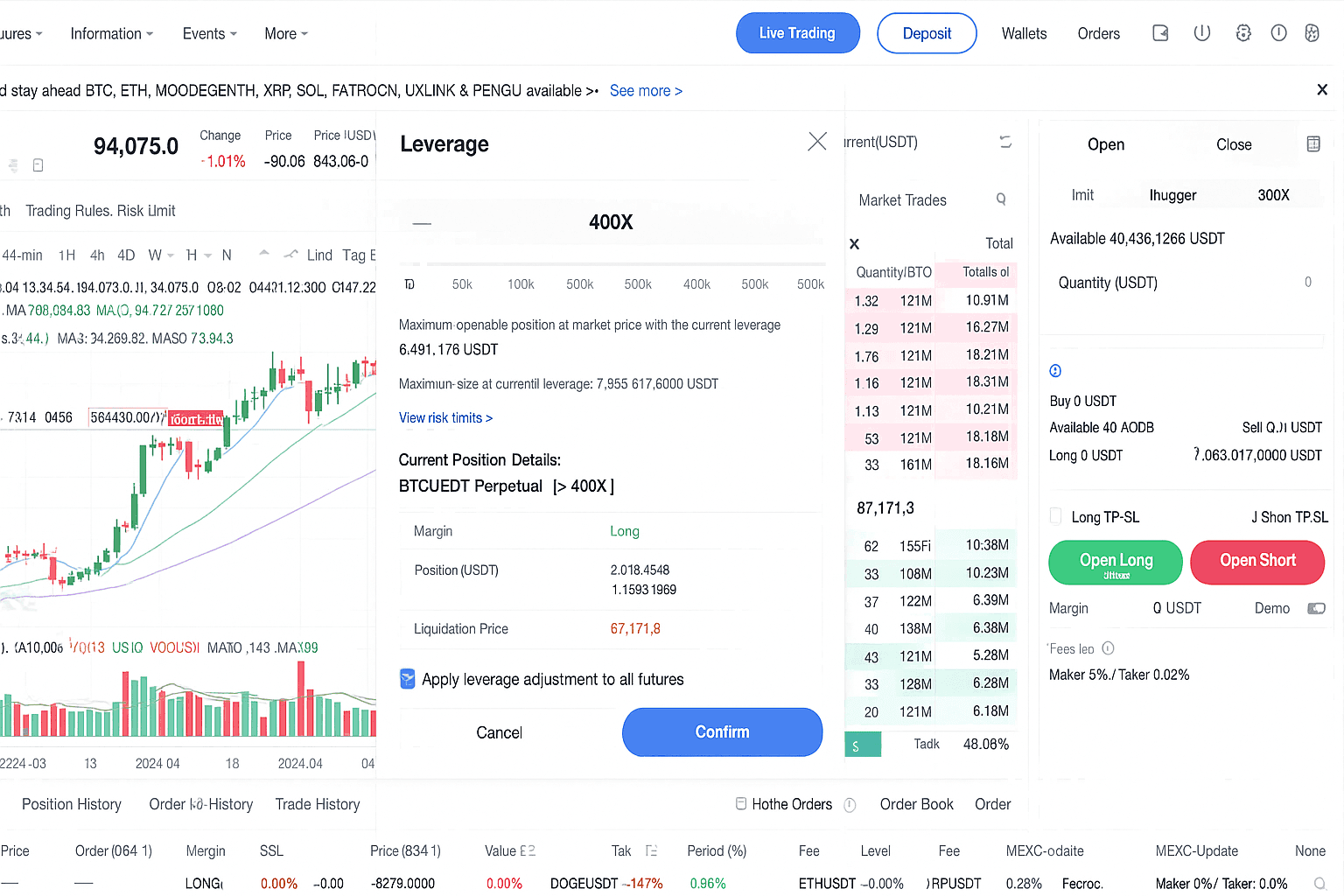
Using one platform can simplify account management, but beginners should still check a few important details before signing up.
- Product Type: Some platforms offer direct crypto ownership, while others only provide derivative exposure.
- Regulation: Forex and crypto services may fall under different rules depending on the jurisdiction.
- Fees: Overnight costs, spreads, commissions, and withdrawal charges may vary by asset class.
- Leverage Limits: Forex leverage may be higher than crypto leverage on the same platform.
- Asset Selection: A broker may offer many currency pairs but only a small list of cryptocurrencies.
- Platform Reliability: Execution quality, security, and withdrawal policies matter in both markets.
How Much Money Do You Need to Start Trading Forex or Crypto?
The amount needed to start depends on the broker, platform, asset choice, and whether leverage is available. In forex, some brokers allow accounts to be opened with very small deposits, sometimes as low as $10 to $100, while others set higher minimums. In crypto, many exchanges let users begin with a very small purchase amount, and some allow fractional buying with less than $10.
That said, the minimum deposit is not the same as the amount you should trade with. A very small account can limit position sizing, increase the effect of fees and spreads, and make risk management harder. In both markets, starting capital should be large enough to absorb normal price movement without forcing poor decisions.
Capital needs are usually influenced by the following factors:
- Broker or Platform Minimums: Each provider sets its own deposit rules.
- Leverage Availability: Access to leverage can reduce initial margin needs, but it raises risk.
- Asset Choice: Major forex pairs and large cryptocurrencies often behave differently from thinly traded assets.
- Fees and Spreads: Small accounts are more sensitive to transaction costs.
- Trading Style: Short-term trading usually requires tighter risk control and more active capital management.
Is $100 Enough to Start Trading Forex?
Yes, it is possible to start trading forex with $100, especially with a broker that offers low minimum deposits and small position sizes. However, a small account comes with important limitations. Even modest market moves can have a large percentage impact on your balance, and trading costs may take a bigger share of your results.
For beginners, the main risk is trying to grow a small account too quickly by using too much leverage. That approach can lead to fast losses. A $100 account may be better viewed as a learning tool than as a realistic path to meaningful income.
If you begin with a small amount, focus on capital preservation, low position sizes, and disciplined risk management rather than aggressive profit targets.
Is It Possible to Make $1,000 a Day in Forex?
It is possible in theory, but it is not a realistic expectation for most beginners. Daily profit potential in forex depends on account size, leverage, strategy, market conditions, and experience. Making $1,000 in one day consistently would usually require either substantial capital, very high risk, or both.
The danger is that aiming for a fixed daily income can push traders into overtrading, excessive leverage, and emotional decisions. Forex does not deliver steady daily payouts, and even skilled traders experience losing days, flat periods, and changing market conditions.
Beginners are usually better served by focusing on process, consistency, and risk control instead of targeting large daily profits from the start.
What Strategies Can Be Used to Trade Crypto Like Forex?
Some forex trading methods can be adapted to crypto, especially strategies based on trend-following, breakout trading, support and resistance, and momentum analysis. Traders who use chart-based approaches in forex often apply similar ideas to Bitcoin, Ethereum, and other liquid crypto assets.
Even so, crypto is not identical to forex. Because crypto trades 24/7 and often moves more sharply, strategy rules may need adjustment. Stop-loss placement, position sizing, and trade timing usually need to account for higher volatility and overnight price movement.
Common crossover approaches include the following:
- Trend-Following: Traders look for sustained directional movement and use pullbacks for entry.
- Breakout Trading: Traders watch key price levels and trade when the market pushes through support or resistance.
- Range Trading: In quieter periods, traders buy near support and sell near resistance.
- Momentum Trading: Traders follow strong price acceleration when volume and sentiment increase.
- Risk-Based Position Sizing: Traders adjust trade size based on volatility and account risk.
The biggest difference is that crypto can produce faster and less predictable moves, so a strategy that feels manageable in forex may need tighter controls in digital assets.For beginners in both forex and crypto, risk management matters more than chasing quick returns.
How to Choose the Right Market for You
The better choice depends on what you want from your investment journey. If you prefer a market built on established currency systems, clearer rules, and economic fundamentals, forex may suit you better. If you are more interested in digital innovation, nonstop access, and the possibility of bigger short-term price swings, crypto may feel more attractive.
Beginners should also consider what they enjoy analyzing. Someone who follows central bank policy, inflation reports, bank commentary, S&P Global Ratings updates, and macro trends may be more comfortable with forex. Another person fascinated by blockchain networks, token utility, and exchange developments may prefer crypto.
It also helps to think about related markets. Some traders who start in forex later explore stock, exchange-traded fund, futures contract, or option (finance) products. Others move from Bitcoin into broader crypto sectors. Your first market does not have to be your last, but your starting point should match your temperament and learning style.
Before placing any trade, keep these basics in mind:
- Define your risk management rules.
- Decide how much capital you can afford to lose.
- Determine how much leverage you will use.
- Assess what kind of volatility you are willing to tolerate.
- Consult a qualified financial adviser if needed.
Conclusion
Forex and crypto each offer genuine opportunities, but they serve different types of traders. Forex usually provides a more mature, liquid, and policy-driven setting centered on currency trading and global economics. Crypto offers access to a newer world shaped by blockchain, digital currency adoption, and rapid market shifts.
For most beginners, forex is often the more stable entry point because of its stronger structure and generally lower chaos. Crypto can still be worthwhile for those who understand the added risk and want exposure to emerging technology and a fast-changing asset class.
The smartest decision is not about chasing hype. It is about choosing the market that aligns with your goals, your tolerance for risk, and the kind of information you can realistically follow with discipline.


