
Easa And Eurocontrol Set Out a New Aviation Safety Plan For Gnss Disruption


The European Union Aviation Safety Agency and Eurocontrol have released a joint action plan aimed at improving the safety and resilience of European aviation operations as interference with GNSS becomes more frequent. The document is meant to help the sector hold together under degraded satellite navigation conditions rather than wait for a larger systems failure to force change.
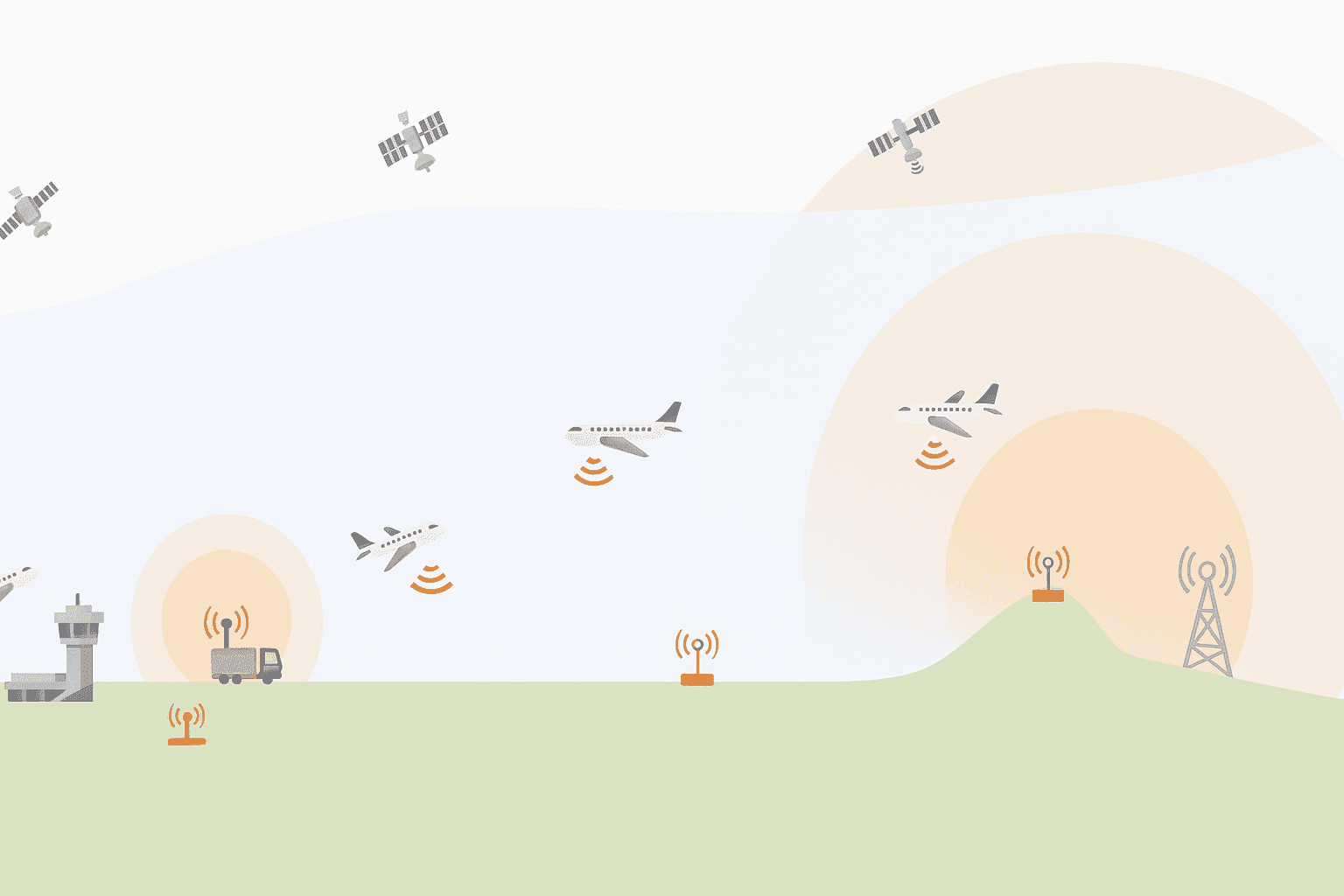
GNSS underpins precise positioning, navigation, and timing for modern flight operations, and that makes it part of critical infrastructure across the European Union airspace network. Interference with those signals is no longer occasional background noise. It is now a recurring operational issue, especially around the margins of conflict zones, and it carries direct aviation safety implications. The plan concentrates on protecting near-term operations while limiting pressure on airspace capacity, and it lays out short-, medium-, and long-range steps to reduce the impact of GNSS interference through coordinated procedures, clearer responsibilities, and better timing on who does what. In practical terms, the scope covers the full chain from disruption detection to operational response, investigation, information sharing, and longer-range equipment resilience. The threats in view include deliberate jamming, spoofing, and other radio frequency interference, including unintentional events that can still degrade navigation performance.
“While the potential threat to aviation safety from GNSS interference has so far been mitigated by short-term actions such as raising pilot awareness, it is clear that more needs to be done,” said Florian Guillermet, EASA executive director. “This action plan lays out and prioritizes short, mid and longer-term actions and, importantly, also assigns roles to the various aviation actors. By working together with Eurocontrol and pooling our expertise, we have been able to create a strong plan that will enable the wider sector to come together to counter this threat.”
“GNSS interference remains a significant and evolving challenge for European aviation, making today’s action plan an important step forward in our collective response,” said Raúl Medina, director-general of Eurocontrol. “The action plan concretely supports our Member States and aviation partners as we work together to ensure the evolution and resilience of aviation’s critical infrastructure — one of the core goals of Eurocontrol’s Trajectory 2030 strategy. I welcome the strong cooperation and close coordination with EASA and all our partners across the aviation sector on this plan, which demonstrates our shared commitment to safety, and aims at delivering tangible benefits for the network, operators and passengers by making GNSS-based operations more robust.”
| Timeframe | Action | Responsible Parties |
|---|---|---|
| Short term | Raise awareness, refine operational guidance, and improve immediate reporting of disruption events. | EASA, Eurocontrol, flight crews, air traffic control, and national authorities |
| Medium term | Strengthen shared monitoring, investigation, and coordinated information exchange across the network. | EASA, Eurocontrol, Member States, air navigation service providers, and operators |
| Long term | Support more interference-resistant avionics, standards work, and broader resilience planning. | Manufacturers, avionics industry, regulators, and international partners |
Core Pieces of the Joint Plan
The framework rests on several practical pillars intended to improve Europe’s ability to detect, handle, and reduce GNSS interference. From what I’ve seen in other technical networks, the most useful plans are the ones that define responsibility as clearly as the engineering problem, and this one appears to be built with that in mind.
- Detection of GNSS interference through shared monitoring and more consistent reporting.
- Handling of interference events through updated operational procedures and clearer responsibilities.
- Reduction of interference impact through coordination, investigation, and longer-term resilience work.
Using shared monitoring and data exchange, the European Union Aviation Safety Agency and Eurocontrol want to build a common, verified operational picture of interference events across Europe. In plain terms, that means better detection, more reliable reporting, and improved situational awareness for civil aviation stakeholders. I looked through several sections of the plan summary, and the structure reads a bit like aligning GIS layers: one isolated signal tells you very little, but multiple validated data sources can reveal the real pattern.
By combining operational data and technical expertise, both organizations intend to improve their understanding of where interference appears, how it behaves, what it does to operations, and which safety risks follow. The goal is to produce consistent guidance for:
- air navigation service providers
- airline operators
- national authorities
so that responses are faster and more harmonized across the network.
That cooperation also sits within a broader EASA-Eurocontrol relationship on aviation safety and network performance. Beyond GNSS disruption, the two bodies routinely align on operational safety priorities, common data-sharing practices, and resilience work that supports more sustainable and efficient use of airspace. The article does not list separate sustainability programs in detail, but the partnership clearly extends beyond one interference issue and into wider system planning.
Operational Guidance, Investigation, and Coordination
EASA and Eurocontrol also plan to update operational guidance for flight crews and air traffic controllers so they can manage disruptions more effectively when navigation performance is degraded. That matters because safe operations in a compromised signal environment depend as much on disciplined procedures as on hardware. In my own testing of technical guidance documents in other sectors, the strongest ones are usually the ones that crews can absorb in a few minutes, not the ones that look complete on paper but slow decisions in the field.
The two bodies also intend to combine resources for ongoing investigations into GNSS interference. That should help move the response beyond anecdotal reporting and toward a more consistent evidence base. Better investigative coordination can improve how event data is interpreted, especially where electromagnetic interference has both operational and security dimensions.
Another part of the plan calls for stronger mechanisms for timely information sharing through Member States. That is especially important when an event touches both civil and military interests. A coordinated and transparent exchange process can reduce disruption, preserve airspace capacity, and give decision-makers a clearer picture of what is happening across the broader aviation system.GNSS interference is no longer just a technical nuisance. In operational terms, it is a network-level safety risk that can add workload, complicate routing, and erode the margin that modern aviation depends on.
GNSS interference is no longer just a technical nuisance. In operational terms, it is a network-level safety risk that can add workload, complicate routing, and erode the margin that modern aviation depends on.
Longer-Term Work With Industry and International Partners
The action plan also points to closer work with aircraft manufacturers and the avionics industry to support the development of equipment that is more resistant to interference over time. That longer arc is important. You can improve procedures relatively quickly, but improving avionics resilience is more like rebuilding a base map than patching a route line. It takes standards work, engineering cycles, certification effort, and broad industry alignment.
The document responds in part to concerns raised in a letter sent on June 6, 2025, by 13 EU Member States to the European Commission. That letter called for immediate, coordinated European action to address the increasing number of radio frequency interference events affecting GNSS-dependent systems.
The plan also draws on input and guidance from international organizations, including the International Civil Aviation Organization and the International Air Transport Association. While the article does not detail any role for the Federal Aviation Administration, the broader issue clearly extends beyond one region, since satellite navigation interference does not respect national boundaries and can affect interconnected infrastructure well outside the original source area.
EASA-IATA PNT Resilience Workshop
The article only gives a limited pointer here, but the purpose of the EASA-IATA PNT resilience workshop is reasonably clear from the context of the wider action plan. Its objective is to bring regulators, operators, and technical specialists into one working forum to compare disruption cases, review operational vulnerabilities in positioning, navigation, and timing, and identify practical resilience measures that can be applied across civil aviation. The target participants would typically include airlines, air navigation service providers, manufacturers, avionics specialists, regulators, and other aviation stakeholders dealing with GNSS-dependent operations. Expected outcomes are likely to include shared lessons, more consistent guidance, and concrete follow-up actions for procedures, training, reporting, and equipment resilience rather than a purely theoretical discussion.
Alternative PNT Technologies Being Explored
The joint plan is mostly about operational resilience, but the longer-term direction naturally points toward alternative or complementary PNT options in Europe. These are generally being researched or considered as layered backups rather than direct one-for-one replacements for GNSS.
- Enhanced ground-based navigation aids: Continued use and selective modernization of conventional radio navigation systems to provide fallback guidance where satellite performance is degraded.
- Inertial navigation systems: Aircraft-based sensors that estimate position and movement without relying on external signals, useful for continuity over shorter periods but subject to drift over time.
- Multi-sensor fusion: Combining GNSS with inertial, radio, terrain, or other onboard inputs so one weak signal does not dictate the full navigation picture.
- Alternative timing sources and resilient PNT architectures: Broader system work on backup timing and cross-checking methods so disruption in one source does not cascade across operations.
Based on the way these programs are usually described, most of this work appears to sit at mixed stages: some elements are already deployed as backups in existing operations, while others remain in testing, standards development, or longer certification cycles.
Resources and Guides on GNSS Interference
For practical resources, the most relevant places to look are the official publications and safety material issued by EASA, Eurocontrol, and the International Civil Aviation Organization. Publicly available material typically includes safety bulletins, operational guidance, disruption reporting material, training content, and technical briefings tied to resilience and interference awareness. Eurocontrol and EASA are the most obvious starting points for sector-specific guidance connected to this action plan, while ICAO material is useful for the broader international operating context.
Why This Matters for Flight Operations
GNSS supports more efficient flight paths, lower fuel burn, and the broader use of performance-based navigation. In practice, that allows aircraft to fly more direct routes and operate safely in areas where ground-based navigation infrastructure is limited. Across modern aviation, that efficiency gain is tightly linked to network design, timing, and capacity management.
The problem is that growing radio frequency interference — whether deliberate, such as jamming or spoofing, or unintentional — threatens the resilience of those systems. The most severe cases are generally found near conflict zones, but the operational effects can spread well beyond them. That is one of the more important points here. When I checked how these events are typically described, the pattern reminded me of noisy GPS traces: the strongest distortion may sit in one obvious cluster, but secondary effects can appear farther out than many users expect.
Aircraft can continue operating safely without GNSS, but the loss or degradation of those signals reduces system resilience and can interrupt operational continuity. That means more pressure on crews, controllers, navigation procedures, and the wider airspace network. It can also lead to less efficient routing, added spacing, delays, higher workload in the cockpit and control room, and indirect economic costs tied to fuel burn, scheduling disruption, and reduced airspace capacity. In that context, the joint plan from Eurocontrol and the European Union Aviation Safety Agency looks less like a routine policy update and more like a necessary operational adjustment to an evolving threat environment.
Recent Developments in GNSS Interference
The latest picture described here is one of persistence rather than a one-off spike. Recent aviation reporting has pointed to continued interference activity near conflict-adjacent regions, along with growing recognition that the issue can no longer be treated as isolated technical noise. The main development in response is the shift toward more formal coordination: clearer action planning, stronger reporting expectations, and closer work between regulators, network managers, operators, and industry.
Since the action plan, the most notable changes have been procedural and organizational rather than a single dramatic technical fix. The emphasis has moved toward updated guidance, more structured event investigation, and resilience planning that treats GNSS disruption as an operational risk requiring sustained management. In practical terms, that means more alerts, more operator awareness, and a stronger expectation that aviation actors prepare for degraded navigation conditions instead of assuming satellite performance will always remain stable.


