
Infleqtion Debuts Quantum Timing Platform Through Safran Partnership


Infleqtion has made available its first quantum-based precision timing offering through its collaboration with Safran Electronics & Defense. The release combines Infleqtion’s Tiqker optical clock with Safran’s White Rabbit and SecureSync platforms, and the integrated setup has already been validated as a working timing architecture.
Why More Resilient Timing Matters
Across financial markets, military systems, telecommunications networks, and the modern data center, precise synchronization still leans heavily on GPS and other GNSS services tied to satellite navigation. That model works well until the signal does not. Radio jamming, spoofing, natural interference, and other disruptions can degrade the Global Positioning System in ways that ripple through communication, navigation, software control, and critical infrastructure. From what I’ve seen over years of working around GPS-dependent systems, timing failures often behave like bad map overlays: one weak layer can throw the whole operational picture out of alignment.
| Sector | Current Timing Method | Risks/Challenges | Quantum Timing Benefit |
|---|---|---|---|
| Financial markets | GPS and GNSS-linked synchronization | Signal loss, spoofing, and timing drift | More stable local timing for transaction and system coordination |
| Military systems | Satellite-referenced timing | Jamming, contested environments, and denied access | Independent holdover for mission continuity |
| Telecommunications networks | GNSS-backed network timing | Interference and degraded synchronization | Tighter timing resilience across network infrastructure |
| Data centers | External reference timing feeds | Dependency on vulnerable outside signals | Improved continuity for synchronized computing operations |
That growing risk is why independent timing technology is getting serious attention. Systems that can hold accuracy and precision without constant reliance on external radio frequency references are increasingly important for infrastructure operators in the United States and globally, especially where denied or contested environments are now part of the planning model.For critical infrastructure, resilient timing is not a luxury feature. It is a backup layer that helps operations stay aligned when external signals become unreliable.
For critical infrastructure, resilient timing is not a luxury feature. It is a backup layer that helps operations stay aligned when external signals become unreliable.
Real-World Validation of the Integrated Setup
In a recent live field demonstration carried out with Quantum Corridor, the combined Tiqker, White Rabbit, and SecureSync system was tested outside the lab in a practical operating environment. According to the results, the platform reached picosecond-level performance, compared with the nanosecond range typically associated with GPS timing. That level of synchronization comes from pairing an optical atomic reference with distribution and coordination tools that can keep extremely fine timing relationships locked across the system. I looked through the structure of the announcement the same way I would compare GIS layers, and that contrast is really the key point: the gain is not just theoretical quantum science, but measurable synchronization performance under realistic conditions.
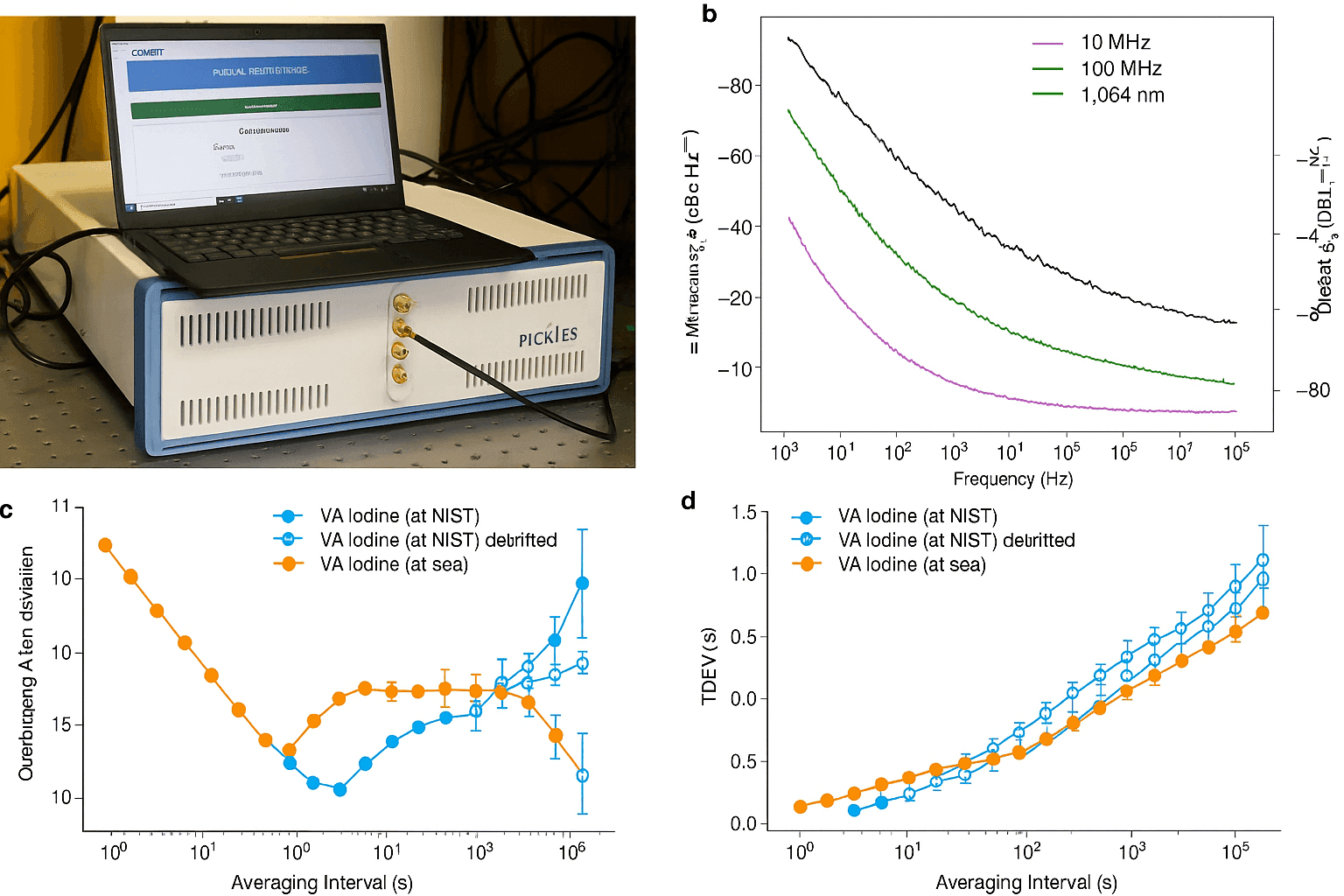
The demonstration also matters because it connects quantum optics and quantum engineering to an operational deployment path rather than a research-only narrative. In plain terms, this is not just a clock on a bench. Tiqker is Infleqtion’s optical atomic clock platform, built to deliver highly stable, highly precise time in a more deployable form than traditional lab-bound atomic clock systems. The practical advantage is not just raw accuracy, but the ability to maintain that accuracy with a footprint and architecture better suited to field use. It is an integrated system designed to support continuity when traditional timing signals are compromised, unavailable, or too noisy to trust.
What the Joint Solution Delivers
The validated package is intended to improve stability, resilience, and continuity for mission-critical operations. That includes environments where standard timing feeds are challenged or denied and where a dependable signal is essential for:
- Electronics
- Computer hardware
- Communication networks
- Navigation-related processes
- Space navigation and communication
Safran and Infleqtion are positioning the system as a deployable architecture rather than an isolated component, which is usually the difference between an interesting technology demo and something operators can actually use.
While the announcement is centered on timing, the wider context touches several adjacent fields, including quantum computing, artificial intelligence, inertial navigation system development, and sensor-driven infrastructure. A quantum sensor or atomic clock technology of this kind can influence how networks coordinate information, how platforms maintain frequency discipline, and how critical systems preserve fault tolerance when external references degrade.
Broader Relevance for Defense, Telecom, and Infrastructure
Through the Infleqtion and Safran relationship, the validated solution is now being offered to customers worldwide across allied defense, telecommunications, and other critical infrastructure sectors. That global rollout matters because precision timing underpins far more than many people realize:
- Secure network synchronization
- Operational continuity in energy systems
- Data center operations
- Space-related systems
In defense applications, that timing layer supports coordinated communications, navigation resilience, system synchronization, and more dependable operation when GPS or other GNSS references are being jammed or spoofed. From an operational standpoint, that is often the difference between a system that degrades gracefully and one that loses alignment at exactly the wrong moment.
When I checked similar infrastructure announcements in the past, the weak spot was often deployment readiness. Here, the emphasis is on faster field adoption in GNSS-challenged environments, not just on laboratory science. That gives the release more practical weight. Even though terms like qubit, physical and logical qubits, quantum computing, materials science, Nvidia, YouTube, LinkedIn, newsletter, research, computer, computing, architecture, and software sit more on the edge of this specific announcement than at its center, they all point to the same larger trend: quantum technology is moving out of isolated science programs and into real operational stacks where timing, signal integrity, and system coordination have to hold up in the field.
At its core, this launch shows how an optical clock can be folded into a broader synchronization framework and delivered through an established defense and electronics partner. For organizations dealing with radio interference, contested navigation conditions, or strict timing requirements, that is the part worth watching most closely.


