
Best Truck Gps For 2026 Our Expert Picks


A wrong turn in a truck can cost far more than a few extra minutes, which is why the best truck GPS is the one built around commercial routing, legal limits, and daily road reality. For a truck driver, a dedicated Global Positioning System helps with safer routing, HOS awareness, and better stop planning in ways a standard car map app usually cannot. I looked at these options the same way I read mapping layers in GIS work - the useful signal is in how the data fits the job.
Drivers with years behind the wheel and people just entering the industry run into the same basic issue. General navigation software is aimed at the average vehicle, while a truck has different size limits, road restrictions, and operating demands. A solid satellite navigation device removes some of that friction and helps the day move with fewer surprises.
After checking the main feature sets and comparing how these systems are used in real cabs, the strongest picks stand out for screen usability, routing logic, and reliability over long hours. Some lean toward long-haul comfort, while others make more sense for tighter budgets or a smaller setup.
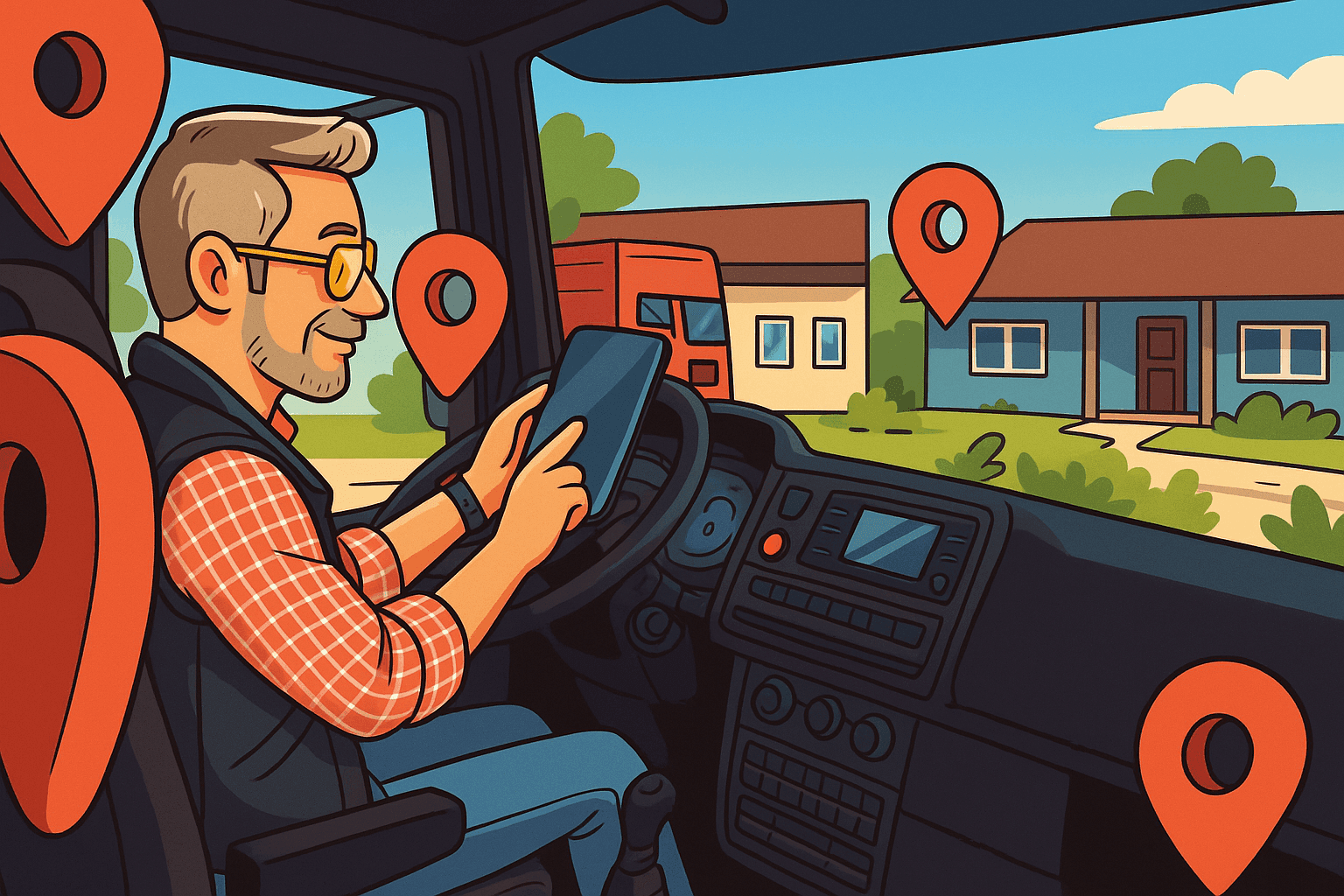
Why a Trucker GPS Matters
A regular GPS or phone app can miss the details that matter most to commercial driving. A truck-specific unit can account for height limits and weight limits, which is where many expensive mistakes begin. That difference alone answers a common question - yes, a trucker GPS is generally better than a regular GPS for professional driving.
Dedicated systems also help with FMCSA compliance by supporting HOS-related functions or integrating with logging tools, depending on the model. They usually do a better job surfacing truck stops, parking, and other useful points on the map. In my own testing over the years, that kind of context matters more than flashy graphics.
Another advantage is live traffic and weather support where available. Some units use satellite data for core navigation and then pull added information through the Internet, Wi-Fi, or Bluetooth. The route line may look simple on screen, but the quality of the underlying routing logic is what keeps a large vehicle out of trouble.
Top GPS Devices for Truck Drivers in 2026
| Device or App | Best For | Key Features |
|---|---|---|
| Garmin dēzl OTR1010 | Long-haul OTR driving | Large 10-inch display and truck-specific routing |
| Rand McNally OverDryve 8 Pro II | Drivers who want one device doing more than route guidance | Truck navigation with HOS support and connected cab features |
| Garmin dēzlCam 785 LMT-S | Solo drivers who want added protection on the road | Built-in camera and truck-aware routing |
| Google Maps With Trucker Apps | Budget-minded drivers and shorter runs | Strong traffic view with truck-routing support from a companion app |
Garmin dēzl OTR1010
Best for - long-haul OTR driving.
- Large 10-inch display with a clear touchscreen
- Custom routing based on truck dimensions and cargo details
- Live traffic and weather support
- Optional camera upgrade for added road coverage
Drivers tend to like this one because the screen is easy to read at a glance, even during long shifts. That larger display helps reduce quick misreads, and on a busy interstate that matters. Garmin has spent years refining truck routing, and it shows in the interface response and map behavior.
Rand McNally OverDryve 8 Pro II
Best for - drivers who want one device doing more than route guidance.
- Truck-focused navigation with HOS logging support
- Voice features with entertainment functions
- Wi-Fi and Bluetooth connectivity
- Dash camera integration
Rand McNally takes a hybrid approach here. You get truck navigation software plus tools that can reduce the number of separate screens in the cab. For an owner-operator trying to simplify the workspace, that can be a practical move.
Garmin dēzlCam 785 LMT-S
Best for - solo drivers who want added protection on the road.
- Built-in camera with incident recording
- Truck-aware routing
- Driver alerts for road conditions and fatigue cues
The integrated camera is the main draw. If there is a dispute or a hard stop event, having video can help. I also like the smaller footprint here. In a tighter cab, a compact GPS with a camera can feel more efficient than mounting separate hardware.
Google Maps With Trucker Apps
Best for - budget-minded drivers and shorter runs.
- Real-time traffic from Google Maps
- User-reported information through trucker apps
- Low-cost or free setup on Android operating system devices and phones
This is the answer to another common question about the best GPS app for trucks. By itself, Google Maps is strong for traffic flow and general road speed, but Google does not offer a true truck mode with full commercial restrictions. That means Google Maps can be useful for parts of the trip, yet it is not ideal as the only navigation tool for a truck.
Paired with a truck-focused app such as Trucker Path or CoPilot Truck, it becomes more workable for local work or short regional routes. In practice, Google Maps handles live traffic well, while the truck app is there to check commercial routing limits and truck stop details. Still, for a heavy vehicle on unfamiliar roads, a dedicated truck GPS remains the safer choice.
How to Choose the Right Truck GPS
- Choose a screen size that cuts glance time and makes the map easier to read.
- Make sure the unit mounts securely without blocking visibility.
- Check update support so the maps and software stay useful.
Screen size affects more than comfort. A larger display can reduce glance time, which matters during lane changes or dense traffic. In a few quick comparisons, a 10-inch screen felt easier to scan than a compact unit, especially when split-screen map data was active.
Mounting matters too. The device should fit the cab cleanly without creating a visibility problem. Good hardware placement is a bit like GPS antenna placement in field mapping work - poor positioning can make a good system harder to trust.
It is also smart to check update policy and support quality. Roads change, restrictions change, and map software that falls behind loses value fast. A dependable brand with regular map updates and responsive support is usually worth paying for.
What Is the Best GPS for a Truck
For many long-haul drivers, the best overall choice is the Garmin dēzl OTR1010 because it balances screen clarity with truck-specific routing. If you want stronger all-in-one functionality, the Rand McNally OverDryve 8 Pro II deserves a serious look. If camera coverage is the priority, the Garmin dēzlCam 785 LMT-S stands out.
The better pick depends on route type, cab space, and how much you want one device to handle. Long distance work usually benefits from a larger dedicated unit. Local driving can sometimes get by with a phone setup and extra truck software, though that is still a compromise.
Conclusion
A truck-specific GPS remains one of the more useful tools a professional driver can buy. It supports safer routing, smoother trip planning, and better awareness of the limits that apply to a commercial driver's license holder on the road. Compare the screen, the routing engine, and the update policy, then choose the unit that fits your truck and your workload.
FAQ
Can I Use My Phone Instead of a Trucker GPS
You can, but a phone app may miss truck height limits or weight restrictions. That can lead to bad routing and costly detours. A dedicated truck GPS is built for commercial use in a way a standard car app is not.
Do Truck GPS Systems Need Internet
Most hardware units use satellite positioning for core navigation, so they do not need constant Internet access to keep a route on the map. Some added functions, such as traffic updates or connected services, do rely on a live connection.
Are Updates Free
Many devices from Garmin and Rand McNally include long-term map or software updates, but the details vary by model. It is worth checking that before buying, because update support affects how useful the device stays over time.


