
Septentrio Unveils Mosaic-g5 P6 For Compact High-precision Gnss Work


No audio is provided with this content.
Small navigation hardware usually forces a tradeoff between footprint and field performance. Septentrio, part of Hexagon, is pushing back on that with the mosaic-G5 P6, a multi-frequency precise positioning module built for commercial unmanned aerial vehicle platforms and robotics, along with other systems where space and electric energy consumption stay tight. The receiver measures 23 mm by 16 mm and weighs 2.2 grams, so the pitch is straightforward - dependable positioning in a very compact satellite navigation device.
| Specification | Value |
|---|---|
| Size | 23 mm x 16 mm |
| Weight | 2.2 grams |
| Interfaces | Septentrio says the module is built for compact integrations and evaluation workflows, with interface details covered in the product documentation. |
| Power Use | The company highlights low power operation, but typical and peak figures were not specified in the announcement. |
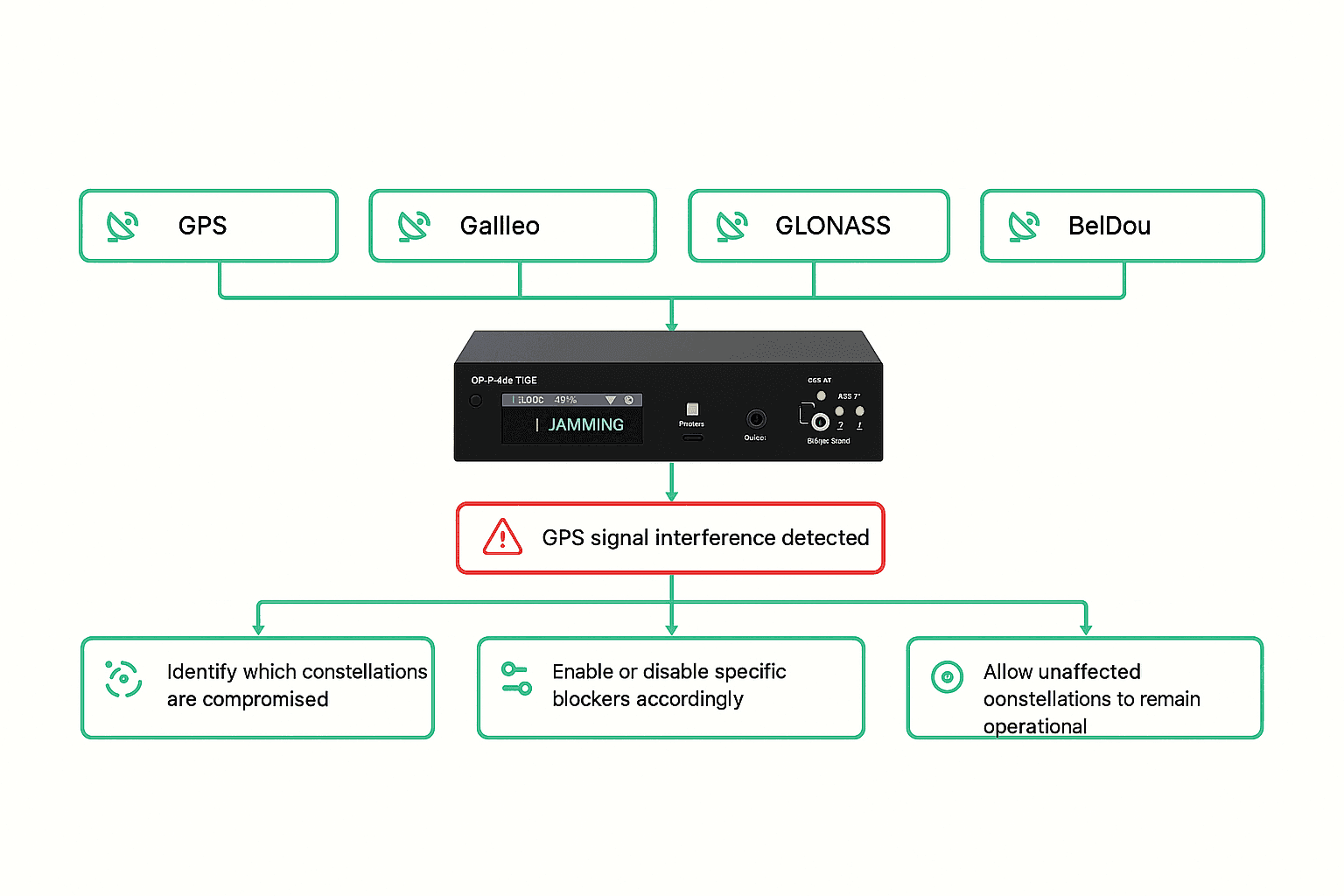
AIM+ Premium is included to help the GNSS receiver hold up against deliberate interference and accidental signal disruption, along with spoofing attempts. Septentrio describes that package as part of the module's resilience layer, aimed at keeping position output usable when the radio environment gets messy. From my side of the fence, that matters because noisy satellite signals can throw off a control system the way bad GPS input can skew a map layer.
“By extending the mosaic family with mosaic-G5 P6, we are bringing an all-in-one module offering accuracy, resilience, and flexibility for demanding industrial applications,” said Yasmine Hunter, product manager at Septentrio.
High Update Speed for Control and Fusion
The new module is positioned at the high end of the market for update rate, and it also keeps latency low. Septentrio did not attach specific Hz or latency figures in the launch material, but the point is clear enough for automation work where a vehicle or robot has to react quickly without drifting off line. Septentrio also makes raw measurements available, which gives developers more room for sensor fusion in systems that depend on tighter accuracy and precision. The company did not spell out raw output formats in the announcement, so developers will need the formal technical documentation for that level of detail.Low-latency GNSS matters most when the control loop is already tight. A fast receiver helps keep the positioning trace closer to the real route instead of lagging behind it.
Low-latency GNSS matters most when the control loop is already tight. A fast receiver helps keep the positioning trace closer to the real route instead of lagging behind it.
Flexible Accuracy Options and HAS Support
Septentrio says the mosaic-G5 P6 lets users tune the balance between accuracy and signal availability. It works with Galileo High Accuracy Service out of the box, giving access to decimeter-level positioning without extra complexity at the start. The announcement points clearly to HAS support, while fuller details on RTK, PPP, and expected accuracy by operating mode are left to the official specification set. In real deployments, that kind of built-in support can save integration time by a few hours, especially during early evaluation.
Users can set the module up with one antenna or two, depending on the job. A dual-antenna arrangement supports precise GNSS heading, which is useful for orientation control in automation systems such as autonomous equipment and precision guidance. Septentrio says the receiver supports all major global constellations, but the launch summary stops short of listing every signal and frequency. Heading accuracy figures were also not included in the announcement.
| GNSS Constellation | Supported Signals/Frequencies |
|---|---|
| Galileo | Supported, with HAS called out directly in the launch material. Full signal and frequency details are left to the datasheet. |
| Other major constellations | Support is stated for the broader multi-constellation stack, but the complete signal map was not included in the release summary. |
Integration With Existing Autopilot Stacks
The module is designed to fit into established development workflows. It supports open-source autopilot environments such as PX4 and ArduPilot, and it also works with ROS, which should make life easier for teams building robotics or UAV platforms. I looked at this the way I would inspect a GPS integration path, and compatibility at this layer often saves far more time than the hardware spec sheet suggests.
Septentrio also offers an evaluation kit for bench testing and early field checks. The company says it includes direct connections for autopilot systems, while the free RxTools user interface helps with setup and evaluation. The launch note does not break out the kit contents item by item, so details such as interface boards, included cables, or bundled antennas still need to be checked in the official kit documentation.
Accessories and Related Hardware
The announcement confirms support for single-antenna and dual-antenna setups, and it points to an evaluation kit for development work. Beyond that, Septentrio did not provide a formal accessory list in the release, so buyers looking for compatible antennas, cables, mounting hardware, or interface boards will need to check the product page and datasheet for the approved options tied to the mosaic-G5 P6.
How It Sits Within the mosaic-G5 Line
This launch piece presents the mosaic-G5 P6 as a compact, higher-end option aimed at demanding UAV and robotics integrations. It does not include a direct side-by-side comparison with variants such as the P3 or P3H, so there is no official feature or performance breakdown here to map against the rest of the range. If that comparison matters for a design decision, the cleanest path is to line up the datasheets for each module and check positioning mode support, heading capability, and interface details.
Documentation and Specifications
Septentrio's announcement points readers to the company's product information for more detail on the module and related hardware. The technical documentation, datasheet, and specification pages for the mosaic-G5 P6 are the right place to confirm interfaces, power figures, raw data formats, and correction-service support, since those details were only partly covered in the launch summary.
Where to See the Module
Septentrio will show the mosaic-G5 P6 at Xponential in Detroit, Michigan, from May 11 through May 14 at booth #37030. More information about the module and other Septentrio products is available from the company’s team.


