
Septentrio Unveils Compact Mosaic-g5 P6 Gnss Receiver


A very small GNSS module is now pushing into jobs that usually force a compromise on size, power, or positioning quality. Septentrio, part of Hexagon, has introduced the mosaic-G5 P6 as an all-in-one GPS and GNSS receiver aimed at survey work and industrial automation, with a footprint of 23 mm by 16 mm and weight starting at 2.2 gram.
| Feature | Specification |
|---|---|
| Footprint | 23 mm by 16 mm |
| Weight | Starting at 2.2 gram |
| Positioning focus | High-accuracy GNSS for compact industrial designs |
| Key capabilities | Sensor fusion support and anti-jamming protection |
| Accuracy modes | Standalone, RTK, and Galileo HAS support |
| Antenna setup | Single-antenna or dual-antenna operation |
Small Hardware With Full Precise Positioning Capability
Septentrio says the new module is built for equipment where every millimeter matters. That includes UAVs and robotics systems, along with other machine designs that have tight SWaP limits. From what I have seen in compact satellite navigation device design, that size class usually means giving something up. Here, the pitch is that users keep reliable navigation performance without taking that hit.
The company also includes AIM+ Premium technology, which is intended to help the receiver stay operational under GNSS jamming or spoofing conditions. That matters in tougher signal conditions as well, including dense built-up areas or other interference-heavy environments. In practical field use, a noisy signal can throw motion control off course much like bad GPS data can distort a map layer.
Built for Fast Control Loops and Sensor Fusion
According to Septentrio, mosaic-G5 P6 delivers one of the higher update rates currently available, along with low latency. That is a key point for automation systems where the control loop has to react quickly and the navigation feed cannot lag behind the machine.
Alongside high-accuracy positioning output, the module provides raw measurements for sensor fusion. That gives developers more room during evaluation and prototype work.
- Custom interface integration
- ArduPilot or ROS compatibility
I tend to look at that the same way I read overlapping GIS layers - the value improves when each signal lines up cleanly with the next one.
Flexible Accuracy Options for Industrial Use
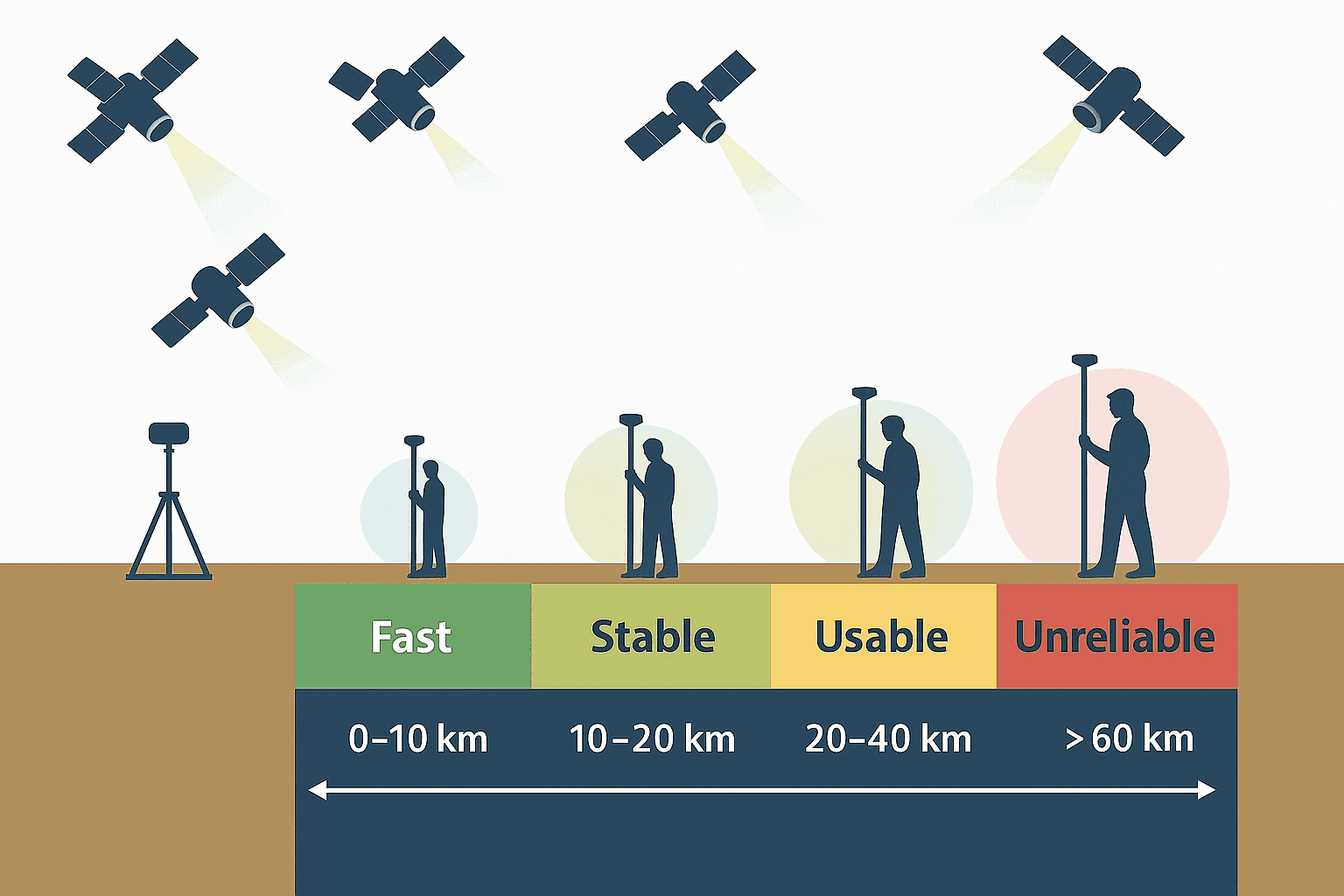
Septentrio says users can tune the balance between accuracy and availability, which is often necessary in real-world satellite navigation rather than lab conditions. The module supports Galileo HAS out of the box for decimetre-level positioning, and Septentrio also points to RTK support for higher precision where that correction workflow is available. In broad terms, users can expect lower precision in standalone mode and tighter results in corrected modes.
Users can deploy the receiver in either a single-antenna or dual-antenna setup. The receiver is designed to work with major GNSS constellations, including GPS and Galileo, and that broader satellite coverage helps maintain heading and position performance. That opens the door to precise GNSS heading, which helps with orientation and autopilot performance in autonomous machinery, robot navigation, and precision guidance. In many industrial systems, accurate heading can be just as important as absolute position.
Accessories, Evaluation Hardware, and Documentation
For integration work, the related hardware usually centers on practical add-ons such as antennas and connection cables. Evaluation boards are also the kind of accessory teams look for first, especially when they want to validate fit, signal quality, or software behavior before committing the module to a production design.
The evaluation kit is intended to speed up bench testing and early integration. In most cases that means a kit built around the receiver module, paired with the basic hardware needed to power it and connect it to a host system, along with setup material for first use.
For documentation and specifications, the official Septentrio product page is the main place to check for the datasheet, user manual, and technical notes. Support resources are typically grouped there as well, so it is the natural starting point when you need current integration details or firmware-related guidance.
How It Fits Within the mosaic-G5 Family
Within the broader mosaic-G5 line, the P6 version stands out for packing precise positioning and heading support into a very small form factor. That makes it a better fit for compact automation hardware or tightly constrained mobile platforms, while other modules in the family may be aimed more at different integration layouts or performance trade-offs.
“By extending the mosaic family with mosaic-G5 P6, we are bringing an all-in-one module offering accuracy, resilience, and flexibility for demanding industrial applications,” said Yasmine Hunter, Product Manager at Septentrio.


