


Crypto Faucets For Beginners


Since Bitcoin appeared in 2009, the Cryptocurrency market has expanded into a multi-trillion-dollar sector, creating many ways for people to explore digital finance. Among the simplest starting points are crypto faucets for beginners, which distribute tiny amounts of a coin or token in exchange for easy actions such as solving a CAPTCHA, viewing Advertising, or filling out short forms. In most cases, these rewards are testnet units rather than spendable Money, so they are not a true Investment or income stream. Even so, they give newcomers practical Experience with a Cryptocurrency wallet, Blockchain transactions, Digital asset transfers, and basic network Fee concepts without taking on major Financial risk.
In this article, our editorial team explains what these faucets do, how they function, and how to use them wisely. Let’s get into it.
Crypto faucets are online services that hand out small crypto rewards after users complete quick activities such as CAPTCHA checks, ad views, or surveys. In a typical process, a user connects or enters a wallet address, completes the required task, submits a claim, and waits for the reward to arrive either immediately or after a short delay. Some faucets work on mainnet and pay tiny real rewards, while many others work on testnet and distribute tokens that are useful for learning or development but have no real market value.
Understanding Crypto Faucets
A crypto faucet is usually a website or app that gives out very small amounts of Digital currency after a user finishes a basic task. The term comes from the image of a Tap (valve) that releases drops slowly rather than pouring out a large amount at once. Instead of delivering meaningful Revenue, these platforms focus on usability, onboarding, and Learning.
Many faucet operators use this model to build Interest in a project, expand awareness, and introduce users to a network’s Technology. Some also help cover Gas or transaction Cost on a test network. For example, an Ethereum-based faucet may send small test balances so a developer can deploy a Smart contract, interact with a Decentralized application, or test a Contract flow without spending real funds. Similar resources can exist across other ecosystems, including Solana (blockchain platform), Litecoin, Dogecoin, and newer Blockchain environments.
The Origins of Crypto Faucets
The earliest well-known BTC faucet went live in 2010, when Bitcoin developer Gavin Andresen created one to encourage wider adoption. At the time, users could receive 5 BTC for completing a simple CAPTCHA, back when the Asset had very little market value. As Bitcoin gained Momentum and became more valuable, faucets evolved and often relied on Advertising, Affiliate marketing, or other monetization methods to support their payouts.
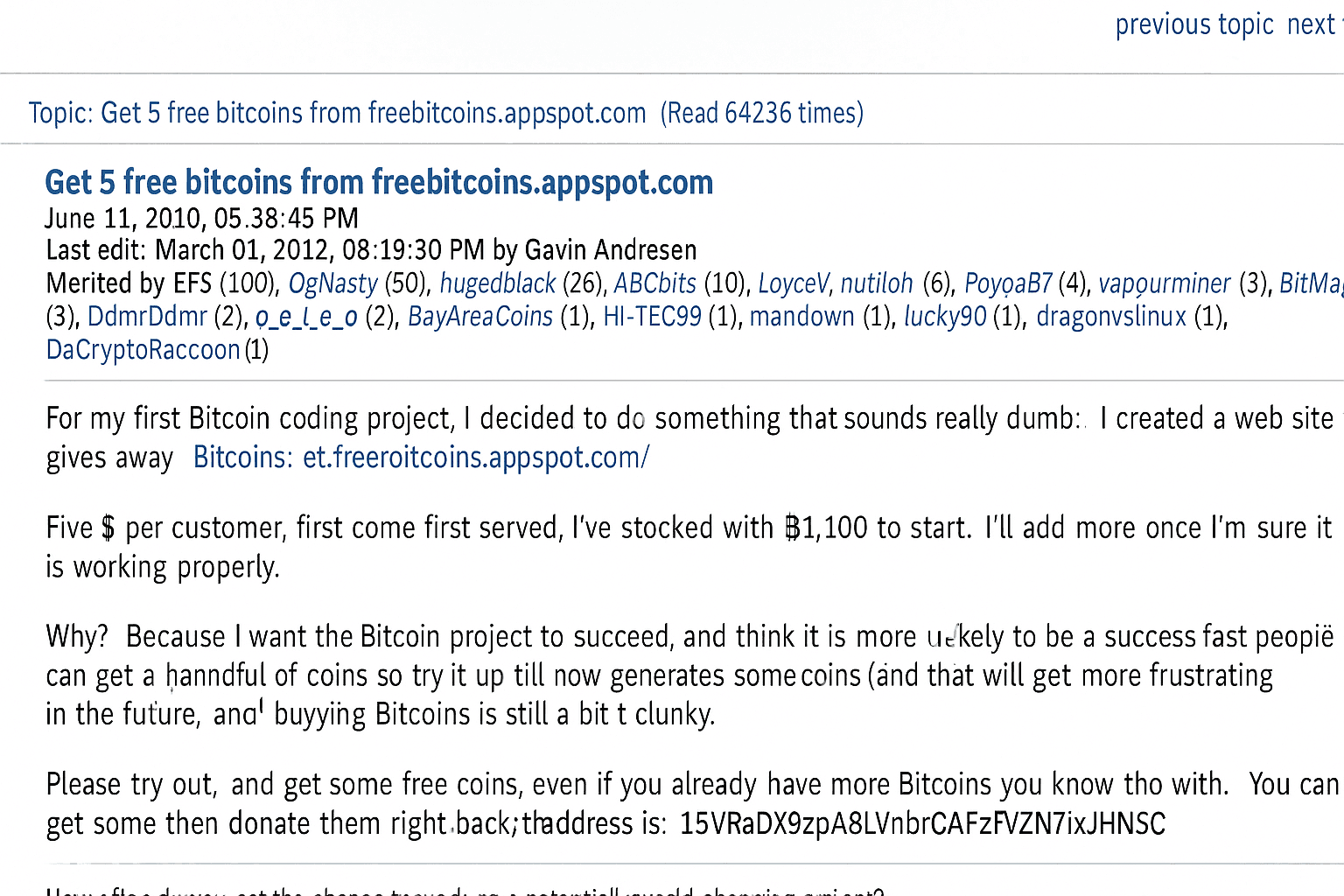
A famous Bitcoin Talk post from Gavin Andresen is often cited as the starting point for the faucet model.
Benefits of Using Crypto Faucets
Although faucets are not designed to generate serious Income, they offer a low-pressure way to interact with crypto tools and processes. For beginners, that can be more valuable than the tiny reward itself.
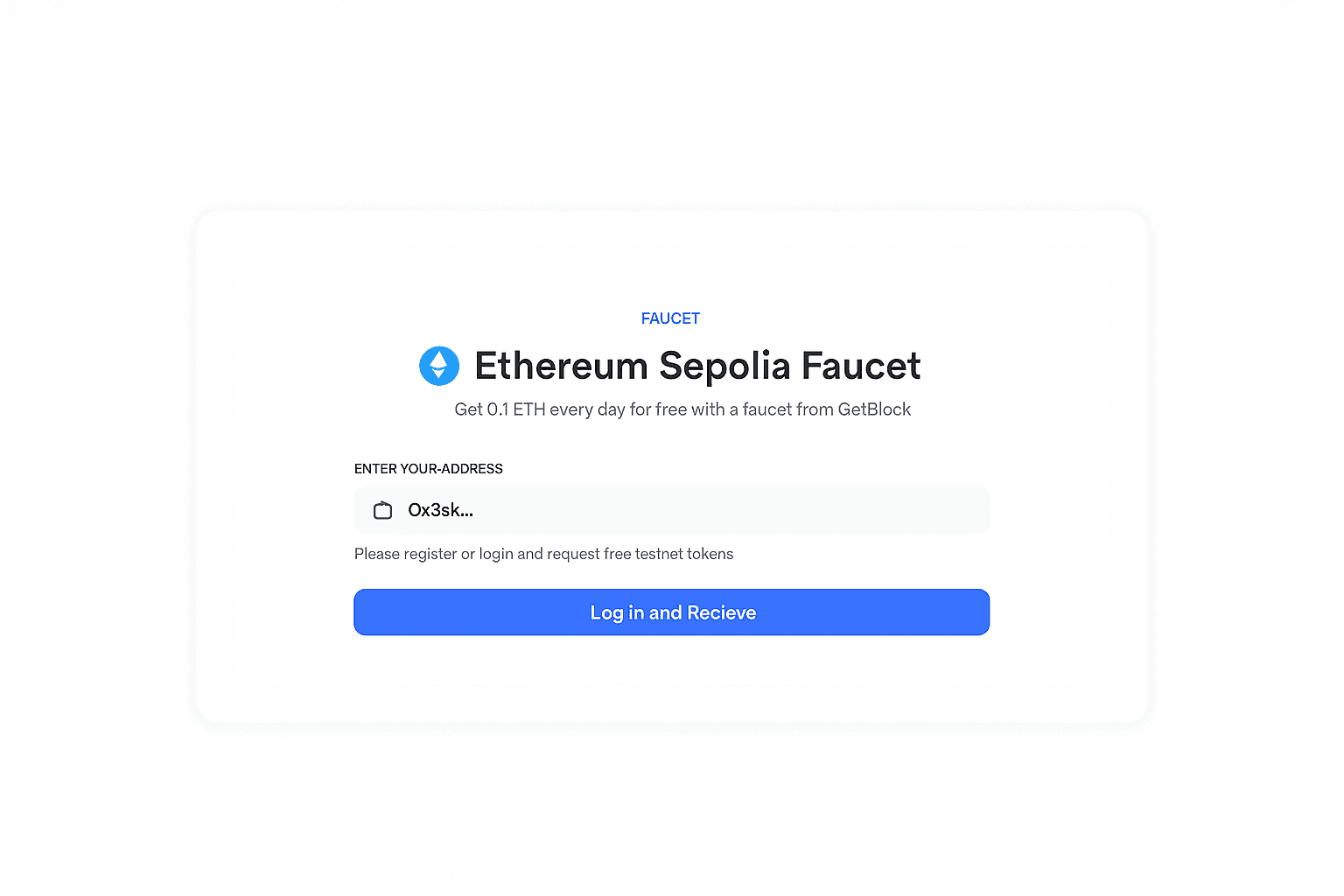
An example of an Ethereum Sepolia faucet interface.
Using a faucet helps new users practice with a Digital wallet, understand Payment flow on a Blockchain, and learn how network Fee settings work. It can also prepare them to explore a broader Ecosystem that includes DeFi platforms, Non-fungible token markets, and developer tools. In practical terms, a beginner may connect MetaMask, copy a wallet address, monitor a Timer before the next claim, and confirm how test tokens arrive. That hands-on Information builds confidence before any real-money decision is made.
Are Crypto Faucets Good for Beginners?
Yes, crypto faucets can be a good starting point for beginners when the goal is education rather than profit. They let new users practice wallet setup, token transfers, and basic network actions without committing much Money. The downside is that rewards are extremely small, and some platforms may be cluttered with ads, tracking tools, or misleading offers.
- Pros: Low-cost way to learn how wallets, claims, and transactions work.
- Pros: Useful for testing apps and networks before using real funds.
- Cons: Rewards are usually tiny and rarely meaningful as income.
- Cons: Some sites may waste time or expose users to scams and Privacy risks.
For most newcomers, faucets are suitable if they are treated as a practice tool. They are much less suitable if the goal is dependable earnings.
How To Use a Crypto Faucet
- Pick a reputable service: Look for a faucet with strong community feedback, clear rules, and support for your preferred Currency or network. Our team analyzed several options and found that trust, Privacy practices, and transparent Data handling matter more than flashy rewards.
- Create an account: Many platforms ask for an email and a Password. Keep your login details secure, and never reuse sensitive credentials from financial accounts.
- Complete simple tasks: Common activities include:
- CAPTCHA checks
- Short surveys
- Ad viewing
- Playing games
- Referring friends
- Downloading apps
- Timer or cooldown period between claims
- Request the tokens: After the task is done, submit your claim. Depending on the Tool and network, the transfer may be instant or delayed.
- Send rewards to your wallet: Once minimum withdrawal conditions are met, move the tokens to your Cryptocurrency wallet or Digital wallet for testing. A compatible option such as MetaMask is often used on Ethereum networks.
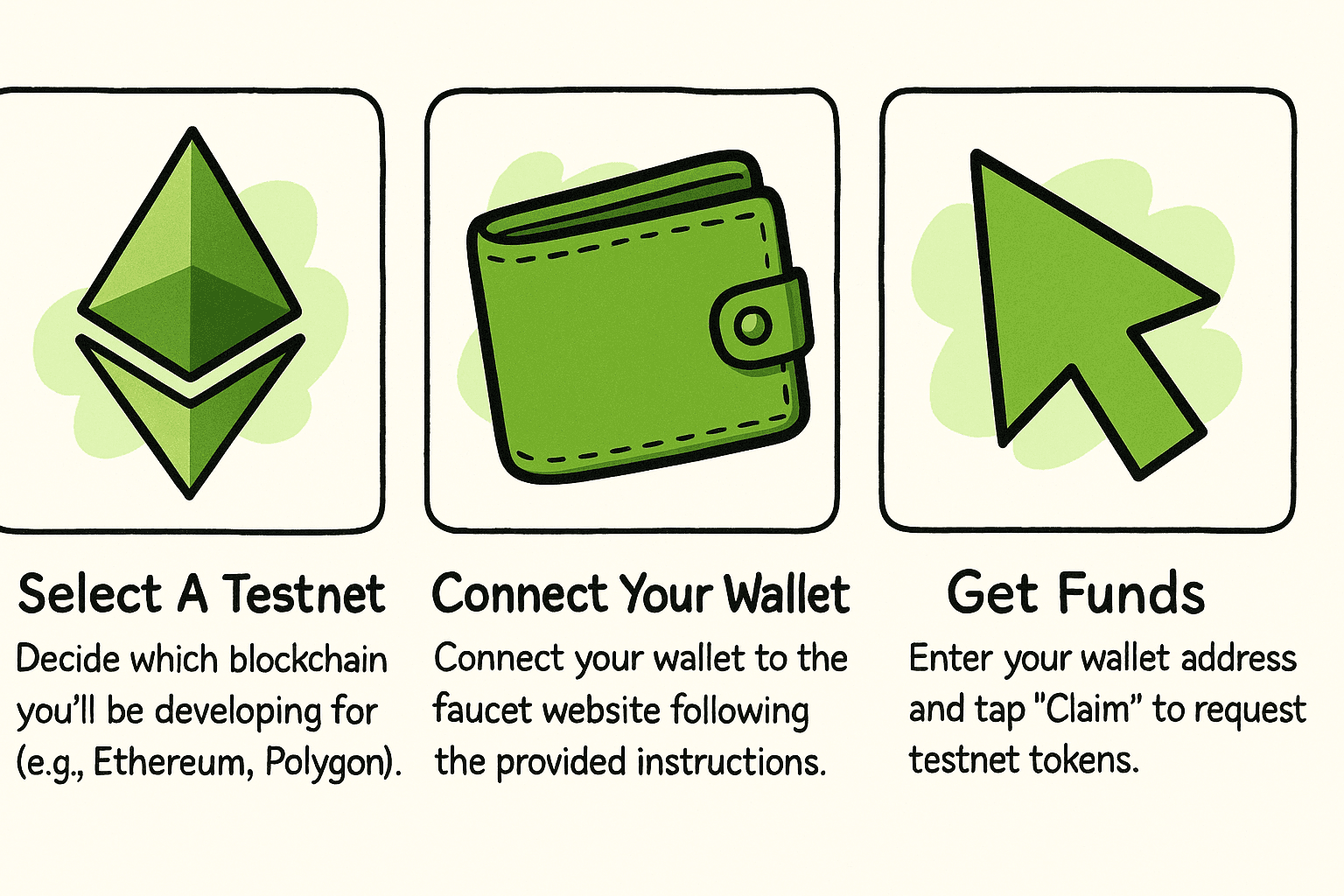
A simple visual showing the basic steps involved in using a crypto faucet.Our experts believe the realistic earning potential from most crypto faucets is extremely limited, especially when compared with the time required to complete tasks and meet withdrawal rules.
How Much Can You Earn From Crypto Faucets?
In most cases, earnings are very small. Mainnet faucets that pay real crypto usually offer only tiny fractions of a coin per claim, and many require repeated visits, task completion, or minimum withdrawal thresholds before anything useful can be moved. Testnet faucets are even more limited from an earning perspective because their tokens are generally meant for testing and do not have real market value.
That means the earning potential depends heavily on the faucet type. A mainnet faucet may provide a small real reward, but it is usually closer to pocket change than meaningful Income. A testnet faucet may be valuable for practice, but its purpose is functionality rather than profit.
Can You Make $1000 a Day With Crypto Faucets?
No. Making $1000 a day with crypto faucets is not a realistic expectation. Faucet rewards are intentionally tiny, and even using multiple sites would not usually overcome payout caps, cooldown periods, withdrawal limits, and the low value of each claim. Any platform suggesting that users can reliably reach that level of daily income through faucet activity alone should be treated with caution.
Realistic limits are far lower, especially for beginners. Faucets are best viewed as learning tools or minor side activities, not as a path to high daily earnings.
Are Crypto Faucets Worth Your Time?
They can be worth your time if you want practical Experience with wallets, test tokens, and Blockchain transactions. They are usually not worth your time if your main goal is to earn meaningful Money. The time-to-reward balance is often poor, especially on ad-heavy platforms that ask users to complete many steps for very small payouts.
In general, faucets are worthwhile when you want to learn, test a workflow, or explore a network with limited risk. They are less worthwhile when they involve excessive ads, repeated tasks, or personal Data requests that do not match the size of the reward.
Top Crypto Faucets
Below are several widely used options for claiming test tokens across different networks and development environments.
| Faucet Name | Supported Networks | Key Features |
|---|---|---|
| Formo Faucet | Multiple testnet environments | Directory for finding free testnet tokens for onchain experimentation |
| Alchemy Faucet | Sepolia and other Ethereum testing environments | Small testnet ETH balances for development and testing |
| Chainstack Faucet | Several Blockchain test networks | Supports contract deployment, wallet checks, and app testing |
| Superchain Faucet | OP Superchain and Optimism-related networks | Free testnet ETH for interconnected Layer 2 projects |
| QuickNode Faucet | Multiple testnets | Test tokens for app trials and smart contract verification |
| Paradigm Faucet | Sepolia, Holesky, OP Sepolia, and Base Sepolia | Multi-network ETH access for cross-chain development |
Some users also explore reward-oriented faucet sites such as Cointiply, which may combine small claims with games, offers, or ad-based tasks. Still, the main value of crypto faucets for beginners is not the Coin amount received. The real benefit is Learning how a network works, how a wallet receives a Digital asset, and how to assess Risk, Privacy, and basic Data-sharing rules before engaging more deeply with crypto.
Which Crypto Coin Is Best for Beginners on Faucets?
For most beginners, the best option is usually a coin or token on a widely used network with good wallet support and clear documentation. Ethereum testnet ETH is a common choice because it works with popular tools such as MetaMask and is widely used for testing Decentralized applications. Bitcoin-themed faucets may be easier to recognize historically, while Dogecoin and Litecoin faucets may feel more approachable because of their simpler community reputation.
The better approach is to choose based on ease of use rather than brand familiarity alone. A beginner-friendly faucet coin should have a compatible wallet, simple claim steps, and a network that is easy to explore. For learning how smart contracts and web3 tools work, Ethereum testnet ETH is often the most practical starting point.Our experts advise beginners to focus first on safe platforms, minimal personal Data sharing, and testnet practice instead of chasing larger rewards from unfamiliar faucet sites.
For newcomers, faucets create a low-stakes path into web3. Test tokens do not carry real market worth, but they can teach how transactions move, how Gas and fees behave, and how a Blockchain application feels in practice. Whether you are curious about Bitcoin history, Ethereum development, Solana (blockchain platform) tooling, or even community-driven names like Dogecoin and Litecoin, faucets can be a useful first step. The key is to stay cautious, protect personal Information, understand the Cost of your time, and remember that no faucet should be treated as guaranteed Revenue or meaningful Money-making potential.
FAQ
1. Can I convert testnet tokens into real crypto?
No. Testnet tokens are not meant to become spendable Money or tradable assets. They exist for testing, education, and development only.
2. Are crypto faucets safe to use?
Some are trustworthy, while others may create Privacy concerns or collect unnecessary Data. Beginners should use established platforms, avoid connecting a wallet that holds real assets, never reuse passwords, and avoid sharing more personal Information than necessary.
Common scams include fake faucets that ask for an upfront deposit, pages that promise unusually high rewards, and sites that imitate legitimate brands to collect wallet details or login credentials.
3. Why do developers need testnet tokens?
They allow developers to test a Smart contract, trial a Decentralized application, and simulate Payment behavior without risking real ETH or another Currency.
4. How often can I claim from a faucet?
That depends on the platform. Some let users claim every hour, others once per day, and some use a Timer or cooldown system.
5. Do I need a wallet to use a crypto faucet?
Yes. You generally need a compatible Cryptocurrency wallet or Digital wallet, such as MetaMask, to receive and manage tokens. This setup improves usability and gives valuable Experience before interacting with live networks.


No comments yet. Be the first to share your thoughts.