


Kucoin VS Binance: A Head‑to‑head Comparison


If you are choosing a crypto platform, you will likely weigh KuCoin and Binance side by side, as both are among the largest exchanges by activity and reach.
This guide contrasts the two exchanges across core areas, including trading fees, key features, futures markets, coin availability, and more, so you can decide with confidence.
KuCoin vs. Binance: Which Exchange Is Right for You?
Binance is the world’s largest cryptocurrency exchange by trading volume and total users. The platform couples sharp pricing with a broad catalog of assets and a deep product stack, making it suitable for beginners and professional traders alike.
From a usability perspective, Binance generally feels more streamlined: it offers simplified buy flows alongside more advanced trading screens, plus a large help center and in-app guidance that can reduce friction during onboarding.
KuCoin lists more than 800 cryptocurrencies and goes far beyond low-cap altcoin trading. The platform also provides crypto futures, lending, margin functionality, and other features. It recently introduced a Beginner Zone to help new users learn the basics and earn rewards along the way.
KuCoin can be appealing if you want to explore a wider range of smaller assets, but the interface and feature set may feel busier for first-time users, and new traders may spend more time learning where key settings and order types live.
From a product perspective, these exchanges are closely matched. Both support a large selection of coins, offer spot and derivatives markets with significant leverage, and focus primarily on crypto-to-crypto pairs.
| Feature | Binance | KuCoin |
|---|---|---|
| Founded | 2017 | 2017 |
| Headquarters | Seychelles | Seychelles |
| Base Spot Fee | 0.10% maker/taker | 0.10% maker/taker (Class A) |
| Listings | 400+ | 800+ |
| Derivatives | Perpetual futures and options | Perpetual futures |
| Fiat Pairs | Supports the euro, Turkish lira, Brazilian real, and more | No fiat pairs |
| Leverage | Up to 125x on select contracts | Up to 125x on select contracts |
| Exchange Token | Bnb | Kcs |
Pricing and Trading Fees
Both platforms are known for low costs, putting them among the cheapest major exchanges for active users.
| Fee Type | Binance | KuCoin |
|---|---|---|
| Spot (Base) | 0.10% maker/taker | 0.10% maker/taker (Class A) |
| Spot (Higher Tiers) | N/A | 0.20% maker/taker (Class B); 0.30% maker/taker (Class C) |
| Futures (Base) | 0.018% maker; 0.045% taker | 0.02% maker; 0.06% taker |
Cryptocurrency Listings
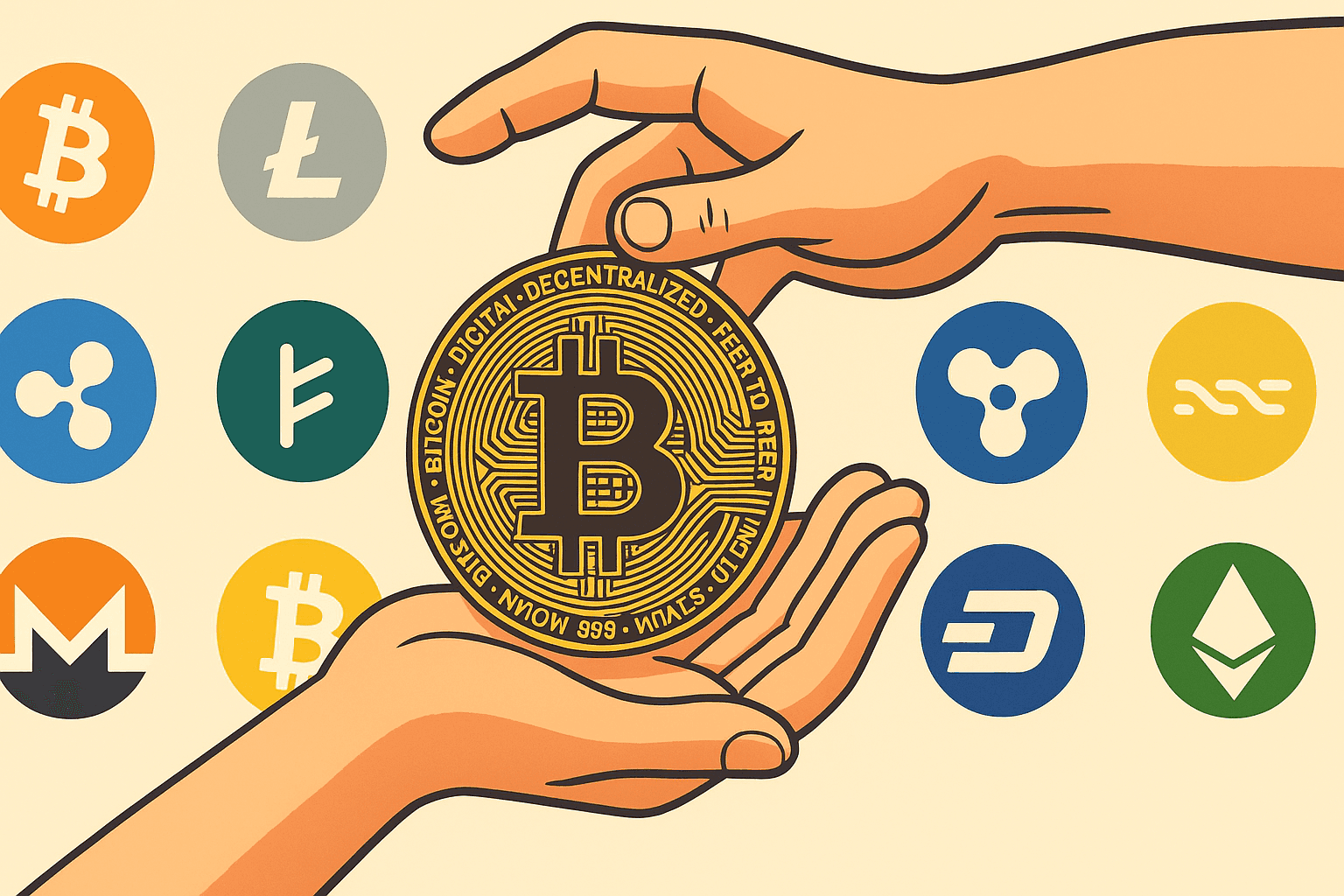
Each platform shines in breadth of coin coverage, making them attractive to traders who like to explore altcoins and diversify their portfolio.
By raw count, KuCoin leads with 800+ assets, while Binance offers 400+.
However, KuCoin’s vast catalog includes obscure micro-caps and lower-quality projects that many users may never touch. If maximum variety is your priority, KuCoin is difficult to beat; if curation matters more, Binance’s lineup may feel more focused.
Derivatives and Margin Trading
Both exchanges run robust derivatives venues and support margin, though Binance edges ahead in instrument choice.
Binance features two futures types: stablecoin-margined contracts settled in a stablecoin (for example, Tether) and coin-margined contracts settled in the underlying asset (for instance, Solana for a Solana-to-dollar contract). Maximum leverage depends on the contract and can reach up to 125x on certain markets.
Binance lists both perpetual and traditional, dated futures, although only Bitcoin and Ethereum have dated futures; many other assets are available as perpetuals.
KuCoin’s futures lineup offers contracts settled either in a stablecoin or the base cryptocurrency, similar to Binance. At present, KuCoin focuses on perpetual futures and does not offer options.
Passive Income and Yield

Users with idle balances can find multiple ways to earn on both platforms, from lending to staking, depending on their risk tolerance.
On Binance, you can provide assets for lending or allow the platform to stake Proof-of-Stake coins on your behalf, with rewards credited back to your wallet minus applicable fees.
Binance also offers BNB Vault, which lets you lock BNB to aggregate rewards from Simple Earn and Launchpool at the same time.
KuCoin provides crypto lending and staking along with KuCoin Wealth, a suite of strategies spanning different risk levels to generate yield on assets.
Notable Extras
The above only scratches the surface.
- NFT trading
- Peer-to-peer marketplaces
- Web3 wallets
- Automated trading tools
- Other additional features
On Binance, Launchpool deserves special mention. New projects allocate a portion of tokens to Launchpool, and users can stake Bnb or stablecoins to farm those tokens.
Launchpool has become popular because it provides a comparatively lower-risk path to earn tokens from high-profile projects.
Regulatory Landscape
Both exchanges have faced regulatory scrutiny, often around allegations of serving users in regions without the proper registrations or approvals.
In practice, their regulatory posture is jurisdiction-dependent: both platforms operate through region-specific entities and policies, and availability (including identity verification requirements) can change based on local rules and enforcement.
Binance, as the largest exchange, has attracted the most attention.
In 2023, Binance agreed to pay $4.3 billion in fines after a United States Department of Justice investigation concluded there were violations tied to the Bank Secrecy Act and operating as an unregistered money-transmitting business.
As part of the resolution, former chief executive officer Changpeng Zhao stepped down and pled guilty to failing to maintain an effective anti-money laundering program.
KuCoin has also faced actions. Following a case brought by the New York attorney general, KuCoin agreed to pay $22 million in fines and refunds related to allegations of failing to register as a securities and commodities broker-dealer and misrepresenting itself as a crypto exchange.
Regulators in Canada, the United Kingdom, and the Netherlands have also issued warnings concerning KuCoin.
KuCoin is not broadly available to customers in the United States, and many references to it being “not allowed” in the country stem from state and federal enforcement actions, registration questions, and the platform’s own access restrictions for certain jurisdictions.
Rumors that KuCoin is “shutting down” are typically tied to regional access changes, compliance updates, or enforcement headlines. A jurisdiction-specific restriction is not the same as a global shutdown, and a widespread closure would generally be accompanied by a clear announcement.
For United States users, the main risk with offshore exchanges is regulatory uncertainty: access can change quickly, and protections may be limited if there is a dispute, freeze, or enforcement action.
For United States citizens specifically, the key considerations are legal and practical: you may be blocked from creating or fully using an account depending on where you live, you may face sudden access limitations, and you generally should not assume you have the same consumer protections you would receive on a fully United States-compliant venue.
Security Breaches and Response
Both exchanges have experienced security incidents involving stolen funds.
In May 2019, Binance suffered a hack totaling about $40 million in crypto. No customer losses were realized, as the platform reimbursed affected users in full.
Afterward, Binance launched Secure Asset Fund for Users (Safu), a dedicated fund to help protect users during emergencies such as hacks. The exchange allocates a portion of trading fees to grow Safu.
KuCoin encountered a major breach in 2020, when roughly $275 million in assets were taken from exchange wallets. Users were later made whole.
On day-to-day account security, both exchanges support common protections such as two-factor authentication, device and login management, and withdrawal controls (for example, address allowlists). The more meaningful difference is how each platform has handled incidents: Binance paired reimbursement with an explicit emergency fund structure, while KuCoin emphasized reimbursement and operational hardening after its breach.
Post-breach improvements tend to look similar across major exchanges: tighter withdrawal controls, more aggressive anomaly monitoring, and stronger custody practices, with the real test being how consistently those controls hold up under stress.
The Bottom Line
Both KuCoin and Binance suit frequent traders who want leverage and a very large menu of tradeable cryptocurrencies.
If Binance operates in your country, it is generally the stronger all-around pick. Still, KuCoin lists coins you won’t find on Binance, which can make it preferable for traders targeting niche altcoins with smaller market capitalizations.
If you primarily want major assets like Bitcoin and Ethereum and you trade infrequently or plan to buy and hold, consider alternatives such as Kraken or Coinbase, which emphasize security and have had fewer controversies.
To explore more options, check out our broader roundup of the best crypto exchanges and compare features that matter most to you.


No comments yet. Be the first to share your thoughts.