
Shahed-136 Kamikaze Drone And Iran: From Battlefield Use to Student Robotics


Audio playback is not provided for this article.
News has been dominated by a clash involving Israel, the United States, and Iran since late February, when Israel and the U.S. opened with unexpected strikes. In the weeks since, coalition attacks have heavily damaged Iranian targets while vowing to cripple the country’s nuclear program and push for leadership change. The stated goals include dismantling networks tied to global violence via aligned groups such as Hezbollah, Yemen’s Houthis, several Iraqi Shia militias, Hamas, and Islamic Jihad, which have targeted Israel and Western interests.
Iran fields more than 600,000 active personnel, an estimated 2,000–3,000 ballistic and short-range missiles, and a substantial inventory of unmanned aerial vehicles.
Among the more discussed systems are:Shahed-136. A low-cost, propeller-driven one-way attack drone (a loitering munition) intended for long-range strikes and for being launched in volume. Russia has used it in the war against Ukraine for repeated large-scale attacks, including against infrastructure, while also leaning on it to stretch air defenses through saturation and steady pressure. Its appeal is simple economics and availability, including production in Russia or manufacture to a similar design. The range figures cited later refer specifically to the Shahed-136, not its jet-powered derivatives.Mohajer-6. A larger armed unmanned aircraft used for surveillance and strike missions, also treated as a core element of Iran’s drone inventory.Shahed-238 (variant). A jet-propelled, longer-range evolution in the Shahed family that differs from the Shahed-136 in propulsion and performance.In modern conflicts, inexpensive one-way attack drones have shifted the math of air defense by rewarding mass, persistence, and saturation as much as precision.
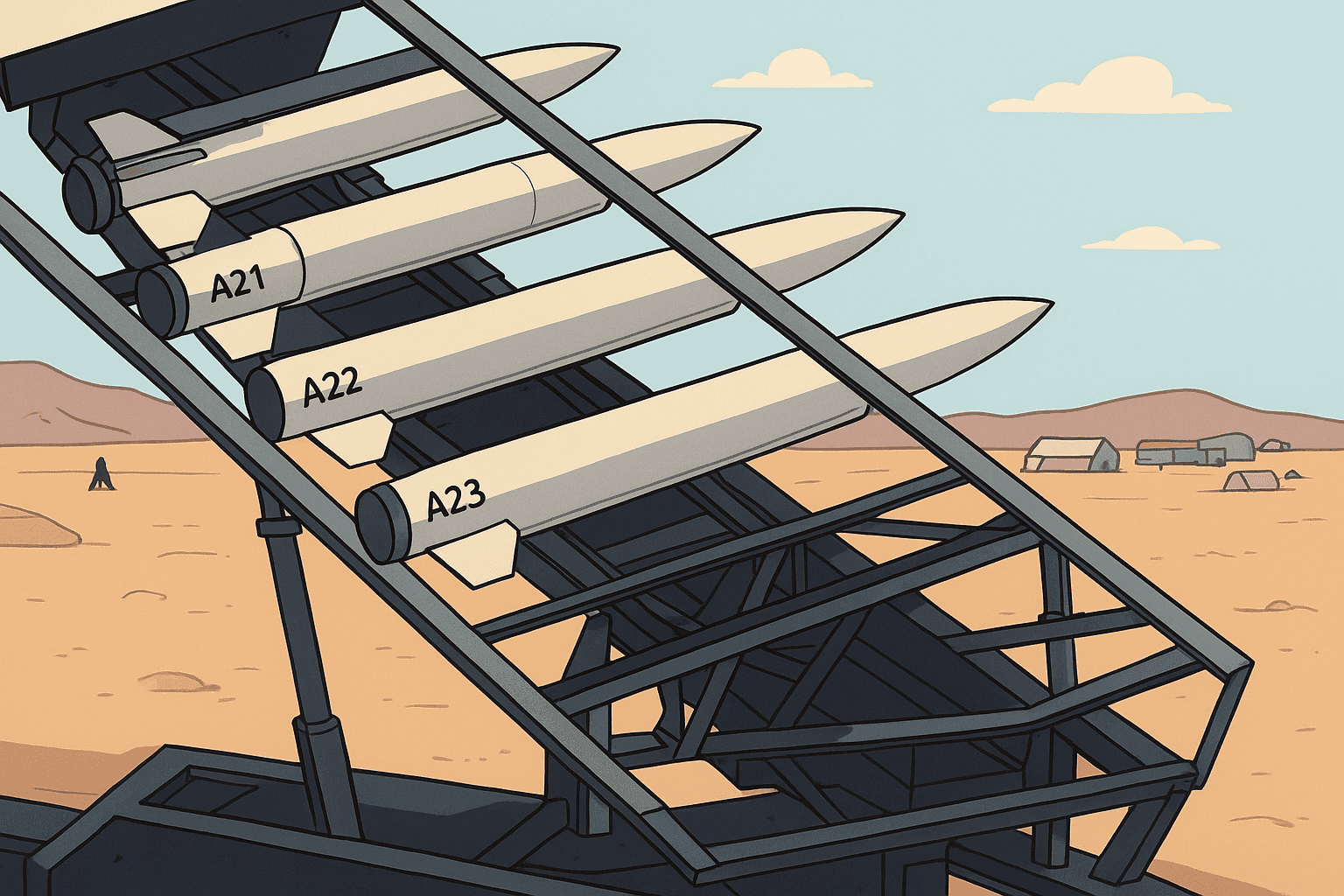
Publicly cited specifications highlight a long-reach, one-way strike system built around a sizable explosive payload.
| Specification | Shahed-136 |
|---|---|
| Advertised range | Roughly 800 to 1,550 miles |
| Warhead weight | About 88 pounds |
| Length | About 11.5 feet (roughly 3.5 meters) |
| Wingspan | About 8.2 feet (roughly 2.5 meters) |
| Height | About 1.6 feet (roughly 0.5 meters) |
| Launch weight | About 440 pounds (roughly 200 kilograms) |
| Typical effects | Can damage structures and disable exposed equipment; can cause casualties. |
Early in the fighting at Port Shuaiba, Kuwait, the six U.S. personnel killed and others wounded may have been hit by a Shahed-style kamikaze drone.
The Shahed-136 can be intercepted, and air defenses have shown they can bring it down with layered approaches that include short-range missiles, gun systems, and mobile teams using heavy machine guns or autocannons. Electronic warfare, including satellite-navigation jamming, can also degrade guidance and reduce accuracy. Its relatively slow speed can make it vulnerable, but low-altitude routes and mass launches can still complicate detection and strain interceptor stockpiles. Ukrainian defenders have repeatedly shown successful shootdowns of Shahed-class drones using both guns and missiles.
Known operators include Iran, which developed and fields the Shahed-136, and Russia, which has employed it extensively and manufactures a close analog.
There is a counterpoint. After recovering downed Shahed-136s, U.S. teams reverse-engineered a domestic analog, the Low-Cost Unmanned Combat Attack System (Lucas). Though it has a shorter reach, its punch is comparable. Iran is believed to turn out thousands of cheap drones for roughly $20,000–$50,000 apiece; at those price points, large salvos can be used to probe defenses and force costly intercepts, making even imperfect hits operationally disruptive. In turn, the United States has moved Lucas into high-rate production and deployed it for missions in Iran.
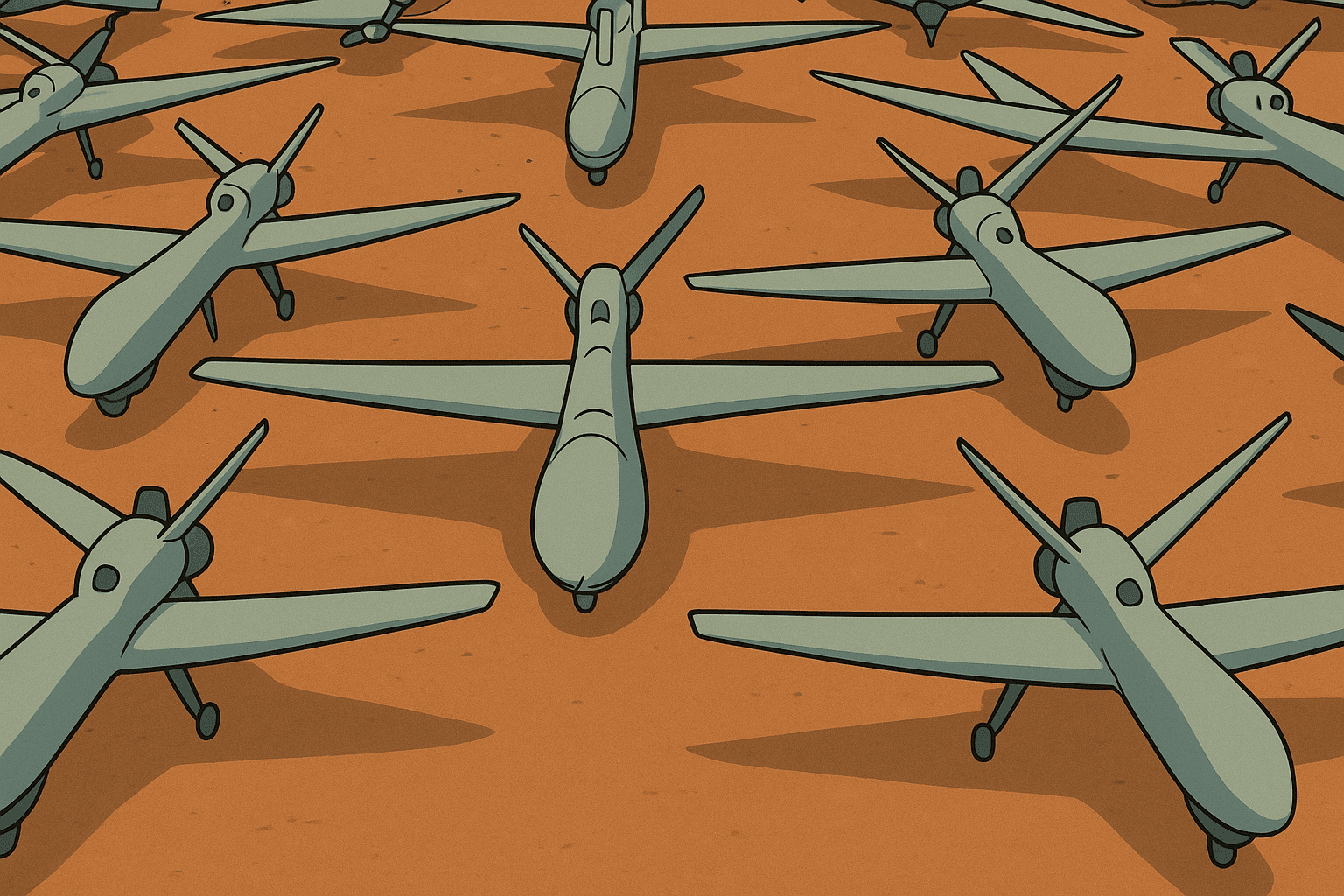
Phoenix-based Spektraworks received a $30 million contract and, within 18 months, produced a rugged, autonomously coordinated attack drone manufactured in the United States at about $43,000 per unit. The system has been fielded in quantity to U.S. Central Command’s newly created unmanned task force, Task Force Scorpion Strike.
Early broadcast footage from the opening salvo showed Baghdad overflights by Shahed-like platforms credited to this unit.
It represents a striking reversal—returning similar loitering munitions, and their destructive effect, to a government long accused of exporting violence for more than five decades.
RoboBoat 2026: Student Autonomy on the Water
Meanwhile, the 2026 RoboBoat competition took place at Nathan Benderson Park near Sarasota, Florida, with 37 high-school and university teams. The challenge centers on developing autonomous marine systems mounted on scale boats. The park’s expansive rowing lake, proven by Olympic rowing and canoe trials, proved a fitting arena for competitors and spectators.
Entrants arrived with a wide range of hull forms and technical stacks, navigating in-water obstacle courses that sharpen navigation and perception while providing practical, career-relevant experience. Volunteers were abundant, and each team brought supporters and technical crews. Typical mission profiles included restoring simulated harbor functions, inspecting underwater infrastructure, and enabling exploration scenarios.
After viewing more than two hours of posted video, the event appears to be run by a student volunteer organization. Without live commentary, final-round objectives were hard to parse, and it was unclear whether any boat fully completed the course—though several successfully avoided a series of posts before threading narrow red and green buoys.
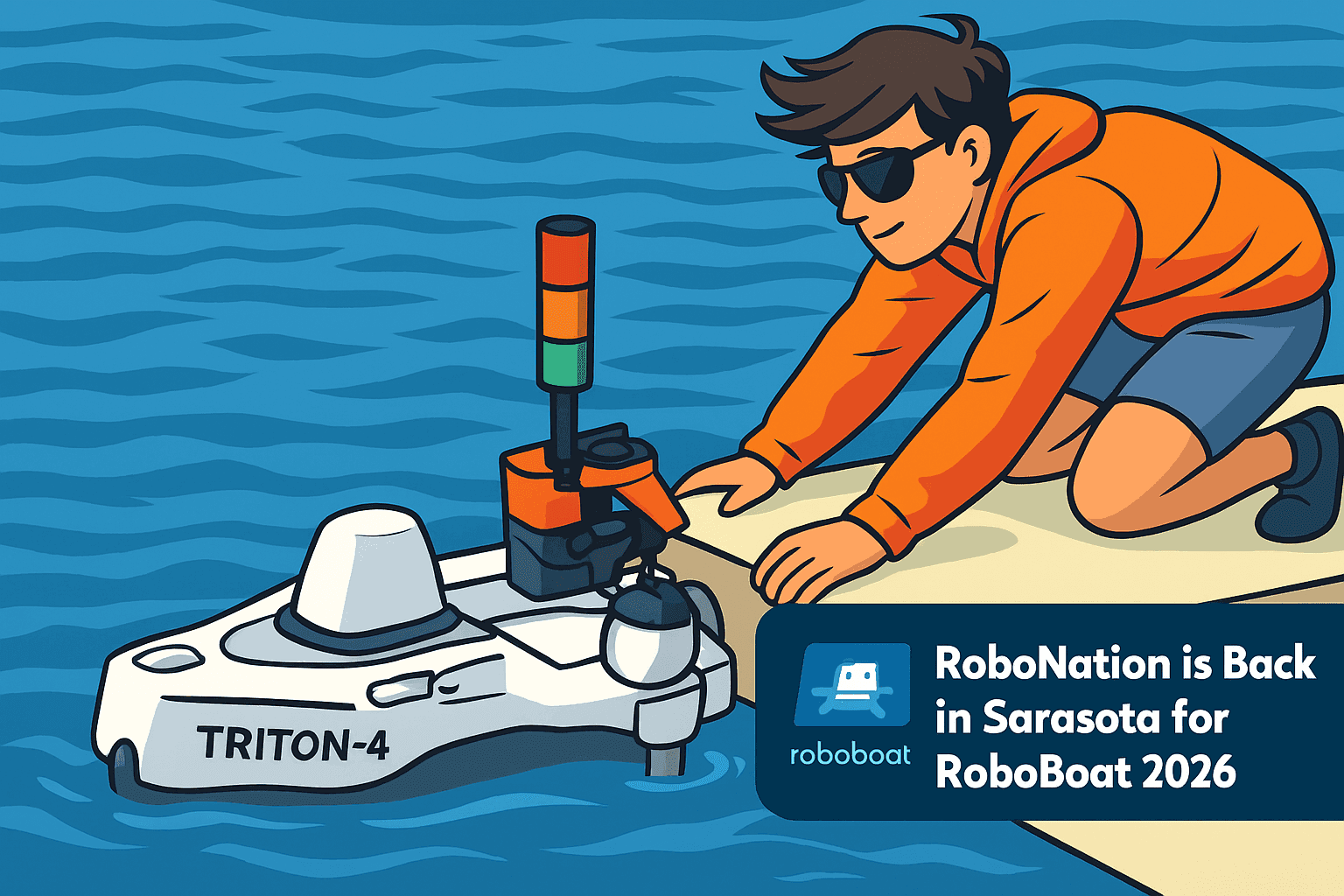
Even so, the enthusiasm was unmistakable, including many teams from overseas. One participant noted their heavy equipment survived a long international shipment and arrived largely intact, yet the substantial demo boat later sank during competition—a setback framed as a learning moment: we will learn and continue. Industry veterans know that making a lab-verified system run on demand at a public demo is a formidable hurdle. Watching students tackle that reality—and make steady progress—shows how they are extending their reach toward maritime robotic autonomy.
From Warlike Drones to Education: A Split Narrative
In parallel, U.S. forces are employing Shahed-style kamikaze systems against the state that popularized them and shared the technology with partners—now feeling the consequences in its own capital—a notable outcome of initial strikes inside Iran. At the same time, the RoboBoat 2026 gathering in Florida is cultivating the next wave of talent. The same toolset spans opposites: one face is built for combat, the other inspires young engineers to advance seaborne autonomy. Iran’s willingness to supply systems like the Shahed-136 also reflects a blend of motives: building leverage with partners, earning revenue, signaling resolve, and learning what mass-produced unmanned weapons can achieve in modern air-defense environments.


